Younger talent pool makes Big Sky race tougher to forecast
8/15/2001 12:00:00 AM | Football
The Big Sky Conference record book will bear their names for many years to come. There's Sacramento State running back Charles Roberts, I-AA's all-time rushing leader.
Montana quarterback Drew Miller, whose 327.8 passing
yards per game are the most in league history. Portland State all-time leading rusher Charles Dunn and his 6,007 career yards, and his teammate Jimmy Blanchard, who once threw an NCAA record 342 straight passes without an
interception. And don't forget Cal State Northridge quarterback Marcus
Brady, whose assault on the conference passing annals would have been
ongoing had the Matadors not withdrawn from the league.
No, the 2001 Big Sky Conference won't have the superstars that furthered
the
league's reputation as the top offensive league in I-AA during the past
four
years. In fact, a robust 50 percent of the conference's total starters
have
departed, leaving a new breed of talent to carry the torch. At Weber
State
(seven returning starters), Idaho State, and Portland State (six each),
you'll need a program. But the history of the league strongly suggests
that
the style of game and amount of electricity will remain, even if many of
the
names have changed.
Following is the 2001 Big Sky Football preview, with teams ranked in
predicted order of finish, and last year's overall and conference
records in
parentheses:
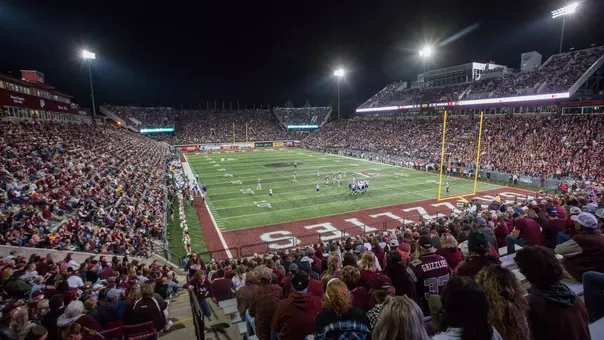
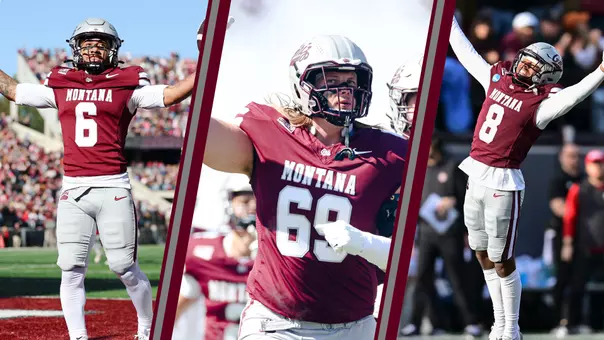
1. MONTANA (13-2, 8-0)
LAST YEAR: Montana was so ticked about its season-opening loss to
Hofstra
that it won and never stopped winning until right before Christmas. Joe
Glenn's first year as head coach in Missoula brought a 13-game winning
streak, No. 1 ranking for the season's final three weeks, the top seed
in
the I-AA playoffs, and an appearance in the national championship game.
In
addition, Glenn won the Eddie Robinson I-AA Coach of the Year Award and
defensive lineman Andy Petek finished second in Buck Buchanan Award
voting
for leading the nation's second-ranked defense. The Grizzlies controlled
but
never dominated the Big Sky, going 8-0 in the league but winning five of
those games by 10 points or less. The team's magical run, which was
punctuated by starting quarterback Drew Miller's endless array of
injuries,
ended by a 27-25 count to Georgia Southern in the rain-soaked title
game.
OFFENSE: The battering that Miller took last season helped to groom his
successor, John Edwards (75-139, 997 yards, 9 TD, 4 INT). Edwards,
dubbed
"Johnny Montana," was 3-0 as a starter and played in 11 of the team's 15
games. The junior will be pushed by Wyoming transfer Brandon Neill, who
started two games for the Cowboys last season. Joining Edwards in the
backfield will be tailback Yo Humphrey (883 yards, 9 TD, 24 receptions),
who
had a productive 2000 despite his own nagging injuries. Though top
receiver
Jimmy Farris is gone, Edwards will look to two experienced wideouts in
all-purpose performer Etu Molden (56 receptions, 699 yards, 6 TD) and
T.J.
Oelkers (24 receptions, 368 yards, 1 TD). Tight end Spencer Frederick
(17
receptions, 165 yards), who developed into one of the nation's top tight
ends last season, should see his role enhanced this season. The line is
the
best in the Big Sky, as All-American Thatcher Szalay and fellow guard
Derek
Decker, tackles Dylan McFarland and Jon Skinner, and center Brian Pelc
were
each starters last season.
DEFENSE: Always known as an offensive powerhouse, the Griz were able to
stand apart last season due to a staunch defense, a unit that loses a
few
key elements going into 2001. Defensive line is probably the team's
thinnest
area, and end Ciche Pitcher (16 tackles, 2 sacks) along with tackles
Curt
Colter (22 tackles, 1 sack) and Jason Francis will be expected to
blossom
early. Matt Steinau (61 tackles) is Montana's best returning linebacker,
and
'99 starter Jacob Yoro will combine with former quarterback Andy
Thompson at
the other outside slot. Dan DeCoite (33 tackles) and Dan Orizotti (11
tackles) are proven on the inside. At secondary, cornerback Calvin
Coleman
(54 tackles, 2 INT) and Vince Huntsberger (106 tackles, 1 INT) could
both be
All-Americans, while safety Trey Young (63 tackles, 1 INT) is another
returning secondary starter. Either Joel Rosenberg (12 tackles) or JC
transfer Johnnie Peeples will start opposite Coleman at the other
corner.
SPECIAL TEAMS: Chris Snyder (13-21 FG, 39-42 XP) was solid as a kicker
last
year, and JC transfer Mark Spencer will be looked to in an effort to
eradicate the team's punting problems from a year ago. Molden (25.7
kickoff
return avg, 1 TD) could return both kickoffs and punts for the Griz,
with
Oelkers and receiver Randyn Akiona lending assistance.
SCHEDULE: Montana has a shot at being the first team in I-AA history to
win
16 games, since a matchup at Hawaii (9/8) allowed the Griz to pick up a
12th
regular season contest. Montana will face back-to-back I-As when they
follow
the Rainbows with Idaho (9/15) in Missoula. Two of the team's most
difficult
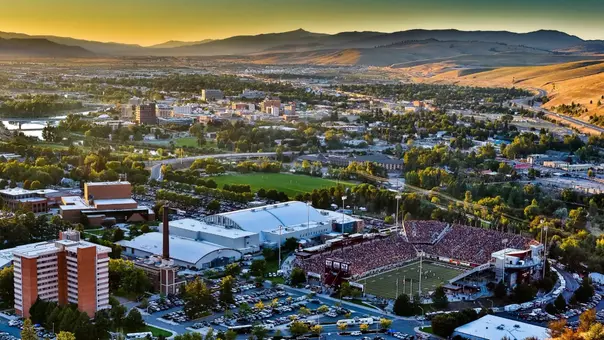
league tilts will be played at Washington Grizzly Stadium, with Eastern
Washington (9/29) and Portland State (10/27) each coming to town. Games
at
Sacramento State (10/6) and Northern Arizona (10/20) will be the
stiffest
league road challenges.
PROGNOSIS: Life is good at Montana, where anything less than a
conference
title would be a surprise, and failure to garner a ninth straight
playoff
berth is out of the question. The Grizzlies have an uncanny combination
of
talent and depth when compared to other teams in this year's Big Sky,
and
are one of I-AA's best-coached teams to boot. The only questions are how
the
non-stop 12-game schedule might affect the troops come playoff time,
from
both a health and fatigue standpoint. The losses of Miller, Farris, and
the
defensive line don't seem like problems Montana shouldn't be able to
overcome, though all-around depth could be more of a question mark for
this
year's edition. Regardless, look for Montana to win nine or 10 games and
to
be playing in Missoula on Thanksgiving weekend.
2. EASTERN WASHINGTON (6-5, 5-3)
LAST YEAR: Paul Wulff's first season as Eastern Washington head coach
was a
mixed bag, with four narrow losses helping to deny the team its first
playoff berth since 1997. Losses to eventual I-A bowl teams Oregon State
(21-19) and Boise State (41-23) were to be expected, but successive
defeats
to Sacramento State (25-22 at home) and at Cal State Northridge (31-26)
raised the frustration level in Cheney. The Eagles did finish strong,
with
wins over Northern Arizona and eventual playoff participant Portland
State
to end the year.
OFFENSE: EWU is as deep at quarterback as any team in the Big Sky, with
starter Fred Salanoa (126-235, 1401 yards, 6 TD, 6 INT) and backups
Chris
Samms (64-114, 764 yards, 4 TD, 5 INT) and Eli Marsh each boasting
playing
experience. The job is Salanoa's to lose, and having two quality running
backs in Payton Award candidate Jesse Chatman (1188 yards, 13 TD, 19
receptions) and Jovan Griffith (382 yards, 3 TD) will take some of the
pressure off. Top receivers for Salanoa include 2000 starters Joe Levens
(38
receptions, 451 yards, 3 TD) and Shaylon Reed (42 receptions, 500 yards,
2
TD), but All-American Lamont Brightful (32 receptions, 413 yards, 2 TD,
128
rushing yards) is a long shot to return. Brightful needs to complete his
bachelor's degree by the end of the summer to gain an extra year of
eligibility. The line has its share of veterans as well, with center
Chris
Polinder, guards Asim Poston and Robert Horal, and tackle David Sherrod
leading the way. Tight end Dan Curley, who missed last season with a
knee
injury, could be a key component for the Eagles if he can remain
healthy.
DEFENSE: Defense has more question marks for Wulff's club, as all four
defensive line starters have departed. End Brandon Moore (3 tackles) and
tackle Adam Chambers (6 tackles) are the squad's only two returning
letterwinners on the line, and Wulff has brought in JC transfers Nick
Tavaglione and Dante Harrell to add some depth. Linebacker is a slightly
better situation, with All-Conference honoree Anthony Griffin (69
tackles, 1
INT) returning to the outside. Luke Vincent (11 tackles) and Adam Zeiger
(33
tackles), both backups a year ago, are expected to join Griffin in the
starting linebacker corps. The secondary is the defense's strength, with
safeties Alvin Tolliver (73 tackles, 4 INT) and Lavonta Howard (2
tackles)
along with corners Anthony Matthews (36 tackles, 1 INT) and Travis Reed
each
coming in with starting experience.
SPECIAL TEAMS: Punter Nick Reynolds (39.2 avg.) is back in Cheney, but
the
team was dealt a huge blow when kicker Troy Griggs (14-22 FG, 30-33 XP)
was
injured in a non-football related injury earlier in the summer. Look for
Reynolds, who handled place-kicking duties in 1998, or a late walk-on to
do
the Eagles' kicking. If Brightful (32.2 kickoff return avg., 2 TD, 11.1
punt
return avg.) fails to come back, EWU will be forced to replace one of
the
top return specialists in I-AA history. Receiver Joe Levens (9.3 punt
return
avg.) does have limited kick returning experience, however.
SCHEDULE: Eastern Washington's athletic department dropped the ball by
failing to find an 11th game, meaning that a potentially strong playoff
candidate will play just eight games against I-AA competition. The
opener at
I-A Connecticut (Sept. 8) is bigger than it should be, and a road
contest
with Montana (Sept. 29) will show just how good EWU can be. Four of the
last
six are at home, including a Nov. 10 contest with Portland State that
could
be a difference-maker for both teams.
PROGNOSIS: Although Wulff is rightfully concerned about depth on the
defensive line, experience on offense and in the secondary is what makes
Eastern Washington look stronger than most other teams in the Big Sky.
Chatman and Griffith form the top backfield in the league, and the
capable
Salanoa welcomes back quality targets and an effective offensive line.
If
the linebackers and secondary hold up, experience on the defensive line
will
become less of a factor. Eastern Washington could challenge Montana for
the
league title, and failing that should emerge as a playoff contender
despite
the glaring scheduling snafu.
3. SACRAMENTO STATE (7-4, 5-3)
LAST YEAR: Though their playoff hopes had seemingly evaporated by early
October, Sac State's 2000 season was the most successful of the school's
I-AA era. The Hornets, who joined I-AA in 1993 and the Big Sky in 1996,
set
a school record for both overall and conference wins, finishing in a tie
for
second in the league. John Volek's team had its back up against the wall
early, losing key games against Portland State (35-23) at home and at
Idaho
State (41-39) in September, before blowing a 20-0 lead to lose 24-20 at
Montana on Oct. 7. Any outside shot the team had of cracking the
playoffs
was gone when Division II UC Davis edged the Hornets (13-10) on Oct. 28.
Running back Charles Roberts, who gained 1,624 yards last season,
graduated
as I-AA's all-time leading rusher with 6,553 yards in his four years.
OFFENSE: Volek has a daunting task on offense, as Sac State must replace
not
only Roberts but also starting quarterback Ricky Ray and top receivers
Lamont Webb and Scott Towne. Under center, the Hornets will turn to
redshirt
freshman Ryan Leadingham , who beat out sophomore Ferni Garza and JC
transfer Kevin Laird in the spring. Garrett White (7-16, 92 yards
passing, 2
receptions, 152 yards rushing), the team's backup quarterback a year
ago,
will be one of Leadingham's top targets after shifting to receiver,
along
with returnees Gary Austin, Jr. (23 receptions, 241 yards, 1 TD), and
Michael Johnson, Jr. (11 receptions, 139 yards) Sophomore Bobby Brown
will
step in at tight end for departed Jon Morrissey. Roberts' replacement
will
likely be junior Derard Barton (150 yards), who has 88 carries over the
past
two seasons. The offense's strength will be on the line, where
All-Conference center Terence Wagner is one of five returning starters.
Tackles Sean Doherty and Marko Cavka and guards Chris Frank and Grant
Hagen
join Wagner in the trenches.
DEFENSE: Eight starters are back on defense for the Hornets, with nose
guard
Bilal Watkins (6.5 sacks) enabling the pass rush. Ends Drew Bogetti
(26.5
tackles, 6 sacks) and Maui Borden (14.5 tackles) and tackle Allen McCoy
(13
tackles) combine with Watkins, and Boise State transfer Justin Llorente
should also lend a hand on the outside. At linebacker, the team will
miss
Anthony Daisley and Santi Hall, but do return starter Lee Turner (31
tackles). Part-timer Park McAllister (27 tackles) should man Hall's
vacated
slot, while junior Jason Rowell (13.5 tackles) heads the list of
candidates
to replace Daisley at rover. The secondary will get a boost if top
corner
Elton Gabourel (66 tackles, 4 INT) can meet the NCAA's graduation
requirement, which would allow him to play a fourth season. Brandon
Coleman
(35 tackles, 4 INT) will play opposite Gabourel, while fellow returning
starter Camron Mweba (28.5 tackles) is penciled in at strong safety.
Either
senior Ed Canonico (22.5 tackles) or freshman Ramon Payne will take over
the
all-important free safety slot.
SPECIAL TEAMS: Jimmy Sanchez (38.8 yards, 7-14 FG, 30-35 XP) will once
again
be the Hornets' punter, but redshirt freshman Paul Kerr is expected to
wrestle place-kicking duties from the senior. The departed Webb handled
most
of the team's punt and kickoff returns, meaning a combination of new
faces
will handle kicks. Safety Camron Mweba, who saw limited action returning
both punts and kickoffs, is a strong candidate to take over in either
capacity.
SCHEDULE: Sac State needs to get off to a quick start in September, as
contests against St. Mary's (Sept. 1), Cal Poly (Sept. 8), Idaho State
(Sept. 22), and Weber State (Sept. 29) should all be wins. The Hornets
will
also have to win one of the following to be in the playoff hunt: at
Portland
State (Sept. 15), Montana (Oct. 6) at home, or Eastern Washington (Oct.
20)
at home. In addition, another loss to UC Davis (Oct. 27) would be
unacceptable.
PROGNOSIS: When you lose as many skill players as Sac State has,
contending
for a league crown isn't supposed to be an option. But with a veteran
defense and offfensive line, the Hornets are further ahead than many of
their Big Sky contemporaries. A kind non-conference scheduling pattern
has
set John Volek's team up to gain some confidence early, and if it can
avoid
the late-game meltdowns of last season, Sac State should be a factor in
the
league race. An 8-3 record and something to play for in November could
be in
the cards.
4. PORTLAND STATE (8-4, 5-3)
LAST YEAR: Portland State's rollercoaster 2000 season nearly ended in
extreme disappointment, but ultimately resulted in the school's
first-ever
playoff appearance. PSU was as hot as any team in the nation through the
first month-and-a-half of the season, destroying I-A Hawaii (45-20) and
defeating four ranked I-AA teams to start 6-0 and move to No. 2 in the
country. But consecutive losses to Weber State (41-9) and Montana
(33-21)
had the Vikings scrambling, and Tim Walsh's team was lucky that a 27-24
defeat at the hands of Eastern Washington in the season's next-to-last
week
didn't spell their doom. Instead, PSU earned the 15th seed in the I-AA
playoffs, where it dropped a 49-14 decision to Delaware.
OFFENSE: Gone are the Viks' all-time leading rusher in Charles Dunn,
all-time top receiver in Orshawante Bryant, and a quarterback, Jimmy
Blanchard, that was one of the best the Big Sky has ever seen. Left in
their
wake are potential NFL receiver Terry Charles (42 receptions, 792 yards,
5
TD) and a number of unproven players. Taking Blanchard's place will be
Juston Wood (4-6, 66 yards, 1 INT), who has studied as the backup for
the
past two seasons. Replacing Dunn will be either Amad Robinson (165
yards, 3
TD) or Hashim Hall (101 yards), both of whom received spot duty last
season,
while Cal transfer Saleem Muhammad should step in at fullback. Receiver
Antonio Jackson (28 receptions, 360 yards, 2 TD) came on late to spell
the
injured Charles, and will be another target for Wood along with JC
transfers
Jesse Levin (once a starter at Idaho State) and Robert Means. The line
loses
its top three starters as well, but center Riley Hayes and tackle Scott
Lesure and JC transfers Lee Gutu and Devan Kelley are expected to make
up a
capable unit. Tim Hester (21 receptions, 199 yards, 1 TD) should see
plenty
of opportunities at the tight end position.
DEFENSE: The defensive line was to return just one starter, Brad Ransom
(26
tackles, 1 sack), so Walsh went out and got JC tackle Matt Jenkins and
end
Elkin King to try and solidify the trenches. Linebacker is a bit more
stable, with Ron Hampton (11 tackles), Marcus Green (32 tackles, 1 sack,
1
INT), and Ron Granderson (60 tackles) each boasting experience. Junior
safety Brent Donnerberg (95 tackles, 2 INT) leads a young secondary that
should also include Tanner Cole (23 tackles) and JC transfer Antyone
Sims at
safety, and Lamar Casear (26 tackles) and Darius Brown (seven tackles)
at
the corner slots..
SPECIAL TEAMS: All-America kicker and punter Dan Frantz is yet another
player that PSU must find a replacement for, with JC transfer Edi Pazos
brought in to punt and junior Mike Cajal-Willis a strong possibility for
place-kicking chores. Departed return men Rashad Floyd and Orshawante
Bryant
will be missed, but Hashim Hall (24.0 average) does have some experience
bringing back kickoffs.
SCHEDULE: The Vikings will start their season in the heat of Texas with
Stephen F. Austin (Sept. 1) before christening newly remodeled PGE Park
with
three consecutive home games. If PSU can survive until late October,
road
contests with Montana (Oct. 27) and Eastern Washington (Nov. 10) could
be
critical to the league race.
PROGNOSIS: Portland State went the JC route to try and ease its many key
losses, bringing in a total of 21 transfers to mesh with the team's 33
returning letterwinners. Obviously, chemistry will be a huge component
to
the Viks' success or failure this season, but talent will be an even
larger
factor. Blanchard, Dunn, and Bryant are not players that can be replaced
easily, and the veteran leadership of all three will certainly be
missed. If
Wood and Robinson are as good as advertised, if Charles can stand up to
the
numerous double-teams he is sure to receive, if the inexperienced lines,
secondary, and special teams can hold up, and if PSU can protect its
home
field, the team will have a chance to compete for a playoff berth.
That's a
lot of "if"s, and a 6-5 or 7-4 mark seems more realistic.
5. NORTHERN ARIZONA (3-8, 2-6)
LAST YEAR: After going 8-4 and earning a playoff berth in 1999, NAU
slipped
to 3-8 last season, with five of the Lumberjacks' eight losses coming by
seven points or less. Jerome Souers' club was embroiled in off-the-field
problems, as star receiver Francis St. Paul's academic suspension dating
from the year prior forced the 'Jacks to forfeit four wins from '99
while
St. Paul missed the first six games of 2000. St. Paul and safety Ray
Perryman were each selected in the NFL Draft following the season.
OFFENSE: For the first time in nine seasons, NAU couldn't turn to a
future
NFL quarterback like Jeff Lewis or Travis Brown in 2000, and it showed.
Both
of last year's inconsistent starting quarterbacks, Preston Parsons
(185-340,
2116 yards, 9 TD, 10 INT) and Carson Bradley (43-73, 382 yards, 3 TD, 2
INT), return, but don't be surprised to see the job go to JC transfer
Clint
Womack or sophomore Jeremy Walker, who had a productive spring. Whoever
plays QB will have the privilege of handing off to Marcus King (1474
yards,
13 TD, 32 receptions), who enters his senior season in close range of
NAU's
all-time rushing mark. Though St. Paul has departed, Souers has veteran
receivers in tow with senior Sidney Smith (49 receptions, 503 yards, 2
TD)
and 6-5 touchdown-catch leader Clarence Moore (15 receptions, 289 yards,
4
TD). Senior Jadiem Wilson and slot man Tom Winn (11 receptions, 95
yards)
should help out as well. The offensive line is a veteran group, anchored
by
preseason All-America tackle Eric Damko and fellow returning starters in
center Pat Walsh, tackle Robert Haws, tight end Peter Cich, and guard
Nick
Yerton.
DEFENSE: Seven starters are gone from last year's club, including
Perryman
and the balance of the NAU secondary. Defensive line will be a concern
as
well, as end Malachi Keddington (44 tackles, 12 TFL) is the lone
returning
regular. Pisa Magele (28 tackles) will likely start opposite Keddington,
while Inoke Taufa (8 tackles) is penciled in on the interior. Linebacker
is
the defense's most veteran unit, with starters Kaaine Keawe (62
tackles),
Keith O'Neil (46 tackles), and Valley Coleman (46 tackles) each back in
the
mix. The secondary will have to rely on part-time starter and free
safety
Keala Loo (54 tackles, 1 INT) to stabilize things, while Charles Nash
returns from an injury in game three that forced him to miss the
remainder
of the season. Northwestern transfer Shegun Cummings-John will battle a
host
of non-starting returnees for a place in the defensive backfield.
SPECIAL TEAMS: NAU may have the most experienced kicking game in the Big
Sky, as punter Mark Gould (41.2 avg.) and kicker Ty Dondelinger (10-15
FG,
25-27 XP) each return. Marcus King is expected to take his talents to
kickoff returns along with Quinten Bennett, while wideout Johnny
Marshall is
penciled in at punt returner.
SCHEDULE: A four-game stretch in September will be murder, as a home
game
with Southland power Stephen F. Austin (Sept. 8) precedes road contests
with
Oklahoma State (Sept. 15), Southern Utah (Sept. 22), and Portland State
(Sept. 29). NAU is fortunate to have both Montana (Oct. 20) and Eastern
Washington (Nov. 3) at the Walkup Skydome.
PROGNOSIS: After a disastrous 2000 that was exacerbated by off-the-field
problems, Northern Arizona is eager to find its previous winning ways.
There
is some talent in place to accomplish just that, with the talented King
and
veteran offensive line and linebacking corps putting the Lumberjacks far
ahead of some of their young Big Sky brethren. The quarterback situation
is
a huge "x" factor, however, and how NAU will adjust defensively without
Perryman's leadership will also be worth watching. The Lumberjacks
should be
able to manage 6-5, and might have a chance to be better if September is
kind to Souers' team.
6. WEBER STATE (7-4, 5-3)
LAST YEAR: Weber State finished the season as one of the nation's
hottest
teams, winning five of its final six games and vaulting into the Top 25.
The
one loss over that stretch was a season-ending 30-28 heartbreaker to
Montana, which eliminated the Wildcats from playoff contention. The
team's
7-4 record and 5-3 conference mark were its best figures since the 1996
season.
OFFENSE: Gone is quarterback Cole Cooper, who quietly but effectively
led
Weber State to a successful 2000 campaign. In line to succeed Cooper are
junior Tyler Gladwell or 6-6 sophomore Tate Bennett, both of whom have
limited experience. Who the new QB will throw to is another question
mark,
as top receiver Jon Jefferson and All-America tight end Ryan Prince are
both
gone. Damon Greenberry (19 receptions, 197 yards, 3 TD) is the team's
most
veteran receiver, while Boise State transfer DeAndre Harrington should
provide a capable deep threat. Senior Mark Larsen appears to be the
replacement for Prince over the middle. Head coach Jerry Graybeal could
concentrate more on the running game, as Johnnie Gray III (596 yards, 7
TD,
15 receptions) and Jordan Miller (500 yards, 13 receptions) are two of
the
squad's top returning skill players. Tackles Damion Wright and Chris
Rhodes
will anchor an offensive line that should also feature center Ben Olson
and
two new starting guards.
DEFENSE: Only three starters are back on the defensive side of the ball,
with end Randy Spencer (10 tackles) ranking as the only returning
regular on
the line. Junior college transfer Brian Marquardt should fill one of the
tackle slots, but otherwise WSU will be short on manpower up front.
Things
at linebacker are less bleak, with 11-game starter Eric Lohnes (35
tackles,
two sacks) and Matt McFadden (21 tackles, 3 sacks) among those providing
veteran leadership. In the secondary, strong safety Spencer Sigoda (34.5
tackles) will combine with free safety Randy Smith, who suffered a
season-ending knee injury in the team's second game last season.
Cornerback
is a tougher proposition, with Sylvester Daniels (six tackles) ranking
as
the only player at that position with any starting experience.
SPECIAL TEAMS: The kicking game will be as inexperienced as the offense
and
defense, with kicker Josh Zur boasting limited career experience and
punter
Kory Drew playing his position as a true freshman. Herb Craft and Josh
Andrews, who fielded most of the returns on one of the best special
teams
units in the country, have both departed. Colton Swan (24.0 kickoff
return
average), a linebacker, does have kickoff return experience while true
freshman Dewey Crayton is a candidate to bring back punts.
SCHEDULE: September will be Weber's key month, as a 3-2 record from home
games with Montana State (Sept. 8), Eastern Oregon (Sept. 15),
Sacramento
State (Sept. 29), and trips to Southern Utah (Sept. 1) and Eastern
Washington (Sept. 22) will be necessary to give the Wildcats some
momentum.
Road trips to Montana (Nov. 10) and Utah State (Nov. 17) to end the
season
will be killer.
PROGNOSIS: Thin and young are a bad combination, and Weber State appears
to
be a victim of both in the upcoming season. The quarterback and receiver
situations will have to be stable for Weber to approach last year's
mark,
and Gray will have to live up to his billing as one of the Big Sky's top
returning players. Defensively, things don't look great, but teams have
won
in the Big Sky with less than stellar defensive units. Ultimately, Weber
will need a lot of things to go right in order to have a winning record,
but
a 4-7 or 5-6 mark would appear more realistic.
7. IDAHO STATE (6-5, 4-4)
LAST YEAR: The 2000 season was a success by Idaho State standards, as
the
Bengals sported a winning record for the first time since 1995, and won
four
league games for the first time since 1994. ISU shot out of the gate,
winning four of its first five games to break into the national rankings
for
the first time since 1996. But the bottom quickly fell out for Larry
Lewis'
club as four straight losses including successive whippings by Portland
State (59-21) and Southern Utah (62-24) wiped out the team's playoff
hopes.
Quality victories over Montana State (58-14) and I-A Utah State helped
ISU
finish on a strong note.
OFFENSE: Just three starters are back on offense for ISU, none of which
come
from the skill positions. Redshirt freshmen Caleb Eastman and Erik
Johnson
will battle for quarterback duties, but conventional wisdom would
suggest
that JC transfer Doug Baughman will emerge as the starter. The backfield
is
just as thin, with senior Mike Jones and his 15 career carries
qualifying as
experience for ISU. Washington State transfer Eddie Linscomb who
initially
committed to attend ISU, instead opted to go to Southwest Missouri
State.
Isaac Mitchell, who was slated to start at linebacker, will likely move
back
to his original position at running back. Idaho State's three top
receivers
have exhausted their eligibility as well, leaving backups Eugene Mirador
(26
receptions, 173 yards) and Jerrold Wilkerson (16 receptions, 354 yards,
four
TD) to mesh with UNLV transfer Charles James at wideout. Tight ends Mike
Golightly and Pat Henry could factor into the pass-catching game as
well. If
the Bengal offense has a strength, it's the line, where three starters
including Judd Gold and Bart Teuscher will provide stability.
DEFENSE: Like the offense, the ISU defense brings back just three
starters,
but Lewis appears to have more talent in place on that side of the ball.
Jared Allen (34 tackles, four sacks) enjoyed a breakout freshman season
at
reserve end and should fit easily into a starting role. Starting tackle
Seth
Wertmann started six games last season but could be shifted to
linebacker.
Washington State transfer Eric Boose is a shoo-in for one tackle slot.
At
linebacker, Cedric Dawson (74 tackles, three sacks) is the lone
returning
starter, but experience abounds with converted defensive back Josh
Whitworth
(12 tackles) and JC transfer Bart Brooks. Senior free safety Josh
Robinson
(81 tackles, 6 INT) is the best player on the team's top unit, with
part-timers Na'Jai Rankin (41 tackles) and Josh Thompson (21 tackles)
also
figuring to see a wealth of time in the secondary.
SPECIAL TEAMS: Kicker Javier Garcia (8-15 FG, 39-42 XP) is back, but
All-America punter Ben Simpson (41.6 avg.) has graduated. Junior college
transfer Eddie Johnson is expected to take over for Simpson. All-America
return man DeRonn Finley has also departed, meaning Lewis will also have
to
find new kick-fielders.
SCHEDULE: A 2-2 start would be ISU's worst-case scenario, as Montana
Tech
(Sept. 8) and Montana State-Northern come to Pocatello (Sept. 29) in the
season's first month. October will be the Bengals make-or-break month,
with
trips to NAU (Oct. 6), Utah State (Oct. 20) and Weber State (Oct. 27)
presenting stiff challenges.
PROGNOSIS: A second straight winning season will be a tall order for
Idaho
State, which is neither deep nor experienced on either side of the ball.
The
ability of transfers to mesh with young players will determine just how
good
or bad the Bengals can be in 2001, but preseason uncertainty is usually
a
harbinger of bad things. A four-win season sounds about right for Idaho
State.
8. MONTANA STATE (0-11, 0-8)
LAST YEAR: Oh, the humanity. Head coach Mike Kramer's first year in
Bozeman
was also Montana State's first winless season since 1951, and it was
often
even worse than it appeared. The Bobcats finished last in the league in
scoring offense (11.9), pass offense (131.5), total offense (275.3),
pass
efficiency (80.0), defensive pass efficiency (148.9), punting (31.9),
turnover margin (-0.91), first downs (178), third-down conversions
(31.1),
sacks against (38), and field goals (.333). To say there is nowhere to
go
but up could be understating things.
OFFENSE: After a disastrous year offensively in 2000, changes abound on
that
side of the ball. New offensive coordinator Don Bailey, formerly at Cal
Poly, will center his offense around Oregon State transfer quarterback
Tyler
Thomas, after incumbent Farhaad Azimi (138-287, 1355 yards, 8 TD, 13
INT)
was ineffective in that role last year. Another Oregon State transfer,
Junior Adams, figures to be Taylor's top target. Junior Pat Carahasen
(15
receptions, 138 yards) lines up on the other side, while former fullback
Brandon Vancleeve will play tight end after missing 1999 with a neck
injury.
Scott Turnquist (seven receptions, 46 yards) has a beat on the slot
receiver
role, and JC transfer Toby Winters will see time at wideout as well.
Junior
tailback Ryan Johnson (665 yards, 2 TD) is the team's most capable
backfield
threat. Sophomore tackle Brent Swaggert leads an offensive line that
returns
all five starters, although the unit must improve upon its dismal
performance of a year ago.
DEFENSE: MSU was a credible team defensively last year, a fact that
didn't
play out statistically since the unit spent so much time on the field.
Up
front, four starters are back, with tackle Nick Morasko having recovered
from an injury last season, and Jon Montoya (seven sacks) emerging as
the
team's top pass rusher. Linebacker is a little thinner, but Kyle Ecker
(73.5
tackles, 5.5 sacks) and Mike Woodberry (43.5 tackles, 3 sacks) have
experience. Mike McCafferty, who was projected as a starter before
missing
last season due to injury, should also figure into the mix. Safety Kane
Ioane (98 tackles) leads a secondary that also welcomes back fellow
safety
Lamonte Bell (12 pass deflections at cornerback last season) and CB Joey
Thomas (28 tackles, 2 INT). Former University of New Mexico quarterback
Justin Mobley should also factor in at safety.
SPECIAL TEAMS: MSU's kicking game may have actually been worse than its
offense last season, and the team made minimal strides to reverse its
problems in that area. Nate Cook (37.4 punting average, 3-4 field goals)
was
average at best last season, and was an academic casualty in the spring.
West Virginia transfer E.J. Cochran is an unknown quantity but could
step in
at kicker. Arie Grey and Marcel Dunn, who handled most of the Bobcats'
returns last season, have graduated, leaving Adams as a strong
possibility
to pick up some of the slack.
SCHEDULE: When you have a program that has dropped 17 straight games,
suddenly non-conference foes are lining up to play you. Two of those
opponents, I-A UAB (Aug. 30), and Oregon State (Sept. 15), should lay a
massive hurting on MSU. After playing four of six on the road to open
the
year, the Bobcats finish with four of their final five at Bobcat
Stadium,
including the season finale against Montana (Nov. 17), whom MSU has not
defeated since 1985.
PROGNOSIS: Montana State has certainly made advances in the offseason,
with
the the influx of Oregon State transfers Thomas and Adams and the hiring
of
offensive coordinator Bailey figuring to improve the offense immensely.
But
a 17-game losing streak can't turn into a winning record overnight,
especially with two I-As on the schedule. Montana State should snap its
losing skid and might win three or four games, but remains a couple of
years
from contender status.
Thursday, June 04
Friday, May 01
Monday, March 30
Monday, March 30