First Round Recap - Who's Your Champion Now
11/28/2004 12:00:00 AM | Football
Philadelphia, PA (Sports Network) - Alright, admit it. If you filled out a pre-tournament bracket, it's already time to put it through a paper cutter.
Sure, some loyalists from Montana, Furman and Delaware probably believed their team would prevail as the I-AA champion. Now that the favorites of most of the non-partisans are gone, those beliefs are stronger than ever.
The exit of the two most dominant teams of the 2004 season, Southern Illinois and Georgia Southern, is the prevailing story after an exciting first round of the I-AA playoffs. But the losses by both teams, though surprising, were certainly not shocking.
The Salukis and Eagles both ran all over opponents to easy wins all year. But both only faced one close, down to the wire finish, and lost that game. They didn't have the experience of their opponent in winning games in the fourth quarter. Southern Illinois and Georgia Southern both played plenty of weak competition in conference play, and drew extremely dangerous opponents in Eastern Washington and New Hampshire. The two "sleepers" of the tournament proved they were no Rip Van Winkles.
Southern Illinois didn't face a passing game like Eastern Washington's all season, and it showed. The Salukis gave up 437 yards passing to Erik Meyer and the Eagles, and Meyer hit Eric Kimble with a 45-yard strike with 1:49 to play for the gamewinning score in a 35-31 win. The Salukis marched down to the EWU 20 yard line in the final seconds, but could not punch the ball in the endzone.
Georgia Southern looked uncomfortable in a tight game against New Hampshire. The Eagles rolled early, jumping out to a 14-0 lead, but New Hampshire stuck around and the Wildcats controlled play in the second half. New Hampshire took its first lead of the day on a 52-yard run by R.J. Harvey with 13:15 to play in the game, and Georgia Southern hit the panic button in the fourth quarter. The Eagles put the ball on the ground, called strange passing plays when the running game was working, and never made the big play to keeps the drive going.
The wins for Eastern Washington and New Hampshire highlighted great days for the Big Sky and the Atlantic 10. The Eagles produced the day's biggest upset, but conference mate Montana had the most overwhelming performance. The Grizzlies had their way with Northwestern State's No. 1 ranked defense. Craig Ochs had another strong day at quarterback, and Lex Hilliard ran for four scores and more than 10 yards per carry in the 56-7 rout. A path to the championship that could have included trips to Georgia Southern and Southern Illinois now probably stays right in Missoula for the Grizzlies, and the likely home edge has to make Montana a slight favorite in the top half of the bracket.
The Big Sky proved it's not in a "down" year, while the Atlantic 10 showed once again it is far and away the best conference in I-AA. All four teams advanced to the quarterfinals, as James Madison, William & Mary and Delaware gutted out first round triumphs. At least one of the quartet will advance as William & Mary takes on Delaware, and with the experience each of these teams has in big games it wouldn't be a shock to see a trio of A-10 teams as part of the final quartet of playoff participants.
Four other leagues had respectable, though not great, days. The Southland teams split, as Sam Houston State's 54-24 thrashing of Western Kentucky made up for the big loss by Northwestern State. Furman's 49-7 thumping of Jacksonville State saved the Southern Conference from an 0-2 day. Despite losses, Hampton had to leave the MEAC feeling good and Lehigh and Lafayette showed the Patriot League belonged with close games against A-10 teams.
The feeling can't be as good in the Gateway and the Ohio Valley Conference. Just a year ago, the Gateway sent four teams to the postseason and none advanced to the semifinals. This time around, the No. 1 team in the nation lost at home and the No. 3 team, Western Kentucky, was throttled on the road. The losses end a bad year for the conference, where five teams struggled all season and another, Northern Iowa, lost its big non-conference games. For Jacksonville State and the OVC, it was another playoff disaster leaving a bad taste in the mouths. The Gamecocks ran all over conference opponents during the season. Now, one has to wonder the quality of the league after Jacksonville State was blown out for the second season in a row.
Suddenly, the losses by seeds in the top half of the bracket make the tournament field a lot more balanced. If anything, the bottom half may now have more power with two seeded teams and defending national champion Delaware still in the mix. With the pre-tournament picks of most prognosticators gone, the only thing for sure is the field is truly WIDE open for the eight contenders. Who's your champion now?
Below is a capsule summary of each team in the field, with historical information, personnel evaluations, and a formula for defeating each team included.
#2 FURMAN (10-2, 6-1 Southern) How They Got Here: defeated Jacksonville State, 49-7. Quarterfinal Round: James Madison I-AA Playoff Appearances: 13th ('82, '83, '85, '86, '88, '89, '90, '96, '99, '00, '01, '02, '04) I-AA Playoff Record: 15-11. Head Coach: Bobby Lamb, 24-11, third year
Furman summary: Furman brings one of the most balanced attacks in the country. Running backs Cedric Gipson and Brandon Mays are a formidable duo that helped the Paladins to 222 rushing yards per game. Florida transfer Ingle Martin can make almost every throw and beat you with his legs as well. Isaac West and Brian Bratton are Martin's favorite targets and will keep defenses honest if they try to attack the running game. The Furman defense has dealt with injury problems all season, but is healthier now. Linebacker Mike Killian has been out since early in the season but returned against Jacksonville State. William Freeman is also back in action, and Cam Newton made his presence felt at safety when he returned from injury against Georgia Southern. Cedrick Ritter and Roy Ravenell have been mainstays at linebacker and defensive end. Kicker Scott Beckler has hit 5-6 kicks from beyond 40 yards but missed five of seven from 30-39 yards out.
How to Beat Furman: Furman did as good a job as anyone against Georgia Southern's running game, but the Paladins' defense has been beaten through the air. Furman gave up big yardage in the passing game in both of its losses, surrendering 380 yards to Pittsburgh and 413 yards to Appalachian State. Running against a healthy Furman team will prove especially challenging, so a team with a star quarterback and strong group of receivers presents the best matchup. Appalachian State burnt Furman with short, intermediate passes. Put pressure on Martin. The quarterback has not thrown an interception in the past five games, but threw nine picks in the first six contests. Also, keep Martin in the pocket and don't let him beat you with his scrambling ability. There isn't one player to shut down in the running game, but there isn't a big threat either. Holding the Paladins to two and three-yard pickups on first down will be helpful.
#3 WILLIAM & MARY (10-2, 6-1 Atlantic 10)
How They Got Here: defeated Hampton, 42-35 Quarterfinal Round: Delaware I-AA Playoff Appearances: 7 ('86, '89, '90, '93, '96, '01, '04) I-AA Playoff Record: 3-6 Head Coach: Jimmie Laycock, 169-112-2, 25th season
William & Mary summary: Lang Campbell is the engine that makes the Tribe offense go. Campbell threw three picks against Hampton but has still been spectacular down the stretch this season. Campbell is also productive running the ball. Wide receiver Dominique Thompson possess gamebreaking speed and averaged 21. 6 yards per reception in the regular season. Adam O'Connor paces the Tribe defense on the line, with James Miller leading the way in the secondary. Greg Kuehn already won one game on the final play with a 46-yard field goal, but had his problems from more than 40 yards out.
How to Beat William & Mary: Run the ball and control the clock. The Tribe defense allows 155 yards per contest on the ground, and in the loss to Delaware the Blue Hens' running backs and O-line wore down the Tribe defense at the end. William & Mary isn't exactly a powerhouse against the pass, but the fewer attempts given to Campbell and the offense the better. Using the run could set up a big play in the passing game. The best bet against the Tribe offense is to force third-and-long by stopping the mediocre running game. Force the Tribe to go to the air and play a nickel or dime package. Campbell doesn't make mistakes, but at least get some pressure to make him hurry throws.
DELAWARE (9-3, 7-1 Atlantic 10)
How They Got Here: defeated Lafayette, 28-14 Quarterfinal Round: at William & Mary I-AA Playoff Appearances: 13th ('81, '82, '86, '88, '91, '92, '93, '95, '96, '97, '00, '03, '04). I-AA Playoff Record: 16-11 Head Coach: K.C. Keeler, 30-10, third season
Delaware summary: Delaware runs the spread offense, and Sonny Riccio has two solid targets to throw to in Justin Long and David Boler. The Blue Hens searched for a consistent running threat all season, and may have finally found their man with Omar Cuff. Cuff has been solid in the month of November after taking over as the feature back. Niquan Lee is a bruising back that can do some damage near the goal line. Tom Parks anchors the Delaware defensive line, with Mondoe Davis leading the way at linebacker. Sidney Haugabrook is often thrown away from at corner, but is a threat as a kick and punt return man. Brad Shushman has hit 4-6 kicks from 40 yards or more.
How to Beat Delaware: Riccio is hot and cold. He can be excellent at times and erratic at others. Do everything possible to get some pressure on the quarterback and make him add to his total of 11 interceptions. Blitzing and sending different looks could work, and the Blue Hens' running attack probably won't burn the blitz. Only Navy ran effectively on the Delaware defense, so don't expect a ton of yards there. Crossing routes and anything over the middle has worked against the Blue Hens secondary. Delaware has also given up some big plays, so don't be afraid to look deep a few times.
EASTERN WASHINGTON (9-3, 6-1 Big Sky)
How They Got Here: defeated Southern Illinois, 35-31 Quarterfinal Round: Sam Houston State I-AA Playoff Appearances: 4th ('85, '92, '97, '04) I-AA Playoff Record: 4-3 Head Coach: Paul Wulff, 34-22, six seasons
Eastern Washington summary: The offense will go as far as Erik Meyer and Eric Kimble can take it. Meyer got hot down the stretch with nine touchdown passes in the final two games against Cal Poly and Montana State, and kept the strong play going against Southern Illinois. Kimble emerged as a top receiver and serves as a duel threat as a punt returner. Darius Washington leads a trio of running backs to take the heat off the passing game. Brandon Keeler and Joey Cwik lead the defensive effort. Tom Finnerty is the leading sacker, while Isaiah Trufant and Ryan Phillips are tough to pass on in the secondary. Sheldon Weddle and Skyler Allen have combined to try just one field goal over 40 yards.
How to Beat Eastern Washington: Eastern Washington opened the season 0-2 after facing strong rushing attacks in Nicholls State and Air Force. Montana ran for 157 yards against the Eagles, and Montana State went for 251. Running the ball not only works against the Eagles' defense, but it keeps Meyer and the offense off the field. The Eagles' offense averages 38 points and nearly 470 yards per game, so if the conditions are clear don't expect to completely shut them down. Throw some different looks to disrupt Meyer's rhythm, and make the Eagles' offense one-dimensional by shutting down the running game at the line.
JAMES MADISON (10-2, 7-1 Atlantic 10)
How They Got Here: defeated Lehigh, 14-13 Quarterfinal Round: at Furman I-AA Playoff Appearances: 6th ('87, '91, '94, '95, '99, '04) I-AA Playoff Record: 3-5 Head Coach: Mickey Matthews, 37-33, six seasons
James Madison summary: If the running game is involved, the Dukes are happy. James Madison is a run-oriented offense, even though two of the top backs have missed time this season. Raymond Hines has been healthy all season, and if Alvin Banks is near full-strength it would be a big boost. Justin Rascati is an effective runner, but also has decent numbers through the air. Freshman Tony LeZotte has emerged at safety for a James Madison run defense that ranks in the top ten nationally. The Dukes have four other players with at least 50 tackles, and Trey Townsend leads the team with five interceptions. Placekicker David Rabil and punter Nick Englehart form a less than imposing kicking game.
How to Beat James Madison: On defense, key in on the James Madison running game. Stack the line, put eight in the box, do whatever is necessary to force the Dukes to pass more often. It's not that Rascati can't succeed by passing, but James Madison likes to control the tempo of the game and control the clock with the rushing attack. Force the receivers to make plays to beat you, and not just grind it out in the rushing attack. The James Madison defense is strong against the run and the pass. Some trickery could be in order, but just passing on first and second down might be a good idea. James Madison has a great pass rush in addition to the strong run defense, and falling into third and long situations by continually getting stuffed in the run game could be a recipe for disaster.
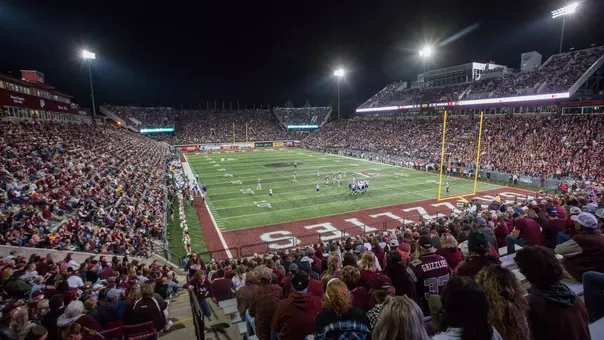
MONTANA (10-2, 6-1 Big Sky)
How They Got Here: defeated Northwestern State, 56-7 Quarterfinal Round: New Hampshire I-AA Playoff Appearances: 15th ('82, '88, '89, '93, '94, '95, '96, '97, '98, '99, '00, '01, '02, '03, '04). I-AA Playoff Record: 20-12. Head Coach: Bobby Hauck, 19-6, second season
Montana summary: The Grizzlies have developed a strong balance between the run and pass in the latter stages of the season. Quarterback Craig Ochs has played efficient games all season and has quality receivers in Jefferson Heidelberger and Jon Talmage, with Tate Hancock and Levander Segars also over the 40 catch mark. Running backs Justin Green and Lex Hilliard (split duties, with Hilliard serving as more of a home run threat and earning more carries late in the season. On defense, the Grizzlies have picked off 18 passes. Kevin Edwards leads the way in the secondary. Shane McIntyre is a load on the defensive line, and while the defense lacks star power it is deep. Dan Carpenter has a strong leg but has struggled a bit from in close, and Tyson Johnson has done a solid job punting the ball.
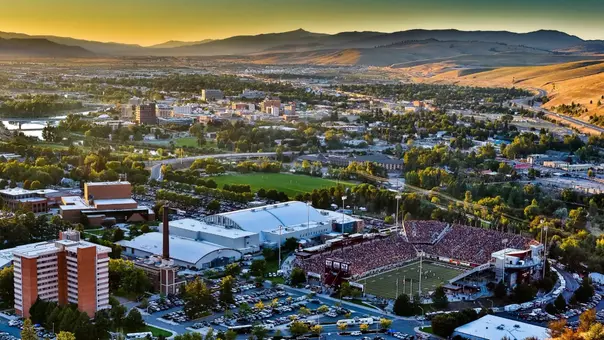
How to Beat Montana: Just about everyone finds a hole in the Montana pass defense. The Grizzlies have faced some of the best quarterbacks in the nation, but ranking at the bottom of I-AA with more than 300 yards per game allowed indicates Montana can be beaten through the air. The Grizzlies averaged around three yards per rush in their two losses. Ochs is talented and can beat you with his arm, but better to take the chances with a one-dimensional offense by shutting down the Grizzlies' backs. Montana was 2-2 on the road, so getting the Grizzlies away from Washington-Grizzly Stadium (8-0) wouldn't hurt.
NEW HAMPSHIRE (10-2, 6-2 Atlantic 10)
How They Got Here: defeated Georgia Southern, 27-23 Quarterfinal Round: at Montana I-AA Playoff Appearances: 3rd ('91, '94, '04) I-AA Playoff Record: 1-2 Head Coach: Sean McConnell, 33-34, six seasons
New Hampshire summary: Ricky Santos was I-AA's biggest story through the first half of the season, and he didn't let down in the second half. The redshirt- freshman had an amazing season with 29 touchdown passes against just seven interceptions. Santos' favorite target is David Ball, who caught 84 balls for 1488 yards and 17 touchdowns. Ball, however, was injured against Georgia Southern and his status for the rest of the postseason is unknown. John McCoy and R.J. Harvey split duties in the backfield. Aaron Thomas and Corey Graham lead the defense, along with George Peterson. Colin McCormick is 12-18 on field goals, but nailed just one kick longer than 40 yards.
How to Beat New Hampshire: For as productive as New Hampshire's passing game is, one lockdown corner could cause Santos and company some problems. Stopping Ball is the key to slowing down the New Hampshire attack. Ball has more than the half of the yardage and touchdowns for UNH's wide receivers, and the second highest yardage total belongs to David Bailey with 1400 less yards than the star. If an opponent can slow Ball, Santos will need to look for new targets or rely more on an average running game. Of course, Ball missed nearly the entire game against Georgia Southern and Santos and company found a way to win with defense and the running game. If Ball is out again, more attention can go to that rushing attack and the trickery of the New Hampshire attack. New Hampshire surrendered 270 yards a game through the air, but the Wildcats were beaten on the ground by Massachusetts. Establish the rushing game to control the ball and keep Santos and company off the field.
SAM HOUSTON STATE (10-2, 4-1 Southland)
How They Got Here: defeated Western Kentucky, 54-24. Quarterfinal Round: at Eastern Washington I-AA Playoff Appearances: 4th ('86, '91, '01, '04) I-AA Playoff Record: 2-3 Head Coach: Ron Randleman, 131-123-1, 23 seasons
Sam Houston State summary: The dynamic offense revolves around Dustin Long and the passing attack. Long has been as good, or even better, than advertised in his first season with the Bearkats after transferring from Texas A & M. He has a great crew of receivers to throw to, as Jarrod Fuller and Jason Mathenia receive a bulk of the work. Paul Donaldson, Markus Mikulec and Mark Hughes lead the defensive effort. Lance Garner is 13-18 on field goal attempts.
How to Beat Sam Houston State: The Bearkats average nearly 350 yards per game and score almost 40 points per contest. No defense is going to shut down Long for an entire game, but Long's 14 interceptions indicate a team can force him to make some mistakes. Long had four interceptions in the loss to Southwest Missouri State and two against Northwestern State. Another way to beat Long and the SHSU offense is to keep the ball out of their hands. Northwestern State ran all over the Bearkats, and Sam Houston State allows 167 yards per game on the ground. Winning the time of possession and turnover battles will go a long way toward earning a victory against Sam Houston State.
Sure, some loyalists from Montana, Furman and Delaware probably believed their team would prevail as the I-AA champion. Now that the favorites of most of the non-partisans are gone, those beliefs are stronger than ever.
The exit of the two most dominant teams of the 2004 season, Southern Illinois and Georgia Southern, is the prevailing story after an exciting first round of the I-AA playoffs. But the losses by both teams, though surprising, were certainly not shocking.
The Salukis and Eagles both ran all over opponents to easy wins all year. But both only faced one close, down to the wire finish, and lost that game. They didn't have the experience of their opponent in winning games in the fourth quarter. Southern Illinois and Georgia Southern both played plenty of weak competition in conference play, and drew extremely dangerous opponents in Eastern Washington and New Hampshire. The two "sleepers" of the tournament proved they were no Rip Van Winkles.
Southern Illinois didn't face a passing game like Eastern Washington's all season, and it showed. The Salukis gave up 437 yards passing to Erik Meyer and the Eagles, and Meyer hit Eric Kimble with a 45-yard strike with 1:49 to play for the gamewinning score in a 35-31 win. The Salukis marched down to the EWU 20 yard line in the final seconds, but could not punch the ball in the endzone.
Georgia Southern looked uncomfortable in a tight game against New Hampshire. The Eagles rolled early, jumping out to a 14-0 lead, but New Hampshire stuck around and the Wildcats controlled play in the second half. New Hampshire took its first lead of the day on a 52-yard run by R.J. Harvey with 13:15 to play in the game, and Georgia Southern hit the panic button in the fourth quarter. The Eagles put the ball on the ground, called strange passing plays when the running game was working, and never made the big play to keeps the drive going.
The wins for Eastern Washington and New Hampshire highlighted great days for the Big Sky and the Atlantic 10. The Eagles produced the day's biggest upset, but conference mate Montana had the most overwhelming performance. The Grizzlies had their way with Northwestern State's No. 1 ranked defense. Craig Ochs had another strong day at quarterback, and Lex Hilliard ran for four scores and more than 10 yards per carry in the 56-7 rout. A path to the championship that could have included trips to Georgia Southern and Southern Illinois now probably stays right in Missoula for the Grizzlies, and the likely home edge has to make Montana a slight favorite in the top half of the bracket.
The Big Sky proved it's not in a "down" year, while the Atlantic 10 showed once again it is far and away the best conference in I-AA. All four teams advanced to the quarterfinals, as James Madison, William & Mary and Delaware gutted out first round triumphs. At least one of the quartet will advance as William & Mary takes on Delaware, and with the experience each of these teams has in big games it wouldn't be a shock to see a trio of A-10 teams as part of the final quartet of playoff participants.
Four other leagues had respectable, though not great, days. The Southland teams split, as Sam Houston State's 54-24 thrashing of Western Kentucky made up for the big loss by Northwestern State. Furman's 49-7 thumping of Jacksonville State saved the Southern Conference from an 0-2 day. Despite losses, Hampton had to leave the MEAC feeling good and Lehigh and Lafayette showed the Patriot League belonged with close games against A-10 teams.
The feeling can't be as good in the Gateway and the Ohio Valley Conference. Just a year ago, the Gateway sent four teams to the postseason and none advanced to the semifinals. This time around, the No. 1 team in the nation lost at home and the No. 3 team, Western Kentucky, was throttled on the road. The losses end a bad year for the conference, where five teams struggled all season and another, Northern Iowa, lost its big non-conference games. For Jacksonville State and the OVC, it was another playoff disaster leaving a bad taste in the mouths. The Gamecocks ran all over conference opponents during the season. Now, one has to wonder the quality of the league after Jacksonville State was blown out for the second season in a row.
Suddenly, the losses by seeds in the top half of the bracket make the tournament field a lot more balanced. If anything, the bottom half may now have more power with two seeded teams and defending national champion Delaware still in the mix. With the pre-tournament picks of most prognosticators gone, the only thing for sure is the field is truly WIDE open for the eight contenders. Who's your champion now?
Below is a capsule summary of each team in the field, with historical information, personnel evaluations, and a formula for defeating each team included.
#2 FURMAN (10-2, 6-1 Southern) How They Got Here: defeated Jacksonville State, 49-7. Quarterfinal Round: James Madison I-AA Playoff Appearances: 13th ('82, '83, '85, '86, '88, '89, '90, '96, '99, '00, '01, '02, '04) I-AA Playoff Record: 15-11. Head Coach: Bobby Lamb, 24-11, third year
Furman summary: Furman brings one of the most balanced attacks in the country. Running backs Cedric Gipson and Brandon Mays are a formidable duo that helped the Paladins to 222 rushing yards per game. Florida transfer Ingle Martin can make almost every throw and beat you with his legs as well. Isaac West and Brian Bratton are Martin's favorite targets and will keep defenses honest if they try to attack the running game. The Furman defense has dealt with injury problems all season, but is healthier now. Linebacker Mike Killian has been out since early in the season but returned against Jacksonville State. William Freeman is also back in action, and Cam Newton made his presence felt at safety when he returned from injury against Georgia Southern. Cedrick Ritter and Roy Ravenell have been mainstays at linebacker and defensive end. Kicker Scott Beckler has hit 5-6 kicks from beyond 40 yards but missed five of seven from 30-39 yards out.
How to Beat Furman: Furman did as good a job as anyone against Georgia Southern's running game, but the Paladins' defense has been beaten through the air. Furman gave up big yardage in the passing game in both of its losses, surrendering 380 yards to Pittsburgh and 413 yards to Appalachian State. Running against a healthy Furman team will prove especially challenging, so a team with a star quarterback and strong group of receivers presents the best matchup. Appalachian State burnt Furman with short, intermediate passes. Put pressure on Martin. The quarterback has not thrown an interception in the past five games, but threw nine picks in the first six contests. Also, keep Martin in the pocket and don't let him beat you with his scrambling ability. There isn't one player to shut down in the running game, but there isn't a big threat either. Holding the Paladins to two and three-yard pickups on first down will be helpful.
#3 WILLIAM & MARY (10-2, 6-1 Atlantic 10)
How They Got Here: defeated Hampton, 42-35 Quarterfinal Round: Delaware I-AA Playoff Appearances: 7 ('86, '89, '90, '93, '96, '01, '04) I-AA Playoff Record: 3-6 Head Coach: Jimmie Laycock, 169-112-2, 25th season
William & Mary summary: Lang Campbell is the engine that makes the Tribe offense go. Campbell threw three picks against Hampton but has still been spectacular down the stretch this season. Campbell is also productive running the ball. Wide receiver Dominique Thompson possess gamebreaking speed and averaged 21. 6 yards per reception in the regular season. Adam O'Connor paces the Tribe defense on the line, with James Miller leading the way in the secondary. Greg Kuehn already won one game on the final play with a 46-yard field goal, but had his problems from more than 40 yards out.
How to Beat William & Mary: Run the ball and control the clock. The Tribe defense allows 155 yards per contest on the ground, and in the loss to Delaware the Blue Hens' running backs and O-line wore down the Tribe defense at the end. William & Mary isn't exactly a powerhouse against the pass, but the fewer attempts given to Campbell and the offense the better. Using the run could set up a big play in the passing game. The best bet against the Tribe offense is to force third-and-long by stopping the mediocre running game. Force the Tribe to go to the air and play a nickel or dime package. Campbell doesn't make mistakes, but at least get some pressure to make him hurry throws.
DELAWARE (9-3, 7-1 Atlantic 10)
How They Got Here: defeated Lafayette, 28-14 Quarterfinal Round: at William & Mary I-AA Playoff Appearances: 13th ('81, '82, '86, '88, '91, '92, '93, '95, '96, '97, '00, '03, '04). I-AA Playoff Record: 16-11 Head Coach: K.C. Keeler, 30-10, third season
Delaware summary: Delaware runs the spread offense, and Sonny Riccio has two solid targets to throw to in Justin Long and David Boler. The Blue Hens searched for a consistent running threat all season, and may have finally found their man with Omar Cuff. Cuff has been solid in the month of November after taking over as the feature back. Niquan Lee is a bruising back that can do some damage near the goal line. Tom Parks anchors the Delaware defensive line, with Mondoe Davis leading the way at linebacker. Sidney Haugabrook is often thrown away from at corner, but is a threat as a kick and punt return man. Brad Shushman has hit 4-6 kicks from 40 yards or more.
How to Beat Delaware: Riccio is hot and cold. He can be excellent at times and erratic at others. Do everything possible to get some pressure on the quarterback and make him add to his total of 11 interceptions. Blitzing and sending different looks could work, and the Blue Hens' running attack probably won't burn the blitz. Only Navy ran effectively on the Delaware defense, so don't expect a ton of yards there. Crossing routes and anything over the middle has worked against the Blue Hens secondary. Delaware has also given up some big plays, so don't be afraid to look deep a few times.
EASTERN WASHINGTON (9-3, 6-1 Big Sky)
How They Got Here: defeated Southern Illinois, 35-31 Quarterfinal Round: Sam Houston State I-AA Playoff Appearances: 4th ('85, '92, '97, '04) I-AA Playoff Record: 4-3 Head Coach: Paul Wulff, 34-22, six seasons
Eastern Washington summary: The offense will go as far as Erik Meyer and Eric Kimble can take it. Meyer got hot down the stretch with nine touchdown passes in the final two games against Cal Poly and Montana State, and kept the strong play going against Southern Illinois. Kimble emerged as a top receiver and serves as a duel threat as a punt returner. Darius Washington leads a trio of running backs to take the heat off the passing game. Brandon Keeler and Joey Cwik lead the defensive effort. Tom Finnerty is the leading sacker, while Isaiah Trufant and Ryan Phillips are tough to pass on in the secondary. Sheldon Weddle and Skyler Allen have combined to try just one field goal over 40 yards.
How to Beat Eastern Washington: Eastern Washington opened the season 0-2 after facing strong rushing attacks in Nicholls State and Air Force. Montana ran for 157 yards against the Eagles, and Montana State went for 251. Running the ball not only works against the Eagles' defense, but it keeps Meyer and the offense off the field. The Eagles' offense averages 38 points and nearly 470 yards per game, so if the conditions are clear don't expect to completely shut them down. Throw some different looks to disrupt Meyer's rhythm, and make the Eagles' offense one-dimensional by shutting down the running game at the line.
JAMES MADISON (10-2, 7-1 Atlantic 10)
How They Got Here: defeated Lehigh, 14-13 Quarterfinal Round: at Furman I-AA Playoff Appearances: 6th ('87, '91, '94, '95, '99, '04) I-AA Playoff Record: 3-5 Head Coach: Mickey Matthews, 37-33, six seasons
James Madison summary: If the running game is involved, the Dukes are happy. James Madison is a run-oriented offense, even though two of the top backs have missed time this season. Raymond Hines has been healthy all season, and if Alvin Banks is near full-strength it would be a big boost. Justin Rascati is an effective runner, but also has decent numbers through the air. Freshman Tony LeZotte has emerged at safety for a James Madison run defense that ranks in the top ten nationally. The Dukes have four other players with at least 50 tackles, and Trey Townsend leads the team with five interceptions. Placekicker David Rabil and punter Nick Englehart form a less than imposing kicking game.
How to Beat James Madison: On defense, key in on the James Madison running game. Stack the line, put eight in the box, do whatever is necessary to force the Dukes to pass more often. It's not that Rascati can't succeed by passing, but James Madison likes to control the tempo of the game and control the clock with the rushing attack. Force the receivers to make plays to beat you, and not just grind it out in the rushing attack. The James Madison defense is strong against the run and the pass. Some trickery could be in order, but just passing on first and second down might be a good idea. James Madison has a great pass rush in addition to the strong run defense, and falling into third and long situations by continually getting stuffed in the run game could be a recipe for disaster.
MONTANA (10-2, 6-1 Big Sky)
How They Got Here: defeated Northwestern State, 56-7 Quarterfinal Round: New Hampshire I-AA Playoff Appearances: 15th ('82, '88, '89, '93, '94, '95, '96, '97, '98, '99, '00, '01, '02, '03, '04). I-AA Playoff Record: 20-12. Head Coach: Bobby Hauck, 19-6, second season
Montana summary: The Grizzlies have developed a strong balance between the run and pass in the latter stages of the season. Quarterback Craig Ochs has played efficient games all season and has quality receivers in Jefferson Heidelberger and Jon Talmage, with Tate Hancock and Levander Segars also over the 40 catch mark. Running backs Justin Green and Lex Hilliard (split duties, with Hilliard serving as more of a home run threat and earning more carries late in the season. On defense, the Grizzlies have picked off 18 passes. Kevin Edwards leads the way in the secondary. Shane McIntyre is a load on the defensive line, and while the defense lacks star power it is deep. Dan Carpenter has a strong leg but has struggled a bit from in close, and Tyson Johnson has done a solid job punting the ball.
How to Beat Montana: Just about everyone finds a hole in the Montana pass defense. The Grizzlies have faced some of the best quarterbacks in the nation, but ranking at the bottom of I-AA with more than 300 yards per game allowed indicates Montana can be beaten through the air. The Grizzlies averaged around three yards per rush in their two losses. Ochs is talented and can beat you with his arm, but better to take the chances with a one-dimensional offense by shutting down the Grizzlies' backs. Montana was 2-2 on the road, so getting the Grizzlies away from Washington-Grizzly Stadium (8-0) wouldn't hurt.
NEW HAMPSHIRE (10-2, 6-2 Atlantic 10)
How They Got Here: defeated Georgia Southern, 27-23 Quarterfinal Round: at Montana I-AA Playoff Appearances: 3rd ('91, '94, '04) I-AA Playoff Record: 1-2 Head Coach: Sean McConnell, 33-34, six seasons
New Hampshire summary: Ricky Santos was I-AA's biggest story through the first half of the season, and he didn't let down in the second half. The redshirt- freshman had an amazing season with 29 touchdown passes against just seven interceptions. Santos' favorite target is David Ball, who caught 84 balls for 1488 yards and 17 touchdowns. Ball, however, was injured against Georgia Southern and his status for the rest of the postseason is unknown. John McCoy and R.J. Harvey split duties in the backfield. Aaron Thomas and Corey Graham lead the defense, along with George Peterson. Colin McCormick is 12-18 on field goals, but nailed just one kick longer than 40 yards.
How to Beat New Hampshire: For as productive as New Hampshire's passing game is, one lockdown corner could cause Santos and company some problems. Stopping Ball is the key to slowing down the New Hampshire attack. Ball has more than the half of the yardage and touchdowns for UNH's wide receivers, and the second highest yardage total belongs to David Bailey with 1400 less yards than the star. If an opponent can slow Ball, Santos will need to look for new targets or rely more on an average running game. Of course, Ball missed nearly the entire game against Georgia Southern and Santos and company found a way to win with defense and the running game. If Ball is out again, more attention can go to that rushing attack and the trickery of the New Hampshire attack. New Hampshire surrendered 270 yards a game through the air, but the Wildcats were beaten on the ground by Massachusetts. Establish the rushing game to control the ball and keep Santos and company off the field.
SAM HOUSTON STATE (10-2, 4-1 Southland)
How They Got Here: defeated Western Kentucky, 54-24. Quarterfinal Round: at Eastern Washington I-AA Playoff Appearances: 4th ('86, '91, '01, '04) I-AA Playoff Record: 2-3 Head Coach: Ron Randleman, 131-123-1, 23 seasons
Sam Houston State summary: The dynamic offense revolves around Dustin Long and the passing attack. Long has been as good, or even better, than advertised in his first season with the Bearkats after transferring from Texas A & M. He has a great crew of receivers to throw to, as Jarrod Fuller and Jason Mathenia receive a bulk of the work. Paul Donaldson, Markus Mikulec and Mark Hughes lead the defensive effort. Lance Garner is 13-18 on field goal attempts.
How to Beat Sam Houston State: The Bearkats average nearly 350 yards per game and score almost 40 points per contest. No defense is going to shut down Long for an entire game, but Long's 14 interceptions indicate a team can force him to make some mistakes. Long had four interceptions in the loss to Southwest Missouri State and two against Northwestern State. Another way to beat Long and the SHSU offense is to keep the ball out of their hands. Northwestern State ran all over the Bearkats, and Sam Houston State allows 167 yards per game on the ground. Winning the time of possession and turnover battles will go a long way toward earning a victory against Sam Houston State.
Griz Football Spring Game Highlights - 4/10/26
Friday, May 01
Griz Football Spring Practice - 3/2/26
Monday, March 30
Griz Football Spring Preview Press Conference
Monday, March 30
Griz Football Winter Condo - 2/20/26
Monday, March 30