Origin Stories :: Maygen McGrath
1/29/2019 6:25:00 PM | Softball
How do you measure a father's devotion to his daughter? Or his willingness to help make her dreams come true?
For Keith McGrath that love and commitment can begin to be quantified by the mile markers that flash by on I-5, the interstate that connects Salem, Oregon, and Huntington Beach, California.
It's 1,000 miles between the two, 16 hours' worth of driving, one way, the family Volkswagen only needing to leave I-5 should McGrath and his passenger have need to fuel up on more Taco Bell.
It was his daughter Maygen who rode shotgun all those miles. The two probably made 20 round trips between Salem and Huntington Beach over the course of three or four years, Keith figures.
Salem is their hometown. Huntington Beach is the site of the most important recruiting tournaments held on the West Coast. And Maygen McGrath wanted to play college softball.
So off they went, loading up the car on Thursdays after work and driving through the night, powered by a supply of 5-hour Energy, arriving in Southern California in time on Friday so Maygen could join her Northwest Bullets teammates for another weekend of games.
They might nap in a random Walmart parking lot. And they for sure might stop at a gas station, so Maygen could change into uniform and be ready to go once they arrived at the softball complex.
So she could play on a travel team loaded with Division I prospects. So she could be given every chance to reach her potential. So she could be seen.
How do you measure a father's devotion to his daughter? Forty-thousand miles over the years, one roadside marker at a time, is a good starting point.
"I never looked at it as a sacrifice," says Keith. "It's just one of those things. I always told her, wherever she wanted to go, whatever she wanted to do, we'd figure it out and make it happen.
"As long as she had an interest in it, whatever it was, I was on board."
It's why she's here, why Maygen McGrath is playing softball at Montana and likely to be in the starting lineup a week from Friday, when the Grizzlies open their season against Santa Clara in Davis, California.
And Keith McGrath will be there, supporting his daughter, the first player in Griz softball history to come from the state of Oregon.
"If it wasn't for my dad, I wouldn't be here," McGrath says. "I don't even know if I'd be playing college softball.
"To be able to watch his daughters, to watch them follow their dreams and help them get to where they want to be, has always been the biggest thing for him."
It's an unusual name, Maygen is. It wasn't on the short list that Keith and Shelby took into the delivery room when their second of two daughters arrived.
Jaycie came first, three years earlier. They were thinking April, or a name like it, would be just about right for their second.
"It was just one of those things when she was born. She just looked like a Maygen to us," Keith says. "We had a few other names, but nothing really fit until she was born, and it just came."
Type that name into a smartphone these days, as a greeting in a text to set up an interview for the Origin Stories series, and the device defaults to Mayhem.
But it's always been like that: Maygen McGrath, disrupter. Of the norm. Of what's been expected of someone with her size and with her athleticism.
She must play volleyball, right? Or basketball? She tried the former as an eighth grader. Liked it well enough but not enough to continue. The latter? Played it from the age of four up until the eighth grade, when her knees couldn't take the pounding anymore.
That's what can happen when you grow to be six feet and become tall enough that you're one of the few Grizzlies who can look Tristin Achenbach in the eye. Your shoulders don't care. Or your hands or much else. But those knees can be tricky. Everything has to sync up just right. And it didn't.
So softball it was. And even then the questions would come her way: You must be a pitcher, right? No? Then you must play first base.
She did pitch. For years. But she gave it up as a sophomore at South Salem High. It just wasn't the right fit, even though she looked the part and had a talent for it.
"I wasn't a big fan of the pressure, so I lost interest in it," she says. "I just felt better and more comfortable playing defense and hitting than I did pitching."
But ... shortstop? Really? Even her coaches with the Northwest Bullets, whose job it is to get their players into college programs, tried to get her to change positions.
A six-footer at shortstop just doesn't pass the eyeball test. And what is recruiting if not college coaches making snap judgments in the limited opportunities they have to see thousands of girls who want to be noticed?
"I never saw what they saw," says Keith. "I always believed she could be a shortstop. She had the range and the talent, so I always encouraged her."
Montana's coaches were a bit wary, at least in theory. "Some people never grow into their size," says Griz coach Melanie Meuchel.
Then they saw her play. The kid was a natural. Even if it didn't look natural or normal. Line drives just out of the shortstop's reach? Not with McGrath. That chopper up the middle, the one that eludes the pitcher? It wasn't a sure thing to make it to the grass, not with McGrath eating up ground.
"Your shortstop is, in general, one of your most athletic kids," says Meuchel, "because of the range they have to show and the ability to be a little bit out of position and still have the strength to get a throw across.
"Maygen can defend it well. She has both strength and athleticism."
Having an older sister helped. As McGrath was growing up, she was always playing up, on teams coached by her dad and uncle. She needed to be better than her age would suggest, just to keep up, and if she was tall for her age, it was hardly noticeable, not surrounded by girls two and three years older.
But the true origin of this story? No, not Keith, then living in Santa Rosa, California, visiting extended family in Salem as an 18-year-old and having his car break down, leaving him unable to return home, only to meet Shelby and never again wanting to.
Instead, start at the family home the first three years of McGrath's life, a Field of Dreams story come to life. There, across the street, was a tiny church softball field. Hannibal Lecter had it right: We begin by coveting what we see every day.
"When we lived there, we'd go over there every day with our dad," she says. "That's where it all started and grew from there."
Keith never played organized baseball or fast-pitch softball, so he learned how to coach his daughters' teams by going to clinics and camps with his girls. He'd see and learn, then implement and coach.
At least until Maygen was a freshman, when she joined the All-American Mizuno team out of Redding, Calif., even though the Northwest Bullets were based just up the road from Salem, in Portland.
It was the Duke basketball of softball in the Pacific Northwest. Some love it, some hate it but no one can deny its ability to move players closer to their dreams.
"It was a team I always said I'd never play for. It was just one of those teams," she says. "But then I saw every one of their 18s were committed to Division I. That was a big eye-opener."
So she joined. And soon would make a recruiting visit to Seattle University. And there was interest from schools in Pennsylvania and Texas.
Then one day an email arrived from former Griz coach Jamie Pinkerton. He was interested and wanted McGrath to come to one of Montana's camps.
"I remember reading the email to my dad in our truck going to practice," she says. "I kept telling him, How cool would it be if I got to play for Montana? He was excited too."
There was a little problem, however. Her achy knee had been an issue for years. When she began high school, the pain ratcheted up its intensity. They tried physical therapy. They tried cortisone shots. Finally: surgery.
They cleaned out the buildup of calcium deposits. They smoothed out the roughness under her kneecap until it slid smoothly again.
But the surgery took place in November of her junior year, after the fall tournament season with the Bullets had concluded. And Pinkerton wanted McGrath in Missoula in January for a camp.
Her future with the Grizzlies might just be riding on a performance that lasted a weekend, four years based on a few hours, a few drills, a few times swinging a bat. They'd seen her play with the Bullets. But this was the real thing, a make-or-break moment. And she wasn't exactly camp-ready.
"It was my first time with a ball and a bat in my hand since the surgery. It was nerve-racking, because it felt like you're either going to do it now or you're never going to do it," McGrath says.
Yeah: she did it, and she arrived in Missoula last fall at a time of transition for the Grizzlies. Gone were 11 seniors from last year's team, many of whom had held down their positions for the first four years of the program.
Montana was going through a transformation, its biggest since the start of the program, when those players were freshmen in 2015.
Of course there were players and then there was the player: Delene Colburn. Say the words Griz Softball to most people, and it's Colburn's face (and statistics and greatness and general joie de vivre) that comes immediately to mind.
That's the kind of lasting impression she made on the program. Good luck to the person who would attempt to fill her spot at shortstop, someone who would be judged against the standard that Colburn set the previous four years.
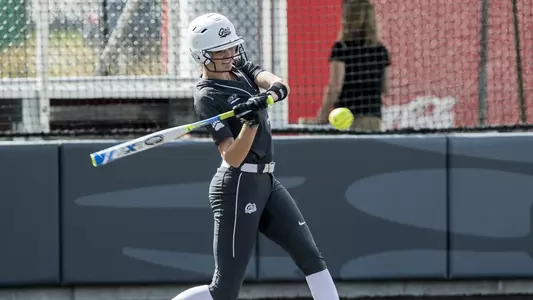
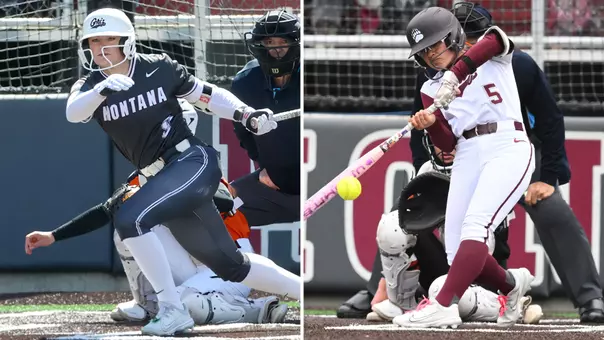
When Montana opened its fall season, it was McGrath who raced out to shortstop when the Grizzlies opened their exhibition season against MSU Billings. And in the bottom of the first, up strode McGrath to the plate, batting cleanup,
No pressure there.
"It's asking a lot of a first-year kid, but she can do it. There is such a big upside for Maygen, and she's already really good," says Meuchel. "That's one thing I like about the group (of newcomers). They can step in and do it. They've had to grow in a hurry, and I think they have."
While it wasn't her official first at-bat, McGrath had an RBI groundout in her first plate appearance in a Montana uniform.
She finished the doubleheader against MSU Billings that day 3 for 8, with three RBIs and a pair of runs scored. In the third game of the exhibition season, McGrath went yard, putting one over the fence in center, Colburn-style.
She batted .412 in six fall games, tying for second with seven runs scored and for third in RBIs with six. She also drew four walks, something Colburn was so adept at.
And there we go again, lumping McGrath with Colburn when there is no real reason to do so.
"At first it was a lot of pressure. Now it's a matter of relaxing and playing like I know how to play, rather than feeling like I have to do what she did," McGrath says.
"Growing up I had a lot of people telling me I couldn't play shortstop in college. That accomplishment is a lot more important to me than being nervous about filling someone else's position."
She wants to be the first Maygen McGrath, not the next Delene Colburn. But there are some things Colburn left behind that McGrath would like to embrace and carry on.
"People still talk about how amazing she was and how fun she was to be around," says McGrath. "I want people to feel that way about me. I hope I can have the same impact on the team that she did."
She'll get the chance, thanks to all those miles and a father whose devotion knew no bounds.
Most of the players on the Bullets flew to Huntington Beach for the weekend tournaments. The McGraths could have joined them. But there is something different about being in a car, something more intimate about the experiences that are shared.
The relationship between father and daughter? It was earned but every mile was worth it.
"Having that quality time with her, that's time you don't ever get back," says Keith. "We spent a lot of times together in the car, but they were good times. They created a bond between us."
For Keith McGrath that love and commitment can begin to be quantified by the mile markers that flash by on I-5, the interstate that connects Salem, Oregon, and Huntington Beach, California.
It's 1,000 miles between the two, 16 hours' worth of driving, one way, the family Volkswagen only needing to leave I-5 should McGrath and his passenger have need to fuel up on more Taco Bell.
It was his daughter Maygen who rode shotgun all those miles. The two probably made 20 round trips between Salem and Huntington Beach over the course of three or four years, Keith figures.
Salem is their hometown. Huntington Beach is the site of the most important recruiting tournaments held on the West Coast. And Maygen McGrath wanted to play college softball.
So off they went, loading up the car on Thursdays after work and driving through the night, powered by a supply of 5-hour Energy, arriving in Southern California in time on Friday so Maygen could join her Northwest Bullets teammates for another weekend of games.
They might nap in a random Walmart parking lot. And they for sure might stop at a gas station, so Maygen could change into uniform and be ready to go once they arrived at the softball complex.
So she could play on a travel team loaded with Division I prospects. So she could be given every chance to reach her potential. So she could be seen.
How do you measure a father's devotion to his daughter? Forty-thousand miles over the years, one roadside marker at a time, is a good starting point.
"I never looked at it as a sacrifice," says Keith. "It's just one of those things. I always told her, wherever she wanted to go, whatever she wanted to do, we'd figure it out and make it happen.
"As long as she had an interest in it, whatever it was, I was on board."
It's why she's here, why Maygen McGrath is playing softball at Montana and likely to be in the starting lineup a week from Friday, when the Grizzlies open their season against Santa Clara in Davis, California.
And Keith McGrath will be there, supporting his daughter, the first player in Griz softball history to come from the state of Oregon.
"If it wasn't for my dad, I wouldn't be here," McGrath says. "I don't even know if I'd be playing college softball.
"To be able to watch his daughters, to watch them follow their dreams and help them get to where they want to be, has always been the biggest thing for him."
It's an unusual name, Maygen is. It wasn't on the short list that Keith and Shelby took into the delivery room when their second of two daughters arrived.
Jaycie came first, three years earlier. They were thinking April, or a name like it, would be just about right for their second.
"It was just one of those things when she was born. She just looked like a Maygen to us," Keith says. "We had a few other names, but nothing really fit until she was born, and it just came."
Type that name into a smartphone these days, as a greeting in a text to set up an interview for the Origin Stories series, and the device defaults to Mayhem.
But it's always been like that: Maygen McGrath, disrupter. Of the norm. Of what's been expected of someone with her size and with her athleticism.
She must play volleyball, right? Or basketball? She tried the former as an eighth grader. Liked it well enough but not enough to continue. The latter? Played it from the age of four up until the eighth grade, when her knees couldn't take the pounding anymore.
That's what can happen when you grow to be six feet and become tall enough that you're one of the few Grizzlies who can look Tristin Achenbach in the eye. Your shoulders don't care. Or your hands or much else. But those knees can be tricky. Everything has to sync up just right. And it didn't.
So softball it was. And even then the questions would come her way: You must be a pitcher, right? No? Then you must play first base.
She did pitch. For years. But she gave it up as a sophomore at South Salem High. It just wasn't the right fit, even though she looked the part and had a talent for it.
"I wasn't a big fan of the pressure, so I lost interest in it," she says. "I just felt better and more comfortable playing defense and hitting than I did pitching."
But ... shortstop? Really? Even her coaches with the Northwest Bullets, whose job it is to get their players into college programs, tried to get her to change positions.
A six-footer at shortstop just doesn't pass the eyeball test. And what is recruiting if not college coaches making snap judgments in the limited opportunities they have to see thousands of girls who want to be noticed?
"I never saw what they saw," says Keith. "I always believed she could be a shortstop. She had the range and the talent, so I always encouraged her."
Montana's coaches were a bit wary, at least in theory. "Some people never grow into their size," says Griz coach Melanie Meuchel.
Then they saw her play. The kid was a natural. Even if it didn't look natural or normal. Line drives just out of the shortstop's reach? Not with McGrath. That chopper up the middle, the one that eludes the pitcher? It wasn't a sure thing to make it to the grass, not with McGrath eating up ground.
"Your shortstop is, in general, one of your most athletic kids," says Meuchel, "because of the range they have to show and the ability to be a little bit out of position and still have the strength to get a throw across.
"Maygen can defend it well. She has both strength and athleticism."
Having an older sister helped. As McGrath was growing up, she was always playing up, on teams coached by her dad and uncle. She needed to be better than her age would suggest, just to keep up, and if she was tall for her age, it was hardly noticeable, not surrounded by girls two and three years older.
But the true origin of this story? No, not Keith, then living in Santa Rosa, California, visiting extended family in Salem as an 18-year-old and having his car break down, leaving him unable to return home, only to meet Shelby and never again wanting to.
Instead, start at the family home the first three years of McGrath's life, a Field of Dreams story come to life. There, across the street, was a tiny church softball field. Hannibal Lecter had it right: We begin by coveting what we see every day.
"When we lived there, we'd go over there every day with our dad," she says. "That's where it all started and grew from there."
Keith never played organized baseball or fast-pitch softball, so he learned how to coach his daughters' teams by going to clinics and camps with his girls. He'd see and learn, then implement and coach.
At least until Maygen was a freshman, when she joined the All-American Mizuno team out of Redding, Calif., even though the Northwest Bullets were based just up the road from Salem, in Portland.
It was the Duke basketball of softball in the Pacific Northwest. Some love it, some hate it but no one can deny its ability to move players closer to their dreams.
"It was a team I always said I'd never play for. It was just one of those teams," she says. "But then I saw every one of their 18s were committed to Division I. That was a big eye-opener."
So she joined. And soon would make a recruiting visit to Seattle University. And there was interest from schools in Pennsylvania and Texas.
Then one day an email arrived from former Griz coach Jamie Pinkerton. He was interested and wanted McGrath to come to one of Montana's camps.
"I remember reading the email to my dad in our truck going to practice," she says. "I kept telling him, How cool would it be if I got to play for Montana? He was excited too."
There was a little problem, however. Her achy knee had been an issue for years. When she began high school, the pain ratcheted up its intensity. They tried physical therapy. They tried cortisone shots. Finally: surgery.
They cleaned out the buildup of calcium deposits. They smoothed out the roughness under her kneecap until it slid smoothly again.
But the surgery took place in November of her junior year, after the fall tournament season with the Bullets had concluded. And Pinkerton wanted McGrath in Missoula in January for a camp.
Her future with the Grizzlies might just be riding on a performance that lasted a weekend, four years based on a few hours, a few drills, a few times swinging a bat. They'd seen her play with the Bullets. But this was the real thing, a make-or-break moment. And she wasn't exactly camp-ready.
"It was my first time with a ball and a bat in my hand since the surgery. It was nerve-racking, because it felt like you're either going to do it now or you're never going to do it," McGrath says.
Yeah: she did it, and she arrived in Missoula last fall at a time of transition for the Grizzlies. Gone were 11 seniors from last year's team, many of whom had held down their positions for the first four years of the program.
Montana was going through a transformation, its biggest since the start of the program, when those players were freshmen in 2015.
Of course there were players and then there was the player: Delene Colburn. Say the words Griz Softball to most people, and it's Colburn's face (and statistics and greatness and general joie de vivre) that comes immediately to mind.
That's the kind of lasting impression she made on the program. Good luck to the person who would attempt to fill her spot at shortstop, someone who would be judged against the standard that Colburn set the previous four years.
When Montana opened its fall season, it was McGrath who raced out to shortstop when the Grizzlies opened their exhibition season against MSU Billings. And in the bottom of the first, up strode McGrath to the plate, batting cleanup,
No pressure there.
"It's asking a lot of a first-year kid, but she can do it. There is such a big upside for Maygen, and she's already really good," says Meuchel. "That's one thing I like about the group (of newcomers). They can step in and do it. They've had to grow in a hurry, and I think they have."
While it wasn't her official first at-bat, McGrath had an RBI groundout in her first plate appearance in a Montana uniform.
She finished the doubleheader against MSU Billings that day 3 for 8, with three RBIs and a pair of runs scored. In the third game of the exhibition season, McGrath went yard, putting one over the fence in center, Colburn-style.
She batted .412 in six fall games, tying for second with seven runs scored and for third in RBIs with six. She also drew four walks, something Colburn was so adept at.
And there we go again, lumping McGrath with Colburn when there is no real reason to do so.
"At first it was a lot of pressure. Now it's a matter of relaxing and playing like I know how to play, rather than feeling like I have to do what she did," McGrath says.
"Growing up I had a lot of people telling me I couldn't play shortstop in college. That accomplishment is a lot more important to me than being nervous about filling someone else's position."
She wants to be the first Maygen McGrath, not the next Delene Colburn. But there are some things Colburn left behind that McGrath would like to embrace and carry on.
"People still talk about how amazing she was and how fun she was to be around," says McGrath. "I want people to feel that way about me. I hope I can have the same impact on the team that she did."
She'll get the chance, thanks to all those miles and a father whose devotion knew no bounds.
Most of the players on the Bullets flew to Huntington Beach for the weekend tournaments. The McGraths could have joined them. But there is something different about being in a car, something more intimate about the experiences that are shared.
The relationship between father and daughter? It was earned but every mile was worth it.
"Having that quality time with her, that's time you don't ever get back," says Keith. "We spent a lot of times together in the car, but they were good times. They created a bond between us."
Players Mentioned



Friday, June 19
Thursday, June 04
Friday, May 01
Friday, May 01