The Craig Hall Chronicles :: Quinn Peacock
7/23/2019 7:32:00 PM | Soccer
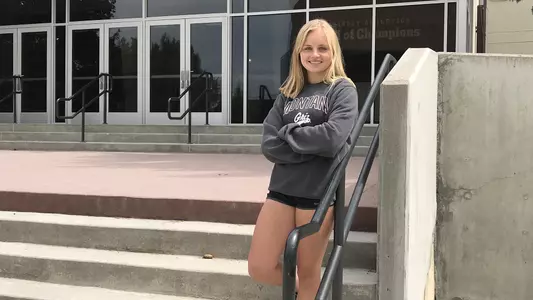
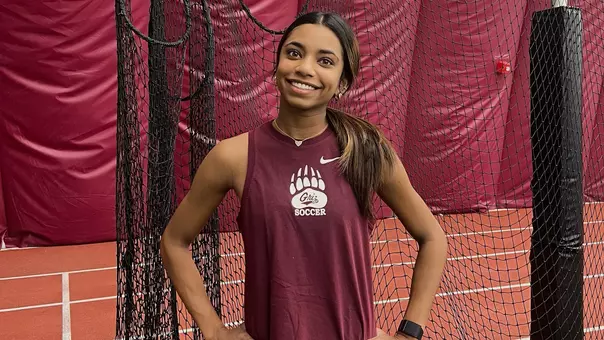
At 5-foot-2, Quinn Peacock has never been one to stand out. Throw in her history -- she was born, raised and learned her favorite sport in Montana, a soccer outpost when viewed through a regional lens, one that tends to focus on Southern California and Seattle -- and she becomes even easier to look past.
It's why college coaches wouldn't have paid her team, the Missoula Strikers U16 squad, much attention when Peacock and her teammates arrived in Boise three summers ago, ready to shock the world after surprisingly earning a spot at the US Youth Soccer Far West Regional.
It didn't take long for that excitement to run head on into the realities of youth soccer, of population bases, of weather and training opportunities. Over the course of three matches, the Strikers lost 10-0 to a team from California, 12-0 to a team from Colorado and finally 7-0 to another team from California.
The scoreboard numbers didn't lie, but at least one coach went away intrigued.
"The thing that stood out to me when I saw her play for the first time that summer at regionals was that if you had put Quinn on any of those other teams, she would have been just fine and could have played with those girls," says one former Division I coach.
"From the first day I saw her, I thought, that kid's different."
Therein resides the story of Quinn Peacock: yes, you can define her by her size, say she has no business trying to play soccer at the Division I level, set her in a box based on your preconceived ideas of what an athlete needs to look like when standing up against a measuring tape.
And she'll just go out and keep proving you and everyone else wrong. It's what she does best.
It's a mentality that was passed down from mother to daughter, not through teaching but through something that runs even deeper and more pure, something that can't be altered: blood.
You see, Jennifer Peacock is even shorter than her daughter. Not by much, mind you, so she faced the same challenges her offspring one day would when she took her own soccer game from Long Island to SUNY Geneseo and the Division III Knights of northwest New York back in the 90s.
What she had come to learn about the game was that the midfield, where she played, could be the great equalizer, a place of space and creativity, where deft footwork and speed could help neutralize some of the differences that came in size and strength.
"I was always undersized, but I never felt like I was at a disadvantage," she says. "I always played midfield, where you can kind of make up for lack of stature."
It's safe to say Quinn Peacock wouldn't be here, a freshman for the Grizzlies, without some of those genes that were passed down. And she wouldn't be here at all if it wasn't for soccer. After all, it was on the rec fields of Missoula that Erik and Jennifer Peacock met.
He arrived earlier, as a middle schooler, and became one of the first kids to sign up for a new opportunity in town, something called Missoula Strikers, a then somewhat crazy notion that kids might want to play a sport in more seasons than just those dictated by the school calendar.
Jennifer arrived later, lured by a post-graduation job at Yellowstone. She eventually would make her way to Missoula, then to those rec fields, joined on a coed team by her future husband.
"I'm fulfilling their legacy," says Quinn, who got soccer at home -- her dad always seemed to have the television tuned to Premier League games -- and on the road, raised as she was on a grassy sideline as her parents continued to play on.
So it was both nature and nurture that led Quinn Peacock to the sport. As for that drive, the one that shows itself both on the field and in the classroom, where she takes on all challenges as well (and most often wins)? That came naturally too, quite likely a response to her size, giving her a fighter's mentality.
She's taken what life has given her and made the most of it. She might be 5-foot-2, but she's no wispy 5-foot-2 distance runner, who might be tipped over in a strong wind. She's rock solid, body by sweat and Cross Fit, "jacked" in the description of her new coach, Chris Citowicki.
"My whole life I've loved the challenge of the next-step-up kind of thing," she says, of taking on the next obstacle placed in her way, the next level to reach. "My size might be a little bit in my way, but I don't see it like that. It's just a little bit extra to push myself."
Her parents never forced the sport on her, though no one was surprised when it became a love. Size and its possible limitations never made it to conversation at the dinner table either.
"I never felt like it was a disadvantage for me, so I never wanted to prep her for it being a disadvantage for her," says Jennifer. Lesson learned, despite never being taught, at least explicitly.
Ask Quinn about her mom as a soccer player and she says, "She had to rely on that grittiness of just toughing it out against people who are bigger than she was." And the picture becomes just a little more clear, of how this all came to be.
As it should with this story: Elementary school, the Sleeping Giant Soccer Classic in Helena, playing for the Missoula Strikers, her first memory of playing in a larger tournament.
The semifinals, the game-winning goal, "one of those that goes over everybody and you're not sure if it went in. And it went in," she says. Then the championship, a 7-0 loss, and the fire starts to flicker to life. "Even as a little kid, that hit pretty hard. I might have cried about it. I was pretty mad."
Opportunities would come her way, to join an ECNL team out of Idaho as a guest player, to go bigger, better, but Missoula was always the right fit. And she always believed she had the right coaches, from her first day with Strikers to two summers ago, when that now U17 team made a return to regionals.
Twelve months after losing three times and getting outscored 29-0, steps had been taken under a new coach. The opener, a 3-0 loss to a team from Santa Clara. Then a 6-2 defeat at the hands of a powerful Seattle team, led by future Washington Husky Summer Yates, a national youth team player.
Peacock and Yates battled for the duration, the former raising the level of her performance to match the moment.
"I don't want to flaunt myself, but I expect to rise to any challenge that is in front of me. If I'm playing against better people than I've ever played against, I should be at my best," says Peacock. "I always felt like I excelled in the games when I was playing against teams who were really, really strong."
It's an opportunity that never would have come her way had a certain vocal segment back home had its preference. After the mostly noncompetitive experience in 2016, people wanted to wave the white flag and give in, admit that Montana kids just can't match up.
Best to have some success locally, let everyone feel like a winner and call it a day. A line of thinking that was anathema to both the coach of that team and Peacock.
"I felt we owed it to the kids in the state to put them up against the best competition they could see so they could understand the level they needed to play at and aspire to get to," says the coach, who needed to point to nothing else but the steps taken by the same players from 2016 to '17.
"As a coach, our job is to educate our players and push them to always get better. By 'protecting' them, you don't help them."
How else would Peacock have received the confirmation that she could go up against a player like Yates and be just fine?
"My parents really wanted me to experience that level," says Peacock. "They had the same mentality that (the coach) had, that you need to see what the level you're trying to reach is. You can't reach something if you don't know what it is."
So, no, Peacock has no regrets about being raised a soccer player in Missoula instead of San Diego. Or someplace just south of Los Angeles, an area that has produced so many Grizzlies. Or Seattle. Bloom where you're planted, right?
"I'd never take back the experience I've had growing up in Missoula, soccer-wise especially," she says. "I don't know how we got so lucky to have such a large number of really good coaches.
"I never thought I'd be better off if I was in a different place. I would have been challenged more, but I don't think I'd know as much about the game. Everyone here is on the same page with what they're teaching you."
When it came time to think about college, it always came with a caveat. Quinn Peacock was going to go to a school where she could play soccer.
"She definitely drove the bus, that's for sure," says her mom. "That was a goal she wasn't going to put aside. She wasn't going to make a decision until she knew she would have an option for soccer. She was not going to give up that goal of hers."
The opportunity to do both, to get an education and play Division I soccer, was just across town from her home, thanks to her club coach, who had seen everything he needed to let him know Peacock could play college soccer at the highest level.
"I didn't worry about her size because of some unique characteristics she had. She is very, very quick. She is left-footed, which causes a lot of problems, and her ability to run at and beat people and serve balls is Division-I level," he said.
And that opinion is the one that mattered most, her ticket onto the team at Montana, until that was ripped out of Peacock's hand the day Montana's former coach lost his job. And Peacock her assured spot.
Passed over amid the reporting of a head coach being let go were all the attached strings that had been severed. Promises had been made and accepted. Major life decisions had been formulated. Colleges had been selected. Now what?
More than a few families, the Peacocks included, were left stranded. Would she still have a spot? Who was the new coach going to be? When was the search process going to end and someone be announced?
"We certainly didn't want Quinn left out to dry," says Jennifer. "It felt like we were swaying in the wind a little bit."
Finally, a new face of the program: Citowicki. But he was someone who had never heard the name Quinn Peacock. It was as if she had to start all over again, convince another coach to see past her size and appreciate everything else about her.
Did he know she'd been training for years with the boys, when the girls in the Strikers program just weren't challenging her enough?
Would he be able to appreciate the skills she'd picked up because of it, out of necessity, how she may not be able to run over or through a defender but could make them look silly with her control of the ball at her feet?
How she saw the game as a big chessboard and how she'd learned to move the pieces around just so, to create space and opportunities -- "endless options, really," she says -- not only for herself but for her teammates?
Citowicki did what he had to do. "Chris told us he was going to respect (the previous coach's) recruiting process but he had to put his own stamp on the team and make sure he was making good choices too," says Jennifer.
And there it was. The final challenge.
Citowicki would identify the on-field skills soon enough, notably at one of his first summer camps, but he couldn't commit until he sat across from Peacock in his office and asked the questions that needed to be answered.
He told her it would be not only a gamble on his end but hers as well, since he couldn't promise this would be a four-year opportunity. She would have to prove herself on a daily basis.
"They were pretty high-level questions for a teenager. Are these the challenges you want to take on? For her to look at me every single time and say, 'Yep, I can do that'? That's when the connection happened for me," says Citowicki.
"The more you know Quinn, the more you like her and the more you realize that internal drive is something a lot of people don't have. She's got the mentality to make something of it.
"There are some kids who make it to Division I and say, Yeah, I made it. Then there are others who are like, This is the goal. Now I have to thrive here. That's what Quinn wants, and it's exciting."
And so she arrived, from nearby, a few weeks ago, along with most of Montana's freshmen. Player-run practices are ongoing, strength and conditioning sessions are being devoured, bodies are being prepared for the grind ahead, a championship team seeking to repeat.
She is now the pride of Missoula, a tag not held by a Griz player since Stephanie Carl. She's playing for her new teammates and everyone in her hometown who helped her get this far. She's also playing for any other undersized kid with big dreams and a heart and drive to match.
"I just hope I can make an impact on the program going forward, after I'm gone," she says. "Leave behind a little bit of a legacy, maybe inspire someone to do what I did."
There are players -- pretty much all of them, really -- to cheer for each season. Then there are those to root for. It brings with it a greater degree of intensity, of buy-in, a bit more risk, to rise and fall as they do.
Quinn Peacock is someone to root for, not because of her stature or what she lacks but for what she's developed in order to succeed in spite of it. Turns out she does stand out after all.
It's why college coaches wouldn't have paid her team, the Missoula Strikers U16 squad, much attention when Peacock and her teammates arrived in Boise three summers ago, ready to shock the world after surprisingly earning a spot at the US Youth Soccer Far West Regional.
It didn't take long for that excitement to run head on into the realities of youth soccer, of population bases, of weather and training opportunities. Over the course of three matches, the Strikers lost 10-0 to a team from California, 12-0 to a team from Colorado and finally 7-0 to another team from California.
The scoreboard numbers didn't lie, but at least one coach went away intrigued.
"The thing that stood out to me when I saw her play for the first time that summer at regionals was that if you had put Quinn on any of those other teams, she would have been just fine and could have played with those girls," says one former Division I coach.
"From the first day I saw her, I thought, that kid's different."
Therein resides the story of Quinn Peacock: yes, you can define her by her size, say she has no business trying to play soccer at the Division I level, set her in a box based on your preconceived ideas of what an athlete needs to look like when standing up against a measuring tape.
And she'll just go out and keep proving you and everyone else wrong. It's what she does best.
It's a mentality that was passed down from mother to daughter, not through teaching but through something that runs even deeper and more pure, something that can't be altered: blood.
You see, Jennifer Peacock is even shorter than her daughter. Not by much, mind you, so she faced the same challenges her offspring one day would when she took her own soccer game from Long Island to SUNY Geneseo and the Division III Knights of northwest New York back in the 90s.
What she had come to learn about the game was that the midfield, where she played, could be the great equalizer, a place of space and creativity, where deft footwork and speed could help neutralize some of the differences that came in size and strength.
"I was always undersized, but I never felt like I was at a disadvantage," she says. "I always played midfield, where you can kind of make up for lack of stature."
It's safe to say Quinn Peacock wouldn't be here, a freshman for the Grizzlies, without some of those genes that were passed down. And she wouldn't be here at all if it wasn't for soccer. After all, it was on the rec fields of Missoula that Erik and Jennifer Peacock met.
He arrived earlier, as a middle schooler, and became one of the first kids to sign up for a new opportunity in town, something called Missoula Strikers, a then somewhat crazy notion that kids might want to play a sport in more seasons than just those dictated by the school calendar.
Jennifer arrived later, lured by a post-graduation job at Yellowstone. She eventually would make her way to Missoula, then to those rec fields, joined on a coed team by her future husband.
"I'm fulfilling their legacy," says Quinn, who got soccer at home -- her dad always seemed to have the television tuned to Premier League games -- and on the road, raised as she was on a grassy sideline as her parents continued to play on.
So it was both nature and nurture that led Quinn Peacock to the sport. As for that drive, the one that shows itself both on the field and in the classroom, where she takes on all challenges as well (and most often wins)? That came naturally too, quite likely a response to her size, giving her a fighter's mentality.
She's taken what life has given her and made the most of it. She might be 5-foot-2, but she's no wispy 5-foot-2 distance runner, who might be tipped over in a strong wind. She's rock solid, body by sweat and Cross Fit, "jacked" in the description of her new coach, Chris Citowicki.
"My whole life I've loved the challenge of the next-step-up kind of thing," she says, of taking on the next obstacle placed in her way, the next level to reach. "My size might be a little bit in my way, but I don't see it like that. It's just a little bit extra to push myself."
Her parents never forced the sport on her, though no one was surprised when it became a love. Size and its possible limitations never made it to conversation at the dinner table either.
"I never felt like it was a disadvantage for me, so I never wanted to prep her for it being a disadvantage for her," says Jennifer. Lesson learned, despite never being taught, at least explicitly.
Ask Quinn about her mom as a soccer player and she says, "She had to rely on that grittiness of just toughing it out against people who are bigger than she was." And the picture becomes just a little more clear, of how this all came to be.
As it should with this story: Elementary school, the Sleeping Giant Soccer Classic in Helena, playing for the Missoula Strikers, her first memory of playing in a larger tournament.
The semifinals, the game-winning goal, "one of those that goes over everybody and you're not sure if it went in. And it went in," she says. Then the championship, a 7-0 loss, and the fire starts to flicker to life. "Even as a little kid, that hit pretty hard. I might have cried about it. I was pretty mad."
Opportunities would come her way, to join an ECNL team out of Idaho as a guest player, to go bigger, better, but Missoula was always the right fit. And she always believed she had the right coaches, from her first day with Strikers to two summers ago, when that now U17 team made a return to regionals.
Twelve months after losing three times and getting outscored 29-0, steps had been taken under a new coach. The opener, a 3-0 loss to a team from Santa Clara. Then a 6-2 defeat at the hands of a powerful Seattle team, led by future Washington Husky Summer Yates, a national youth team player.
Peacock and Yates battled for the duration, the former raising the level of her performance to match the moment.
"I don't want to flaunt myself, but I expect to rise to any challenge that is in front of me. If I'm playing against better people than I've ever played against, I should be at my best," says Peacock. "I always felt like I excelled in the games when I was playing against teams who were really, really strong."
It's an opportunity that never would have come her way had a certain vocal segment back home had its preference. After the mostly noncompetitive experience in 2016, people wanted to wave the white flag and give in, admit that Montana kids just can't match up.
Best to have some success locally, let everyone feel like a winner and call it a day. A line of thinking that was anathema to both the coach of that team and Peacock.
"I felt we owed it to the kids in the state to put them up against the best competition they could see so they could understand the level they needed to play at and aspire to get to," says the coach, who needed to point to nothing else but the steps taken by the same players from 2016 to '17.
"As a coach, our job is to educate our players and push them to always get better. By 'protecting' them, you don't help them."
How else would Peacock have received the confirmation that she could go up against a player like Yates and be just fine?
"My parents really wanted me to experience that level," says Peacock. "They had the same mentality that (the coach) had, that you need to see what the level you're trying to reach is. You can't reach something if you don't know what it is."
So, no, Peacock has no regrets about being raised a soccer player in Missoula instead of San Diego. Or someplace just south of Los Angeles, an area that has produced so many Grizzlies. Or Seattle. Bloom where you're planted, right?
"I'd never take back the experience I've had growing up in Missoula, soccer-wise especially," she says. "I don't know how we got so lucky to have such a large number of really good coaches.
"I never thought I'd be better off if I was in a different place. I would have been challenged more, but I don't think I'd know as much about the game. Everyone here is on the same page with what they're teaching you."
When it came time to think about college, it always came with a caveat. Quinn Peacock was going to go to a school where she could play soccer.
"She definitely drove the bus, that's for sure," says her mom. "That was a goal she wasn't going to put aside. She wasn't going to make a decision until she knew she would have an option for soccer. She was not going to give up that goal of hers."
The opportunity to do both, to get an education and play Division I soccer, was just across town from her home, thanks to her club coach, who had seen everything he needed to let him know Peacock could play college soccer at the highest level.
"I didn't worry about her size because of some unique characteristics she had. She is very, very quick. She is left-footed, which causes a lot of problems, and her ability to run at and beat people and serve balls is Division-I level," he said.
And that opinion is the one that mattered most, her ticket onto the team at Montana, until that was ripped out of Peacock's hand the day Montana's former coach lost his job. And Peacock her assured spot.
Passed over amid the reporting of a head coach being let go were all the attached strings that had been severed. Promises had been made and accepted. Major life decisions had been formulated. Colleges had been selected. Now what?
More than a few families, the Peacocks included, were left stranded. Would she still have a spot? Who was the new coach going to be? When was the search process going to end and someone be announced?
"We certainly didn't want Quinn left out to dry," says Jennifer. "It felt like we were swaying in the wind a little bit."
Finally, a new face of the program: Citowicki. But he was someone who had never heard the name Quinn Peacock. It was as if she had to start all over again, convince another coach to see past her size and appreciate everything else about her.
Did he know she'd been training for years with the boys, when the girls in the Strikers program just weren't challenging her enough?
Would he be able to appreciate the skills she'd picked up because of it, out of necessity, how she may not be able to run over or through a defender but could make them look silly with her control of the ball at her feet?
How she saw the game as a big chessboard and how she'd learned to move the pieces around just so, to create space and opportunities -- "endless options, really," she says -- not only for herself but for her teammates?
Citowicki did what he had to do. "Chris told us he was going to respect (the previous coach's) recruiting process but he had to put his own stamp on the team and make sure he was making good choices too," says Jennifer.
And there it was. The final challenge.
Citowicki would identify the on-field skills soon enough, notably at one of his first summer camps, but he couldn't commit until he sat across from Peacock in his office and asked the questions that needed to be answered.
He told her it would be not only a gamble on his end but hers as well, since he couldn't promise this would be a four-year opportunity. She would have to prove herself on a daily basis.
"They were pretty high-level questions for a teenager. Are these the challenges you want to take on? For her to look at me every single time and say, 'Yep, I can do that'? That's when the connection happened for me," says Citowicki.
"The more you know Quinn, the more you like her and the more you realize that internal drive is something a lot of people don't have. She's got the mentality to make something of it.
"There are some kids who make it to Division I and say, Yeah, I made it. Then there are others who are like, This is the goal. Now I have to thrive here. That's what Quinn wants, and it's exciting."
And so she arrived, from nearby, a few weeks ago, along with most of Montana's freshmen. Player-run practices are ongoing, strength and conditioning sessions are being devoured, bodies are being prepared for the grind ahead, a championship team seeking to repeat.
She is now the pride of Missoula, a tag not held by a Griz player since Stephanie Carl. She's playing for her new teammates and everyone in her hometown who helped her get this far. She's also playing for any other undersized kid with big dreams and a heart and drive to match.
"I just hope I can make an impact on the program going forward, after I'm gone," she says. "Leave behind a little bit of a legacy, maybe inspire someone to do what I did."
There are players -- pretty much all of them, really -- to cheer for each season. Then there are those to root for. It brings with it a greater degree of intensity, of buy-in, a bit more risk, to rise and fall as they do.
Quinn Peacock is someone to root for, not because of her stature or what she lacks but for what she's developed in order to succeed in spite of it. Turns out she does stand out after all.
Players Mentioned

M
/ SoccerLady Griz Basketball Locker Room Unveiling - 5/1/26
Friday, May 01
Griz Track & Field - Montana Open Highlights - 4/25/26
Friday, May 01
Griz Softball vs. Idaho State Game-Winning Hit - 3/25/26
Friday, May 01
Griz Softball Championship Series Promo
Friday, May 01