Grizzlies go global
6/11/2019 4:20:00 PM | Soccer
Already a respected voice and figure on campus, even at the precocious age of 32, you get the feeling Grace Gardner's professional ceiling, if she even has one, might be limited by nothing more than her own ambitions.
Montana's first female Director of Athletics? You can see that as clearly as a cloudless Missoula day in June. But why stop there? President of the University of Montana? Why not? She's clearly going places, even if she never leaves school grounds. After all, up is a direction, right?
The former Griz soccer player, the goalkeeper you might remember as Grace Harris, was a double major, in political science and communication studies, when she graduated just a decade ago.
Working as a popular and supportive academic advisor for the Department of Athletics -- after all, she'd been a student-athlete herself -- she earned a master's degree in public administration on the side in 2013. Just recently she added a PhD in educational leadership.
Last month she left the world of college athletics, for now, to move a few buildings to the south and take over as director of Montana's summer program. Her vision for what campus can be in those middle months, between the fall and spring semesters, is big. It's ambitious. It fits her.
Hers is a story not so much of taking advantage of opportunities presented to her as making her own breaks through her own drive. Which begs the question: Did sports help make the person? Or was she wired that way regardless?
Consider this: In the 25 years of Montana soccer, no goalkeeper has lost as many times (42) as Gardner did. Nor was anyone challenged as often. She faced 1,029 shots over her four-year career. The next player on the list is more than 200 shots behind.
She is a product of those trials, which came every fall Friday and Sunday, which is not to discount those lessons learned at Sentinel High School or every other soccer field she stepped foot on growing up.
She learned how to bounce back from defeat, how to wake up the next morning and focus not on what had happened the day before but on what was ahead, on what was possible. It built resolve, an appreciation for teamwork. It showed her the power of sport and what it can do for young girls.
It's why, as she moves up the ladder, she's not turning her back on or forgetting those who don't have the same opportunity. She wants to bring them along as well, as best she can, as many as she can handle, as many as she can reach.
It's why she is a champion for gender equality and why she believes sport is one of the ways to help speed up a process that grinds along, battling both tradition and an embedded system that often favors the very men who could do something to fix it.
It's why she traveled in 2011 to Bolivia as part of the Level Playing Field initiative.
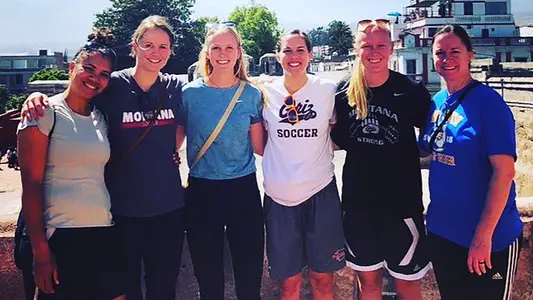
It's why she and five other former Griz soccer players last month traveled to Peru. "Any chance I can have to chip away at the issues of gender equality, I'm going to be all about it," said Gardner.
The entire group of 18, each chosen because of a special skill set, made the trip -- specifically to "promote cultural exchange through sports diplomacy" -- thanks to Montana's Mansfield Center, in conjunction with the U.S. Department of State.
The other members of the travel party with Griz soccer connections:
* Ruth (Scott) Frame played for coach Betsy Duerksen in 1998. She works as a patient coordinator at St. Patrick Hospital and coaches in the Missoula Strikers club program.
* Courtney (Blakely) Shields was a freshman and sophomore on Duerksen's powerhouse teams of 1999 and 2000 and was a four-year member of the program. Today she is the head coach at Big Sky High in Missoula.
* Tess Brenneman was a first-team All-Big Sky Conference defender in 2015 and '16. No stranger to international mission work, Brenneman, who's teaching and coaching in Kalispell, spent a year in the Ukraine after graduating from Montana.
* Payton Agnew arrived at Montana in the fall of 2013 from San Diego and decided to stay. She works for Youth Homes of Montana and coaches soccer at the high school level, yet another former player who is giving back not only through her profession but through coaching.
* Zoe Transtrum completed her freshman season with the Grizzlies in the fall. One season, one Big Sky championship, one trip to the NCAA tournament. She's off to a good start.
Each had their own reason for wanting to make the trip. None was much different than that offered up by Gardner. All of them learned firsthand through their own experiences what sports can do, particularly for a young girl.
"My motivation stemmed from my passion for soccer, female empowerment and travel," said Transtrum. "I've always had a deep love for soccer, and using that as a platform to further the conversation and actions toward strengthening women aligned perfectly with my values and passions.
"Having the opportunity to combine all those passions and share them with other women from Montana and Peru made for one of the best experiences of my life."
It was no open sign-up. Those who were interested in making the trip had to undergo a rigorous application process that began last fall. After all, cuts had to be made. Not unlike athletics, only the best of the best would be chosen.
This was serious business. In an interview setting, the applicants had to convince the selection committee why they were worthy of one of the group's spots.
Was it any wonder that a third of the eventual travel party had played soccer at Montana? If sports give a girl an opportunity to develop her self-worth, doing it at the college level only further sets her up for success later in life.
The agenda for last month was equally rigorous. Days in Peru were filled with presentations, on-field clinics, scrimmages, with the group on the go from 5 a.m. to 11 p.m. After all, they didn't make the trip to spend time in their beds.
There were lives to try to change, situations to attempt to improve and less than a week to accomplish it. Which leads to another question: Do these trips really matter? Do they make a difference?
"Yes," said Gardner, emphatically. "You are not going to solve the problem of gender inequality overnight. It's going to take generations. So you need to focus on small steps that can make a big difference."
The temptation, then, would be to go too big, to throw too much at them, to spread grandiose visions that made no connection to the standing-room-only groups of girls and women who turned out for the events. Just do this, set this up, organize this and you'll be ... more like the U.S. More like us.
Then everyone walked out to the field.
"We would be coaching the girls and we would have limited cones and balls," said Gardner. "Then the men's teams would go on next, and they'd have twice the amount of gear and support that the women had. You could visually see it.
"But the schools would line up to watch us scrimmaging. It's not something they often see, women playing soccer. To be part of that, along with the other generations of Grizzlies, was a life-changing experience."
Instead, their presentations focused on keeping it simple. Not how to get from here to way over there, but how to take the first steps. Build from the ground up. Establish a mission and make the mission available. And repeat. And give it time.
There are 13 million people living across 43 districts in Lima, where the collection of garbage is a daily struggle. Nothing is going to change overnight when it comes to getting more and more girls playing soccer. And it's going to take a village.
"It was so well dialed. It was an unbelievable opportunity. I'm so proud of the work we did down there," said Gardner, who recalled one conversation she had with a 40-year-old mother, who had been playing soccer for most of her life but had seen few changes over the years.
"I had a lot of meaningful discussions. It was about inspiring the next generation, about what might be available for a daughter or a granddaughter. I'm excited that the University of Montana could be a part of it and be leaders in that change."
Some of happened in real time, as the group was in Peru.
"One of my favorite moments from the trip was when we did a small clinic for a local club in Arequipa," said Transtrum. "A young girl read off a paper that she had written in English saying how inspiring it was for them to see older women excelling at soccer and sharing it with their small part of the world."
The trip was only the first half of a home-and-home. In early July a group of two dozen Peruvians will arrive in Missoula to learn even more about soccer and the opportunities the sport can provide.
There will be training sessions, an in-depth look at the soccer infrastructure enjoyed by Missoula youth, from the YMCA to Strikers to the Grizzlies. There will be whitewater rafting, a trip to Glacier, because if Gardner can go sand-skiing on the group's off day in Peru, there should be some fun reciprocation.
It's soccer leading to the feeling of extended family, of everyone fighting the same battle, one that crosses borders, the same thing experienced by the six Grizzlies who traveled last month to Peru, connected by a program, motivated to spread and share the gifts gained through a lifetime in the sport.
"Sharing this experience with other Grizzlies showed me how soccer is truly a lifetime sport that transcends the field," said Transtrum. "The genuine friendships I made with them taught me how soccer unites us.
"It was inspiring to see how the women continue to use soccer in their lives after college. It makes me excited for how I will integrate the game in my life for a long time after I graduate."
Montana's first female Director of Athletics? You can see that as clearly as a cloudless Missoula day in June. But why stop there? President of the University of Montana? Why not? She's clearly going places, even if she never leaves school grounds. After all, up is a direction, right?
The former Griz soccer player, the goalkeeper you might remember as Grace Harris, was a double major, in political science and communication studies, when she graduated just a decade ago.
Working as a popular and supportive academic advisor for the Department of Athletics -- after all, she'd been a student-athlete herself -- she earned a master's degree in public administration on the side in 2013. Just recently she added a PhD in educational leadership.
Last month she left the world of college athletics, for now, to move a few buildings to the south and take over as director of Montana's summer program. Her vision for what campus can be in those middle months, between the fall and spring semesters, is big. It's ambitious. It fits her.
Hers is a story not so much of taking advantage of opportunities presented to her as making her own breaks through her own drive. Which begs the question: Did sports help make the person? Or was she wired that way regardless?
Consider this: In the 25 years of Montana soccer, no goalkeeper has lost as many times (42) as Gardner did. Nor was anyone challenged as often. She faced 1,029 shots over her four-year career. The next player on the list is more than 200 shots behind.
She is a product of those trials, which came every fall Friday and Sunday, which is not to discount those lessons learned at Sentinel High School or every other soccer field she stepped foot on growing up.
She learned how to bounce back from defeat, how to wake up the next morning and focus not on what had happened the day before but on what was ahead, on what was possible. It built resolve, an appreciation for teamwork. It showed her the power of sport and what it can do for young girls.
It's why, as she moves up the ladder, she's not turning her back on or forgetting those who don't have the same opportunity. She wants to bring them along as well, as best she can, as many as she can handle, as many as she can reach.
It's why she is a champion for gender equality and why she believes sport is one of the ways to help speed up a process that grinds along, battling both tradition and an embedded system that often favors the very men who could do something to fix it.
It's why she traveled in 2011 to Bolivia as part of the Level Playing Field initiative.
It's why she and five other former Griz soccer players last month traveled to Peru. "Any chance I can have to chip away at the issues of gender equality, I'm going to be all about it," said Gardner.
The entire group of 18, each chosen because of a special skill set, made the trip -- specifically to "promote cultural exchange through sports diplomacy" -- thanks to Montana's Mansfield Center, in conjunction with the U.S. Department of State.
The other members of the travel party with Griz soccer connections:
* Ruth (Scott) Frame played for coach Betsy Duerksen in 1998. She works as a patient coordinator at St. Patrick Hospital and coaches in the Missoula Strikers club program.
* Courtney (Blakely) Shields was a freshman and sophomore on Duerksen's powerhouse teams of 1999 and 2000 and was a four-year member of the program. Today she is the head coach at Big Sky High in Missoula.
* Tess Brenneman was a first-team All-Big Sky Conference defender in 2015 and '16. No stranger to international mission work, Brenneman, who's teaching and coaching in Kalispell, spent a year in the Ukraine after graduating from Montana.
* Payton Agnew arrived at Montana in the fall of 2013 from San Diego and decided to stay. She works for Youth Homes of Montana and coaches soccer at the high school level, yet another former player who is giving back not only through her profession but through coaching.
* Zoe Transtrum completed her freshman season with the Grizzlies in the fall. One season, one Big Sky championship, one trip to the NCAA tournament. She's off to a good start.
Each had their own reason for wanting to make the trip. None was much different than that offered up by Gardner. All of them learned firsthand through their own experiences what sports can do, particularly for a young girl.
"My motivation stemmed from my passion for soccer, female empowerment and travel," said Transtrum. "I've always had a deep love for soccer, and using that as a platform to further the conversation and actions toward strengthening women aligned perfectly with my values and passions.
"Having the opportunity to combine all those passions and share them with other women from Montana and Peru made for one of the best experiences of my life."
It was no open sign-up. Those who were interested in making the trip had to undergo a rigorous application process that began last fall. After all, cuts had to be made. Not unlike athletics, only the best of the best would be chosen.
This was serious business. In an interview setting, the applicants had to convince the selection committee why they were worthy of one of the group's spots.
Was it any wonder that a third of the eventual travel party had played soccer at Montana? If sports give a girl an opportunity to develop her self-worth, doing it at the college level only further sets her up for success later in life.
The agenda for last month was equally rigorous. Days in Peru were filled with presentations, on-field clinics, scrimmages, with the group on the go from 5 a.m. to 11 p.m. After all, they didn't make the trip to spend time in their beds.
There were lives to try to change, situations to attempt to improve and less than a week to accomplish it. Which leads to another question: Do these trips really matter? Do they make a difference?
"Yes," said Gardner, emphatically. "You are not going to solve the problem of gender inequality overnight. It's going to take generations. So you need to focus on small steps that can make a big difference."
The temptation, then, would be to go too big, to throw too much at them, to spread grandiose visions that made no connection to the standing-room-only groups of girls and women who turned out for the events. Just do this, set this up, organize this and you'll be ... more like the U.S. More like us.
Then everyone walked out to the field.
"We would be coaching the girls and we would have limited cones and balls," said Gardner. "Then the men's teams would go on next, and they'd have twice the amount of gear and support that the women had. You could visually see it.
"But the schools would line up to watch us scrimmaging. It's not something they often see, women playing soccer. To be part of that, along with the other generations of Grizzlies, was a life-changing experience."
Instead, their presentations focused on keeping it simple. Not how to get from here to way over there, but how to take the first steps. Build from the ground up. Establish a mission and make the mission available. And repeat. And give it time.
There are 13 million people living across 43 districts in Lima, where the collection of garbage is a daily struggle. Nothing is going to change overnight when it comes to getting more and more girls playing soccer. And it's going to take a village.
"It was so well dialed. It was an unbelievable opportunity. I'm so proud of the work we did down there," said Gardner, who recalled one conversation she had with a 40-year-old mother, who had been playing soccer for most of her life but had seen few changes over the years.
"I had a lot of meaningful discussions. It was about inspiring the next generation, about what might be available for a daughter or a granddaughter. I'm excited that the University of Montana could be a part of it and be leaders in that change."
Some of happened in real time, as the group was in Peru.
"One of my favorite moments from the trip was when we did a small clinic for a local club in Arequipa," said Transtrum. "A young girl read off a paper that she had written in English saying how inspiring it was for them to see older women excelling at soccer and sharing it with their small part of the world."
The trip was only the first half of a home-and-home. In early July a group of two dozen Peruvians will arrive in Missoula to learn even more about soccer and the opportunities the sport can provide.
There will be training sessions, an in-depth look at the soccer infrastructure enjoyed by Missoula youth, from the YMCA to Strikers to the Grizzlies. There will be whitewater rafting, a trip to Glacier, because if Gardner can go sand-skiing on the group's off day in Peru, there should be some fun reciprocation.
It's soccer leading to the feeling of extended family, of everyone fighting the same battle, one that crosses borders, the same thing experienced by the six Grizzlies who traveled last month to Peru, connected by a program, motivated to spread and share the gifts gained through a lifetime in the sport.
"Sharing this experience with other Grizzlies showed me how soccer is truly a lifetime sport that transcends the field," said Transtrum. "The genuine friendships I made with them taught me how soccer unites us.
"It was inspiring to see how the women continue to use soccer in their lives after college. It makes me excited for how I will integrate the game in my life for a long time after I graduate."
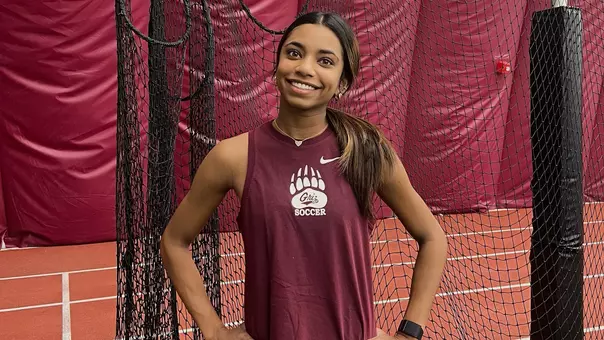
Players Mentioned



Lady Griz Basketball Locker Room Unveiling - 5/1/26
Friday, May 01
Griz Track & Field - Montana Open Highlights - 4/25/26
Friday, May 01
Griz Softball vs. Idaho State Game-Winning Hit - 3/25/26
Friday, May 01
Griz Softball Championship Series Promo
Friday, May 01