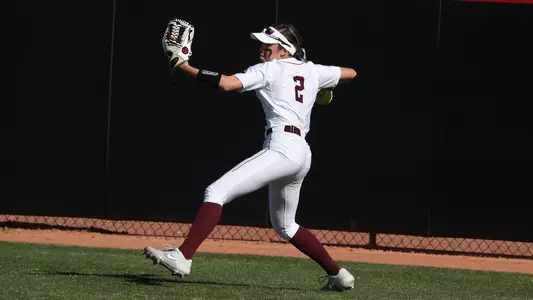
Origin Stories :: Julie Phelps
2/27/2020 4:55:00 PM | Softball
On the way to their very own Field of Dreams, the Huskies will walk out of John W. North High School on Friday morning and take a right on Niki Way.
They'll talk excitedly, feeling like they are getting away with something, spending the morning of what will be an 83-degree day sitting in an outdoor grandstand watching a game and not in class.
But the coach who talked his athletic director into the morning field trip knew what he was doing. This would be validation, proof that hard work can lead to big things and great opportunities.
He wants his players to see firsthand what can happen, that roads can lead to places you've never dreamed of, no matter your starting point.
It will take the players from the school's varsity softball team just a few minutes to reach West Linden Street, which will take them safely over the 215, one of Southern California's major arteries.
There will be 12 lanes of traffic below them and at 8:30 a.m., peak usage. Hundreds of vehicles will pass underfoot, just another weekday morning for the drivers. But it will be no ordinary morning for the players.
They'll pass in front of the Islamic Center of Riverside before reaching Canyon Crest Drive. They'll take a right and need to walk just a few hundred more feet before reaching Amy S. Harrison Field.
It's no sacred shrine, the softball field at UC Riverside that was built in 2004, but on this Friday morning in late February, it will represent everything that's possible.
They'll pass through the turnstiles, enter the stadium and collectively ask one thing: Where's Julie?
If they don't see her before, they will when she runs out to right field for the top of the first inning, Julie Phelps, former Husky and a Division I starter from the first game of her freshman year at Montana.
And the coach's plan will be complete, real life, of someone all the players know, reflecting the lessons he sprinkles into his math classes at the school and his softball practices afterwards.
It's why Donald Phelps is there, at John W. North High. He believes he can make more of a difference in the lives of his math students and softball players than he maybe could at one of the district's other four high schools that draw from the area's more privileged neighborhoods.
He knows about rising up from humble beginnings. He knows hardscrabble.
"That's how I grew up. I grew up not having a whole lot of money, so I identify really well with these kids," he says.
He and his wife Riki have raised their three kids in the Orangecrest section of Riverside. Martin Luther King High School sits one mile away. By most metrics it would probably be rated the "better" school, but they've all attended John W. North, eight miles up the 215.
Because it was never about finding the better, more comfortable, more convenient fit. They wanted it to be the right fit for the overall education and experience of their children.
"That's something I wanted for my kids. I wanted them to see and understand that side. Our socio-economic status is pretty good compared to how I grew up, but I wanted them to understand that not everyone is like that," he says.
"I wanted them to go to a school that is diverse. I think it's made them more aware of the world around them. They understand that not everybody gets everything they want all the time."
It was less than a year ago that Julie Phelps was a Husky. Now she's a Grizzly. That's one of the lessons the coach wants his current team to take away from their softball field trip on Friday, that athletics can open doors to things that may have otherwise been closed and out of reach.
It will also be a day to celebrate perseverance, the idea that obstacles can be overcome, because while Phelps may have been a Husky last year, she was only a Husky as much as she could be from the bench, held up by crutches, her final season taken away from her.
It was in November of her senior year that she bent down to pick up an equipment bag before practice. "It felt like my knee broke," she says. Within seconds her dad's phone, in other word her coach's phone, lit up with calls.
"I was down at the field and got phone calls from about seven different softball girls all at once saying Julie is on the ground crying," he says.
It wasn't the more common ACL tear, but a tendon had separated from her femur. She could play at 60 percent and then have surgery after her senior season, or she could have it earlier and sacrifice her final year as a Husky for a full career as a Grizzly.
Tears flowed as daughter fought over the decision, her world made up of the here and now, her current friendships, not that which would be coming months and months from then and more than 1,000 miles away. The more pragmatic father knew what felt like a setback would be an investment in the future.
"Being a centerfielder, she wouldn't have done much for us. The smarter thing was taking care of it right away so it didn't interfere with any time she had at Montana," he says.
Surgery involved drilling out a hole at the top of her femur, then using pieces of bone from a cadaver to finish the reconstruction and make her whole again, with tendons linked where they should be.
She is 49.9 percent Japanese -- her mom's parents both came to the U.S. from Japan -- 49.9 percent her dad's California and 0.2 percent someone else, thanks to the marvels of medicine. She happily made those spare parts her own and never looked back.
"It's remarkable that the science is what it is and that they were able to do what they did and she's able to run on it and play like normal and not have a fear of hurting it," her dad says.
But for whatever reassurances the Phelps were given by surgeons and doctors and physical therapists, that after six months Julie would be back to 100 percent with little chance of re-injury, the family knew the setback had put her softball future in the hands of Montana coach Melanie Meuchel.
Phelps had already committed to the Grizzlies, had already signed her National Letter of Intent, but that was as an able-bodied outfielder.
Nothing puts doubt in a coach's mind more than those two words: knee injury. Or this one: Surgery. Or these: Months of rehab, months of no softball. At least that's what the Phelps had been led to believe.
"I started asking around and people told me it really depends on the coach," Donald says. "If they think the injury is something where they won't be able to play at the level they were playing before, they can retract their offer.
"We kept our fingers crossed and said all things happen for a reason. But that was a scary time."
It was an injury that was a long time coming, perhaps even inevitable, considering the genetics or sport specialization involved. Or both.
Phelps' dad is 6-foot-5, all Southern Californian. Her mom is 4-foot-11, all Japanese by blood. "I think that's why I have some knee problems," Julie says, partly joking but mostly serious. That's just a lot of DNA to match up and get just right in the biological blueprint.
It's not something Donald and Riki considered three decades ago, when he was the star basketball player at Riverside's Ramona High School, she a year older and the team's stat keeper.
He played tennis in the spring, his team frequently traveling to away competitions with the girls' softball team, of which she was a member.
Friendship became more, marriage turned into parenthood, first of Kayla, who is a student at UC Irvine, then Julie, then Andrew, a freshman at John W. North, star quarterback in the making.
"I think my girls got my longer bones but my wife's shorter muscles," says Donald. "Julie would be at a game and her knee would lock up on her. She would be out of things for a couple of hours, then she'd be good again. That went on for a couple years.
"And with youth softball nowadays, you play travel, you start young, and you play a whole lot. I think she played a whole lot and wore her legs down a little bit."
Which makes a great story now that she's made it through to the other end, but did little to comfort the family the day Julie had to call Meuchel and tell her about the injury, the surgery, the missed time on the softball field.
They thought they knew the coach, they hoped they knew her, but this was nothing that ever came up in recruiting visits.
Scenario 32, our daughter has a serious knee injury. Do you A) move forward like it never happened, B) wait and see the severity of it or C) drop her for the next able-bodied outfielder who catches your eye?
"I was so scared because I thought she was going to pull my scholarship. I didn't think they'd want an injured kid who had to go through rehab," says Julie.
"She was like, 'I still want you. I know you're going to get through this. We're going to push through it and we're going to help.' That was really nice to hear."
She had surgery in February and last March the family headed up to Fresno to watch Montana play in the Bulldog Classic.
Julie was on crutches, parents on pins and needles. Sure, Montana still wanted her, but what did that mean exactly? At the same level of scholarship offer they'd extended pre-injury?
"We talked to the coach afterwards and she said that the offer was still there," says Donald, his voice catching at the retelling of an emotional moment. The phone goes silent for one, two, three seconds as he gathers himself, unintendedly revealing everything.
"She said they talked to their doctors and trainers and were confident she would make a 100 percent recovery and be good to go. You thank the Lord a little bit, look up to the sky, point and say, Thank you for this one."
Donald Phelps was born in Riverside, raised in Riverside and went to college at the University of Redlands, 10 miles away, then returned to Riverside.
He had one chance to move away, to teach math and coach softball at Morro Bay High, a school that sits 1,500 feet from the Pacific near San Luis Obispo, a different world than Riverside, but family came first then, as it does today.
"My wife had just gotten pregnant with our oldest daughter, and I just couldn't see taking her away from her family," he says, sounding like Morro Bay could have been Coos Bay, Oregon, for as far away as it felt from Riverside.
Family has forever kept him in Riverside and family is what got him into softball, back when he and Riki were dating. Her dad was on the board of the local recreational softball league, and a career path was altered just a bit, teacher becoming teacher/coach, in that order he'll remind you.
"He was in charge of getting the fields ready, so he hired me since I was dating his daughter. That's how I got into softball, by lining the fields and doing that kind of stuff," he says.
That led to an umpire job, which got him even closer to the action. And he started taking mental notes. "I watched what the teams were doing, what the coaches were doing, just getting knowledge."
He coached junior varsity at John W. North for three years, then the varsity for 10 before stepping down to follow the playing careers of his own daughters for the next 10 years.
First it was rec ball, then all-stars. Julie started as a middle infielder, then moved permanently to outfield because a coach wanted to take advantage of her speed.
"I fell in love with it. I love being that last line of defense when the game is on the line," she says. "If you let the ball drop, they are going to score. I like having that pressure on me."
The final step in catching the eye of colleges was to join Explosion, a travel team whose very mission statement is to get its players to become student-athletes at the school of their choice.
"College was always the goal," says Julie. "I had friends who were on Explosion who were being recruited. They referred me to the coach and I tried out. It worked out perfectly."
Cal State Northridge became interested. So did Boston College and Boston University. Both parents were fine with the distance, but mom just couldn't sign off on her daughter stepping foot in that town, much less living there, much less playing a ball sport there.
"I was okay with Boston," says Donald. "Her mom wasn't. Her mom is a Yankees fan, so Boston wasn't going to work." You wait for a chuckle that he's half joking. It doesn't come. That's some hardcore fandom.
Then one day an Explosion teammate, McKenna Tjaden, committed to Montana. She visited and spoke of a magical land flowing with milk and honey. And the exodus continued with Phelps.
"She caught my eye, just the way she defended the outfield. And she was working to become a triple threat at the plate out of the left side," said Meuchel, who should get a timeshare in Southern California for as much time as spends there recruiting, to good results.
The injury? Sure, the coach had immediate concerns. But once she learned a 100-percent recovery could be expected with little chance of it happening again, her interest grew ... even stronger?
It's not that Meuchel wants previously injured players on her roster, but she would never turn them down because of it. She wants a gritty team, and nothing is more gritty than a player who has overcome an injury to return to the sport she loves.
They tend to value what can be viewed as an extended life in the sport. They tend to play with a thankfulness to have back what was once dreaded to be lost. And don't think they didn't pick up some valuable traits fighting through the rehab.
"It takes special people to overcome injuries. Anyone who has ever been through an injury knows truly how hard it is," Meuchel says.
Explosion was what got her to Montana, but Phelps still played at John W. North, for a coach who wasn't her dad as a freshman and sophomore.
Then the job opened.
Donald Phelps was the logical choice, but the decision wasn't his to make. "It was asked of me, but I wasn't going to think about doing it if (Julie) wasn't okay with it," he says.
At first his daughter did not like the idea. She wanted that separation, of her on the field and him in the stands. He could coach her after games, on the car ride home, not during.
"Two days later she handed me a letter she had written. It went through what her fears were, but when she thought about it, she decided the best thing for the team and the program and for her was if I did take the job," he says.
"There were some pretty special things she said in that letter. It kind of broke me down into tears, that she thought that highly of what I could do. That was a special moment for both of us."
Here is what he could do: That first team, Julie's junior season, would reach the CIF championship game for the first time in school history, the spunky underdog taking down the blue bloods of the CIF along the way. Or John W. North in a nutshell, doing more with those who sometimes have less.
With Boston scratched off the list as a potential landing spot, there was an official visit made to Montana the fall of her senior year, before the injury. As a softball coach and father, Donald was going to be a tough sell x2. It didn't take long for him to be all in.
"I watched how Julie interacted with the girls on the team and how Melanie treated the players and I was sold," he says. "I saw a family atmosphere, where people care about people."
And now she's here.
Phelps was still doing the last of her rehab in the fall, when Montana played its eight-game exhibition schedule, but she was at 100 percent health when practices started up in early January.
The outfield positions looked to be locked down by returners, but with the redshirt of Katie Pippel, right field provided an opening.
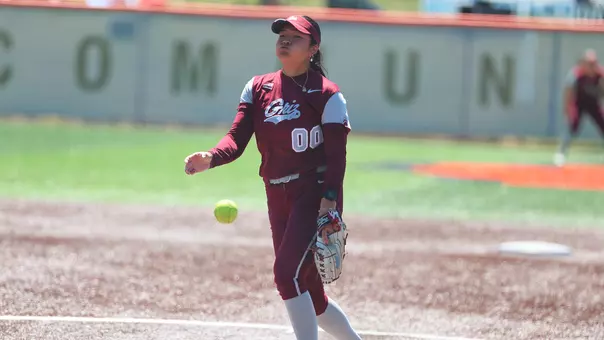
So there was Phelps, running out to right field in the top of the first when Montana played Central Arkansas to open the season in Louisiana.
In her second collegiate at-bat she had an RBI single that tied the game at 2-2 in the bottom of the fourth in a game Montana would win 3-2.
"It was a rush. I felt like I should have been nervous but I wasn't," she says. "We've been doing this for our whole lives, so it shouldn't really change in college.
"You should know your abilities and what you're capable of doing. Mel has you here for a reason."
That's why Donald Phelps is taking his current team to Amy S. Harrison Field on Friday morning, to watch Montana and Julie Phelps face UC Riverside.
It's not just a chance to get out of school on a nice day. It's to show his players that ability and tenacity and drive can trump environment, that's it's okay to dream big, whether that's softball-related or not.
Because there goes Julie Phelps sprinting out to right field, not so long ago a Husky, not so long ago an injured athlete who thought all might be lost. There goes Julie Phelps, embodiment of all that's possible.
And then they'll make the 15-minute walk back to John W. North High, with newer, bolder visions bouncing around their heads.
They'll talk excitedly, feeling like they are getting away with something, spending the morning of what will be an 83-degree day sitting in an outdoor grandstand watching a game and not in class.
But the coach who talked his athletic director into the morning field trip knew what he was doing. This would be validation, proof that hard work can lead to big things and great opportunities.
He wants his players to see firsthand what can happen, that roads can lead to places you've never dreamed of, no matter your starting point.
It will take the players from the school's varsity softball team just a few minutes to reach West Linden Street, which will take them safely over the 215, one of Southern California's major arteries.
There will be 12 lanes of traffic below them and at 8:30 a.m., peak usage. Hundreds of vehicles will pass underfoot, just another weekday morning for the drivers. But it will be no ordinary morning for the players.
They'll pass in front of the Islamic Center of Riverside before reaching Canyon Crest Drive. They'll take a right and need to walk just a few hundred more feet before reaching Amy S. Harrison Field.
It's no sacred shrine, the softball field at UC Riverside that was built in 2004, but on this Friday morning in late February, it will represent everything that's possible.
They'll pass through the turnstiles, enter the stadium and collectively ask one thing: Where's Julie?
If they don't see her before, they will when she runs out to right field for the top of the first inning, Julie Phelps, former Husky and a Division I starter from the first game of her freshman year at Montana.
And the coach's plan will be complete, real life, of someone all the players know, reflecting the lessons he sprinkles into his math classes at the school and his softball practices afterwards.
It's why Donald Phelps is there, at John W. North High. He believes he can make more of a difference in the lives of his math students and softball players than he maybe could at one of the district's other four high schools that draw from the area's more privileged neighborhoods.
He knows about rising up from humble beginnings. He knows hardscrabble.
"That's how I grew up. I grew up not having a whole lot of money, so I identify really well with these kids," he says.
He and his wife Riki have raised their three kids in the Orangecrest section of Riverside. Martin Luther King High School sits one mile away. By most metrics it would probably be rated the "better" school, but they've all attended John W. North, eight miles up the 215.
Because it was never about finding the better, more comfortable, more convenient fit. They wanted it to be the right fit for the overall education and experience of their children.
"That's something I wanted for my kids. I wanted them to see and understand that side. Our socio-economic status is pretty good compared to how I grew up, but I wanted them to understand that not everyone is like that," he says.
"I wanted them to go to a school that is diverse. I think it's made them more aware of the world around them. They understand that not everybody gets everything they want all the time."
It was less than a year ago that Julie Phelps was a Husky. Now she's a Grizzly. That's one of the lessons the coach wants his current team to take away from their softball field trip on Friday, that athletics can open doors to things that may have otherwise been closed and out of reach.
It will also be a day to celebrate perseverance, the idea that obstacles can be overcome, because while Phelps may have been a Husky last year, she was only a Husky as much as she could be from the bench, held up by crutches, her final season taken away from her.
It was in November of her senior year that she bent down to pick up an equipment bag before practice. "It felt like my knee broke," she says. Within seconds her dad's phone, in other word her coach's phone, lit up with calls.
"I was down at the field and got phone calls from about seven different softball girls all at once saying Julie is on the ground crying," he says.
It wasn't the more common ACL tear, but a tendon had separated from her femur. She could play at 60 percent and then have surgery after her senior season, or she could have it earlier and sacrifice her final year as a Husky for a full career as a Grizzly.
Tears flowed as daughter fought over the decision, her world made up of the here and now, her current friendships, not that which would be coming months and months from then and more than 1,000 miles away. The more pragmatic father knew what felt like a setback would be an investment in the future.
"Being a centerfielder, she wouldn't have done much for us. The smarter thing was taking care of it right away so it didn't interfere with any time she had at Montana," he says.
Surgery involved drilling out a hole at the top of her femur, then using pieces of bone from a cadaver to finish the reconstruction and make her whole again, with tendons linked where they should be.
She is 49.9 percent Japanese -- her mom's parents both came to the U.S. from Japan -- 49.9 percent her dad's California and 0.2 percent someone else, thanks to the marvels of medicine. She happily made those spare parts her own and never looked back.
"It's remarkable that the science is what it is and that they were able to do what they did and she's able to run on it and play like normal and not have a fear of hurting it," her dad says.
But for whatever reassurances the Phelps were given by surgeons and doctors and physical therapists, that after six months Julie would be back to 100 percent with little chance of re-injury, the family knew the setback had put her softball future in the hands of Montana coach Melanie Meuchel.
Phelps had already committed to the Grizzlies, had already signed her National Letter of Intent, but that was as an able-bodied outfielder.
Nothing puts doubt in a coach's mind more than those two words: knee injury. Or this one: Surgery. Or these: Months of rehab, months of no softball. At least that's what the Phelps had been led to believe.
"I started asking around and people told me it really depends on the coach," Donald says. "If they think the injury is something where they won't be able to play at the level they were playing before, they can retract their offer.
"We kept our fingers crossed and said all things happen for a reason. But that was a scary time."
It was an injury that was a long time coming, perhaps even inevitable, considering the genetics or sport specialization involved. Or both.
Phelps' dad is 6-foot-5, all Southern Californian. Her mom is 4-foot-11, all Japanese by blood. "I think that's why I have some knee problems," Julie says, partly joking but mostly serious. That's just a lot of DNA to match up and get just right in the biological blueprint.
It's not something Donald and Riki considered three decades ago, when he was the star basketball player at Riverside's Ramona High School, she a year older and the team's stat keeper.
He played tennis in the spring, his team frequently traveling to away competitions with the girls' softball team, of which she was a member.
Friendship became more, marriage turned into parenthood, first of Kayla, who is a student at UC Irvine, then Julie, then Andrew, a freshman at John W. North, star quarterback in the making.
"I think my girls got my longer bones but my wife's shorter muscles," says Donald. "Julie would be at a game and her knee would lock up on her. She would be out of things for a couple of hours, then she'd be good again. That went on for a couple years.
"And with youth softball nowadays, you play travel, you start young, and you play a whole lot. I think she played a whole lot and wore her legs down a little bit."
Which makes a great story now that she's made it through to the other end, but did little to comfort the family the day Julie had to call Meuchel and tell her about the injury, the surgery, the missed time on the softball field.
They thought they knew the coach, they hoped they knew her, but this was nothing that ever came up in recruiting visits.
Scenario 32, our daughter has a serious knee injury. Do you A) move forward like it never happened, B) wait and see the severity of it or C) drop her for the next able-bodied outfielder who catches your eye?
"I was so scared because I thought she was going to pull my scholarship. I didn't think they'd want an injured kid who had to go through rehab," says Julie.
"She was like, 'I still want you. I know you're going to get through this. We're going to push through it and we're going to help.' That was really nice to hear."
She had surgery in February and last March the family headed up to Fresno to watch Montana play in the Bulldog Classic.
Julie was on crutches, parents on pins and needles. Sure, Montana still wanted her, but what did that mean exactly? At the same level of scholarship offer they'd extended pre-injury?
"We talked to the coach afterwards and she said that the offer was still there," says Donald, his voice catching at the retelling of an emotional moment. The phone goes silent for one, two, three seconds as he gathers himself, unintendedly revealing everything.
"She said they talked to their doctors and trainers and were confident she would make a 100 percent recovery and be good to go. You thank the Lord a little bit, look up to the sky, point and say, Thank you for this one."
Donald Phelps was born in Riverside, raised in Riverside and went to college at the University of Redlands, 10 miles away, then returned to Riverside.
He had one chance to move away, to teach math and coach softball at Morro Bay High, a school that sits 1,500 feet from the Pacific near San Luis Obispo, a different world than Riverside, but family came first then, as it does today.
"My wife had just gotten pregnant with our oldest daughter, and I just couldn't see taking her away from her family," he says, sounding like Morro Bay could have been Coos Bay, Oregon, for as far away as it felt from Riverside.
Family has forever kept him in Riverside and family is what got him into softball, back when he and Riki were dating. Her dad was on the board of the local recreational softball league, and a career path was altered just a bit, teacher becoming teacher/coach, in that order he'll remind you.
"He was in charge of getting the fields ready, so he hired me since I was dating his daughter. That's how I got into softball, by lining the fields and doing that kind of stuff," he says.
That led to an umpire job, which got him even closer to the action. And he started taking mental notes. "I watched what the teams were doing, what the coaches were doing, just getting knowledge."
He coached junior varsity at John W. North for three years, then the varsity for 10 before stepping down to follow the playing careers of his own daughters for the next 10 years.
First it was rec ball, then all-stars. Julie started as a middle infielder, then moved permanently to outfield because a coach wanted to take advantage of her speed.
"I fell in love with it. I love being that last line of defense when the game is on the line," she says. "If you let the ball drop, they are going to score. I like having that pressure on me."
The final step in catching the eye of colleges was to join Explosion, a travel team whose very mission statement is to get its players to become student-athletes at the school of their choice.
"College was always the goal," says Julie. "I had friends who were on Explosion who were being recruited. They referred me to the coach and I tried out. It worked out perfectly."
Cal State Northridge became interested. So did Boston College and Boston University. Both parents were fine with the distance, but mom just couldn't sign off on her daughter stepping foot in that town, much less living there, much less playing a ball sport there.
"I was okay with Boston," says Donald. "Her mom wasn't. Her mom is a Yankees fan, so Boston wasn't going to work." You wait for a chuckle that he's half joking. It doesn't come. That's some hardcore fandom.
Then one day an Explosion teammate, McKenna Tjaden, committed to Montana. She visited and spoke of a magical land flowing with milk and honey. And the exodus continued with Phelps.
"She caught my eye, just the way she defended the outfield. And she was working to become a triple threat at the plate out of the left side," said Meuchel, who should get a timeshare in Southern California for as much time as spends there recruiting, to good results.
The injury? Sure, the coach had immediate concerns. But once she learned a 100-percent recovery could be expected with little chance of it happening again, her interest grew ... even stronger?
It's not that Meuchel wants previously injured players on her roster, but she would never turn them down because of it. She wants a gritty team, and nothing is more gritty than a player who has overcome an injury to return to the sport she loves.
They tend to value what can be viewed as an extended life in the sport. They tend to play with a thankfulness to have back what was once dreaded to be lost. And don't think they didn't pick up some valuable traits fighting through the rehab.
"It takes special people to overcome injuries. Anyone who has ever been through an injury knows truly how hard it is," Meuchel says.
Explosion was what got her to Montana, but Phelps still played at John W. North, for a coach who wasn't her dad as a freshman and sophomore.
Then the job opened.
Donald Phelps was the logical choice, but the decision wasn't his to make. "It was asked of me, but I wasn't going to think about doing it if (Julie) wasn't okay with it," he says.
At first his daughter did not like the idea. She wanted that separation, of her on the field and him in the stands. He could coach her after games, on the car ride home, not during.
"Two days later she handed me a letter she had written. It went through what her fears were, but when she thought about it, she decided the best thing for the team and the program and for her was if I did take the job," he says.
"There were some pretty special things she said in that letter. It kind of broke me down into tears, that she thought that highly of what I could do. That was a special moment for both of us."
Here is what he could do: That first team, Julie's junior season, would reach the CIF championship game for the first time in school history, the spunky underdog taking down the blue bloods of the CIF along the way. Or John W. North in a nutshell, doing more with those who sometimes have less.
With Boston scratched off the list as a potential landing spot, there was an official visit made to Montana the fall of her senior year, before the injury. As a softball coach and father, Donald was going to be a tough sell x2. It didn't take long for him to be all in.
"I watched how Julie interacted with the girls on the team and how Melanie treated the players and I was sold," he says. "I saw a family atmosphere, where people care about people."
And now she's here.
Phelps was still doing the last of her rehab in the fall, when Montana played its eight-game exhibition schedule, but she was at 100 percent health when practices started up in early January.
The outfield positions looked to be locked down by returners, but with the redshirt of Katie Pippel, right field provided an opening.
So there was Phelps, running out to right field in the top of the first when Montana played Central Arkansas to open the season in Louisiana.
In her second collegiate at-bat she had an RBI single that tied the game at 2-2 in the bottom of the fourth in a game Montana would win 3-2.
"It was a rush. I felt like I should have been nervous but I wasn't," she says. "We've been doing this for our whole lives, so it shouldn't really change in college.
"You should know your abilities and what you're capable of doing. Mel has you here for a reason."
That's why Donald Phelps is taking his current team to Amy S. Harrison Field on Friday morning, to watch Montana and Julie Phelps face UC Riverside.
It's not just a chance to get out of school on a nice day. It's to show his players that ability and tenacity and drive can trump environment, that's it's okay to dream big, whether that's softball-related or not.
Because there goes Julie Phelps sprinting out to right field, not so long ago a Husky, not so long ago an injured athlete who thought all might be lost. There goes Julie Phelps, embodiment of all that's possible.
And then they'll make the 15-minute walk back to John W. North High, with newer, bolder visions bouncing around their heads.
Players Mentioned
Friday, June 19
Thursday, June 04
Friday, May 01
Friday, May 01