Photo by: © Derek Johnson 2019
Origin Stories :: Ashley Ward
3/6/2020 1:10:00 PM | Softball
Asked what point in time she would most like to travel back to and experience, the history major says the colonial era, when America was taking its first steps toward becoming what it is today.
She name-drops events that span nearly 150 years -- the Salem Witch Trials of the late 1600s, the War of 1812 -- before narrowing in on something a little more specific.
"The American Revolution and the Founding Fathers creating the Bill of Rights. I would love to be in the room and listen to them discuss it. They were definitely ahead of their time."
Since even that period lasted 18 years, Ashley Ward would want to pack some things for her trip. Her glove, a few softballs, a 33-inch, 23-ounce Louisville Slugger or two. You know, to pass the time.
Who says James Madison wouldn't want to take a few cuts on some grassy field in Philadelphia after a long day debating the finer points of Amendment II?
After all, the school in Virginia named for Madison has, now 250 years later, one of the nation's top softball programs. Seems only fitting.
And it would only be right that Ward would throw, befuddling Founding Father after Founding Father with her pitch of choice, her knuckle changeup. And then get locked up for practicing witchcraft.
"I probably would have been on trial. Tarred and feathered," says Ward. "I don't think it would've worked out too well for me."
It isn't the Constitution that gives us the best document to segue into Ward's life as the Declaration of Independence, written a decade earlier.
Right there, in the first sentence of the second paragraph: that all men are created equal. That's just not the case on the softball field, which Ward has learned the hard way.
She wishes she was six feet tall, like fellow Griz pitcher Tristin Achenbach or 5-foot-10 like Michaela Hood. At the same time, she relishes what she was born with, all 5-foot-4 of it.
Would she like to be a six-footer? "Yeah, I would. I don't like being a pitcher and not being tall. I feel like I'm not very intimidating," she says.
"When I go against a team, they're not going to look at me and go, Oh, she's scary. She might blow it by me. They see me and probably think, Oh, she's not going to be that good.
"Usually people don't expect much from me when they first see me, but I'm proud of who I am. I like when people don't expect much of me. I like to prove them wrong."
Now we're getting somewhere, deep into the psychology of Ward, which was going to be her major until last fall, when she went with her passion and chose history.
You wonder what came first, the growth spurt that abruptly stopped at 64 inches or the mindset that makes her one of the most competitive players Montana coach Melanie Meuchel has ever coached.
It probably wouldn't be a stretch to say that the latter was going to be there regardless but was made more prominent when the idea that all men are created equal just isn't the case between the lines.
Because what fun would sports be if that was the case?
Sports allow Steph Curry, 6-foot-3 and 190 pounds, to be just as dominant on the basketball court, just in his own way, as LeBron James, who is larger by six inches and 60 pounds.
Softball allows for a 5-foot-4 pitcher at the Division I level, but it would help if she had some defining attribute, something a little more intangible, that balances out the physical.
"Ashley is one of the most competitive individuals I've been around anywhere," says Meuchel, and that is telling. Meuchel has been coaching collegiate softball for nearly two decades.
"She loves to compete. She is an individual who when the ball goes up, she's going to go get ball." Or send it out of the park when a message needs to be sent.
There was the time she was a high school junior at Coronado High and playing in the Nevada state tournament. The opponent that game was from her league, so the opposing coaches knew her well.
Her first plate appearance: intentional walk. Her second plate appearance: intentional walk. When she came up a third time, there was nowhere to put her. They had to take their chances and pitch to her.
"She hit a home run, right over center field," says her mom, Beth. "That was typical Ashley. She got mad and had to prove that they had made the right choice to walk her."
So even when given the ultimate sign of respect, the intentional walk that limits the amount of destruction a player can do, Ward took it as some sort of an affront? Yeah, she's in the right place.
"We knew she had some of the DNA we look for and would fit our program and add something to it," says Meuchel.
These stories may all lead to a bit of cognitive dissonance, because we tend to view pitchers and hitters as two separate entities, especially at the college level.
The starting pitcher. The leadoff hitter. The power hitter. The middle infielder who hits for average but has occasional pop. Each in her own box.
At first Ward was throwing her knuckle changeup to the Founding Fathers, now she's hitting home runs?
Which one is it? Is she a combative pitcher, one who weaponizes her left arm to make batter after batter look silly?
Or is she a power hitter, who last Saturday provided the big blow, a three-run, pinch-hit home run in the bottom of the sixth in what had been a scoreless game in Montana's win over Michigan State?
Can't she have it both ways? Didn't the Declaration of Independence allow for the pursuit of happiness, however a person chooses to define that? "I like doing both. I want to do both," she says.
"When you're pitching, you control the game and control the pace. Hitting, like what happened against Michigan State, is super cool. You can really change the game quickly."
It will be a nice memory, one she can story-tell for decades, of how she hit her first collegiate home run against a Power 5 program.
The game had seen 11 straight zeros go up on the scoreboard. Until the bottom of the sixth. Then McKenna Tjaden singled through the left side. And Kendall Curtis singled to short.
Ward was called upon to pinch hit.
She quickly fell into a 0-2 hole with two swinging strikes. Then she watched three straight balls. In the split second that these decisions are made, she saw ball No. 4 coming, but she wasn't going to let it pass.
"The last pitch was up high. It probably would have been a ball, but I thought, I'm going for it," she says. "Right when it hit my bat, even if it wasn't going over, I knew it was going to score two runs."
It's fitting that her home run defeated a team from the Big Ten. It's the league Ward would be playing in had Indiana made a different choice.
The Hoosiers needed one spot filled, either by Ward, who is from Henderson, Nev., or from a player out of Indiana. They chose the in-state kid for tuition and scholarship purposes.
"I really wanted to go there," says Ward, who had been conditioned, as most youth athletes are, to believe that everything is better behind the bright lights of the name-brand schools.
Duke is better than Drexel, right? So we pledge allegiance (or hatred because of all the bandwagon followers) to all things Blue Devils. Life is just better there. It has to be.
"The uniforms, the pants, the cleats, the helmets, the facilities. I always wanted that. I always wanted to play in the SEC," says Ward.
Then she was in the winning dugout last month as Montana took down No. 23 Arkansas of the SEC in a 5-0 shutout. Then she played an outsized role in last weekend's victory over Michigan State.
"That's something I learned since I came here. It's not the school or the conference. Good softball is good softball," she says. "Montana is just as good as a lot of the teams out there.
"The leagues, the names, they don't mean anything. Just because you're Power 5 doesn't mean you're good."
Despite growing up just outside of Las Vegas, Ward isn't about the glamour. She is all grit. She's wired to play for a program like Montana.
"We're underdogs. People don't expect much from us. I like being the underdog," she says. "I like to prove people wrong, and this team proves people wrong. A lot. It's nice to be on a team like that."
Michaela Hood is from Las Vegas. Sophomore third baseman Kylie Becker is from nearby Henderson. Her younger sister, Leah, is a former teammate of Ward's.
But she knew nothing of Montana, and the Grizzlies knew nothing of Ward, and it would have stayed like that, two ships passing in the night, had she not joined the Little Rebels travel-ball team as a senior.
College coaches don't know -- can't know -- every softball player who has next-level potential between the ages of 16 and 17 across a wide range of states.
They can go to the important showcase tournaments and see with their own eyes, but even that has its limits.
Instead, it can be the travel-ball coaches who become the important conduit between hopeful player and school.
But it can be a fine line. Oversell a player and a travel-ball coach can lose all credibility within college coaching circles. Undersell a player and opportunities for her may be lost.
There is a reason Montana has looked to southern Nevada and will continue to do so in the future. His name is Gordie Mark, coach of the U18 team, among others, for Little Rebels.
"I have a good connection with him. He says it like it is and that's something I really value. Not everything is a sales pitch, not everybody is perfect. That's not how life is," says Meuchel.
Mark is in his seventh year with Little Rebels, or about as long as Montana has been out recruiting since Jamie Pinkerton was hired in August 2013 to start the program.
His own daughter would go on to join the program at Oregon State, so Mark has an intimate familiarity with the recruiting process and takes it as seriously as Meuchel claims he does.
"We're usually brutally honest with coaches. If anything, we're going to err on the side that the kid is probably a little better than we're telling the coach," he says. "We want to give an honest picture.
"If you're misrepresenting what you're sending them, they may never come back, so we try to be as upfront as possible."
And it works the other way as well. Mark's players are fully aware he knows the college scene better than they or their parents do.
One can only imagine what he told Hood when she went all in on a startup program in a faraway land years ago. She and the Grizzlies went to the NCAA tournament her freshman year, in 2017.
"I was honestly shocked that Michaela would have stayed up there with the snow and cold weather, but talking to her since then, she loves it," says Mark.
"I can see her putting down roots up there. She likes the community and just about everything about the place.
"Now I tell families here that are looking at the program that if my daughter was still playing travel ball, Coach Mel is absolutely someone I would have no problem sending my daughter to play for."
Beth Ward's daughter knew she wanted to be a softball player at the age of five, the day she was in Southern California and watched her older cousin play. She wanted to be just like her.
She started pitching at the age of six. "The first team I was on needed pitchers. It started from there. The rest is history," she says.
"I like being in control and having people depend on me. And I like the excitement of it, of constantly doing something. I've played almost every position, and I like pitching the most."
Her mom, a self-described non-athlete, had no option but to become a softball parent. Even more challenging: the mom of a pitcher.
You can picture her, can't you, watching another game from the stands, through the cracks in her fingers, not able to watch but not able to look away either?
"It's very stressful. You cross your fingers and hope it's going to be one of those days when she hits her marks and everything is good," she says. "But it can be hard to watch, even on a good day."
Her parents, like the rest of their families, were living in Southern California until the 90s when her dad's work as a land surveyor brought the Wards to Las Vegas.
No, she was not raised in a hotel on the Strip. No, she did not learn to count by playing blackjack. Yes, she was raised in a neighborhood and went to school, just like kids everywhere else.
"There are a lot of misconceptions about growing up in Las Vegas. It's not just about the Strip and the gambling and the shows. It's a lot more than people think," she says. "I get a lot of funny questions."
And then there is the softball, a natural fit for the desert climate. "The softball community in Las Vegas is big, but it's pretty tight-knit and interconnected. It's very supportive."
She would be the Gatorade Nevada Softball Player of the Year as a senior at Coronado High, but it was her bat and not her left arm that everyone thought would be her ticket to a spot on a college program.
After all, she had a four-year batting average of .502. And college coaches tended to look at her as a thrower the same way opposing batters did: wait, that's their pitcher? She didn't pass the eyeball test.
"People have always seen me as a hitter first. I wasn't seen as a pitcher as much as a utility player who could hit," she says.
"I never thought I could be a pitcher in college. I thought I was going to be a hitter, then they'd throw me at first base or in right field."
That fall day in 2018, when Ward's fellow freshmen -- Kendall Curtis, Jaxie Klucewich, Julie Phelps -- made their official visits on the same football weekend? Meuchel had yet to even see Ward play.
Yet they all signed in November, once Meuchel got to see the Little Rebels and Ward in person for the first time.
"She proves you don't have to be a six-foot kid, that height doesn't determine your ability in our sport by any means," said Meuchel. "When people watch her, they see how big she plays."
It was a quick turnaround. Mark tipped Meuchel off about a player he had. Meuchel saw her play. And Ward was on an official visit within a week.
She missed out on what is usually Montana's top selling point for recruits, a home football weekend. Ward got the season-opening basketball game in November instead.
That was fine with her. She prefers watching basketball to football anyway. It makes sense. It's a sport where a person can excel no matter their size.
Beyond that, she had finally found a coach who saw her as a pitcher who has a big bat, not a hitter who her college coach would need to find a defensive position for.
"I wanted to be a pitcher in college, but most people didn't see that in me. Coach Mel was the only one who saw me as a pitcher who can hit," says Ward.
"I guess she saw something in me that nobody else saw, and I'll always appreciate her for that."
If you haven't seen Ward play, if you didn't make it to Grizzly Softball Field in the fall for one of Montana's eight exhibition games, you'll get your chance this spring.
She might be the starting pitcher. She might throw in relief. She might be in the batting order as the designated player, maybe in the No. 4 spot, or come in for a high-pressure pinch-hit opportunity.
She's another on Montana's growing list athletes who just want to play, just want to contribute, just want to help the team win, not fill some narrow role that includes a single position. It's bigger than that.
"We only had her for one year, and what I came to love about her was her enthusiasm for the way she played the game," said Mark.
She wants to go all Harbaugh on the moment and attack it with an enthusiasm unknown to mankind.
"She is a ball of energy. Always has been," says her mom. "And it's always been contagious to everyone around her. She's always been a very positive presence."
But she's just a freshman, right? Doesn't she know to mind her place? Nah, that's not Meuchel's program. She knows players are at their best when they are allowed to be themselves.
"When she started with her high school team, she was the only freshman on varsity," says her mom. "She was very reserved, but once she got her personality out there, she was leading the team."
She wants to win championships. She wants to celebrate on the field with her teammates. She wants to go to NCAA tournaments. All of those things in the plural.
In other words, she wants to make history at the same time she is studying it.
She name-drops events that span nearly 150 years -- the Salem Witch Trials of the late 1600s, the War of 1812 -- before narrowing in on something a little more specific.
"The American Revolution and the Founding Fathers creating the Bill of Rights. I would love to be in the room and listen to them discuss it. They were definitely ahead of their time."
Since even that period lasted 18 years, Ashley Ward would want to pack some things for her trip. Her glove, a few softballs, a 33-inch, 23-ounce Louisville Slugger or two. You know, to pass the time.
Who says James Madison wouldn't want to take a few cuts on some grassy field in Philadelphia after a long day debating the finer points of Amendment II?
After all, the school in Virginia named for Madison has, now 250 years later, one of the nation's top softball programs. Seems only fitting.
And it would only be right that Ward would throw, befuddling Founding Father after Founding Father with her pitch of choice, her knuckle changeup. And then get locked up for practicing witchcraft.
"I probably would have been on trial. Tarred and feathered," says Ward. "I don't think it would've worked out too well for me."
It isn't the Constitution that gives us the best document to segue into Ward's life as the Declaration of Independence, written a decade earlier.
Right there, in the first sentence of the second paragraph: that all men are created equal. That's just not the case on the softball field, which Ward has learned the hard way.
She wishes she was six feet tall, like fellow Griz pitcher Tristin Achenbach or 5-foot-10 like Michaela Hood. At the same time, she relishes what she was born with, all 5-foot-4 of it.
Would she like to be a six-footer? "Yeah, I would. I don't like being a pitcher and not being tall. I feel like I'm not very intimidating," she says.
"When I go against a team, they're not going to look at me and go, Oh, she's scary. She might blow it by me. They see me and probably think, Oh, she's not going to be that good.
"Usually people don't expect much from me when they first see me, but I'm proud of who I am. I like when people don't expect much of me. I like to prove them wrong."
Now we're getting somewhere, deep into the psychology of Ward, which was going to be her major until last fall, when she went with her passion and chose history.
You wonder what came first, the growth spurt that abruptly stopped at 64 inches or the mindset that makes her one of the most competitive players Montana coach Melanie Meuchel has ever coached.
It probably wouldn't be a stretch to say that the latter was going to be there regardless but was made more prominent when the idea that all men are created equal just isn't the case between the lines.
Because what fun would sports be if that was the case?
Sports allow Steph Curry, 6-foot-3 and 190 pounds, to be just as dominant on the basketball court, just in his own way, as LeBron James, who is larger by six inches and 60 pounds.
Softball allows for a 5-foot-4 pitcher at the Division I level, but it would help if she had some defining attribute, something a little more intangible, that balances out the physical.
"Ashley is one of the most competitive individuals I've been around anywhere," says Meuchel, and that is telling. Meuchel has been coaching collegiate softball for nearly two decades.
"She loves to compete. She is an individual who when the ball goes up, she's going to go get ball." Or send it out of the park when a message needs to be sent.
There was the time she was a high school junior at Coronado High and playing in the Nevada state tournament. The opponent that game was from her league, so the opposing coaches knew her well.
Her first plate appearance: intentional walk. Her second plate appearance: intentional walk. When she came up a third time, there was nowhere to put her. They had to take their chances and pitch to her.
"She hit a home run, right over center field," says her mom, Beth. "That was typical Ashley. She got mad and had to prove that they had made the right choice to walk her."
So even when given the ultimate sign of respect, the intentional walk that limits the amount of destruction a player can do, Ward took it as some sort of an affront? Yeah, she's in the right place.
"We knew she had some of the DNA we look for and would fit our program and add something to it," says Meuchel.
These stories may all lead to a bit of cognitive dissonance, because we tend to view pitchers and hitters as two separate entities, especially at the college level.
The starting pitcher. The leadoff hitter. The power hitter. The middle infielder who hits for average but has occasional pop. Each in her own box.
At first Ward was throwing her knuckle changeup to the Founding Fathers, now she's hitting home runs?
Which one is it? Is she a combative pitcher, one who weaponizes her left arm to make batter after batter look silly?
Or is she a power hitter, who last Saturday provided the big blow, a three-run, pinch-hit home run in the bottom of the sixth in what had been a scoreless game in Montana's win over Michigan State?
Can't she have it both ways? Didn't the Declaration of Independence allow for the pursuit of happiness, however a person chooses to define that? "I like doing both. I want to do both," she says.
"When you're pitching, you control the game and control the pace. Hitting, like what happened against Michigan State, is super cool. You can really change the game quickly."
It will be a nice memory, one she can story-tell for decades, of how she hit her first collegiate home run against a Power 5 program.
The game had seen 11 straight zeros go up on the scoreboard. Until the bottom of the sixth. Then McKenna Tjaden singled through the left side. And Kendall Curtis singled to short.
Ward was called upon to pinch hit.
She quickly fell into a 0-2 hole with two swinging strikes. Then she watched three straight balls. In the split second that these decisions are made, she saw ball No. 4 coming, but she wasn't going to let it pass.
"The last pitch was up high. It probably would have been a ball, but I thought, I'm going for it," she says. "Right when it hit my bat, even if it wasn't going over, I knew it was going to score two runs."
It's fitting that her home run defeated a team from the Big Ten. It's the league Ward would be playing in had Indiana made a different choice.
The Hoosiers needed one spot filled, either by Ward, who is from Henderson, Nev., or from a player out of Indiana. They chose the in-state kid for tuition and scholarship purposes.
"I really wanted to go there," says Ward, who had been conditioned, as most youth athletes are, to believe that everything is better behind the bright lights of the name-brand schools.
Duke is better than Drexel, right? So we pledge allegiance (or hatred because of all the bandwagon followers) to all things Blue Devils. Life is just better there. It has to be.
"The uniforms, the pants, the cleats, the helmets, the facilities. I always wanted that. I always wanted to play in the SEC," says Ward.
Then she was in the winning dugout last month as Montana took down No. 23 Arkansas of the SEC in a 5-0 shutout. Then she played an outsized role in last weekend's victory over Michigan State.
"That's something I learned since I came here. It's not the school or the conference. Good softball is good softball," she says. "Montana is just as good as a lot of the teams out there.
"The leagues, the names, they don't mean anything. Just because you're Power 5 doesn't mean you're good."
Despite growing up just outside of Las Vegas, Ward isn't about the glamour. She is all grit. She's wired to play for a program like Montana.
"We're underdogs. People don't expect much from us. I like being the underdog," she says. "I like to prove people wrong, and this team proves people wrong. A lot. It's nice to be on a team like that."
Michaela Hood is from Las Vegas. Sophomore third baseman Kylie Becker is from nearby Henderson. Her younger sister, Leah, is a former teammate of Ward's.
But she knew nothing of Montana, and the Grizzlies knew nothing of Ward, and it would have stayed like that, two ships passing in the night, had she not joined the Little Rebels travel-ball team as a senior.
College coaches don't know -- can't know -- every softball player who has next-level potential between the ages of 16 and 17 across a wide range of states.
They can go to the important showcase tournaments and see with their own eyes, but even that has its limits.
Instead, it can be the travel-ball coaches who become the important conduit between hopeful player and school.
But it can be a fine line. Oversell a player and a travel-ball coach can lose all credibility within college coaching circles. Undersell a player and opportunities for her may be lost.
There is a reason Montana has looked to southern Nevada and will continue to do so in the future. His name is Gordie Mark, coach of the U18 team, among others, for Little Rebels.
"I have a good connection with him. He says it like it is and that's something I really value. Not everything is a sales pitch, not everybody is perfect. That's not how life is," says Meuchel.
Mark is in his seventh year with Little Rebels, or about as long as Montana has been out recruiting since Jamie Pinkerton was hired in August 2013 to start the program.
His own daughter would go on to join the program at Oregon State, so Mark has an intimate familiarity with the recruiting process and takes it as seriously as Meuchel claims he does.
"We're usually brutally honest with coaches. If anything, we're going to err on the side that the kid is probably a little better than we're telling the coach," he says. "We want to give an honest picture.
"If you're misrepresenting what you're sending them, they may never come back, so we try to be as upfront as possible."
And it works the other way as well. Mark's players are fully aware he knows the college scene better than they or their parents do.
One can only imagine what he told Hood when she went all in on a startup program in a faraway land years ago. She and the Grizzlies went to the NCAA tournament her freshman year, in 2017.
"I was honestly shocked that Michaela would have stayed up there with the snow and cold weather, but talking to her since then, she loves it," says Mark.
"I can see her putting down roots up there. She likes the community and just about everything about the place.
"Now I tell families here that are looking at the program that if my daughter was still playing travel ball, Coach Mel is absolutely someone I would have no problem sending my daughter to play for."
Beth Ward's daughter knew she wanted to be a softball player at the age of five, the day she was in Southern California and watched her older cousin play. She wanted to be just like her.
She started pitching at the age of six. "The first team I was on needed pitchers. It started from there. The rest is history," she says.
"I like being in control and having people depend on me. And I like the excitement of it, of constantly doing something. I've played almost every position, and I like pitching the most."
Her mom, a self-described non-athlete, had no option but to become a softball parent. Even more challenging: the mom of a pitcher.
You can picture her, can't you, watching another game from the stands, through the cracks in her fingers, not able to watch but not able to look away either?
"It's very stressful. You cross your fingers and hope it's going to be one of those days when she hits her marks and everything is good," she says. "But it can be hard to watch, even on a good day."
Her parents, like the rest of their families, were living in Southern California until the 90s when her dad's work as a land surveyor brought the Wards to Las Vegas.
No, she was not raised in a hotel on the Strip. No, she did not learn to count by playing blackjack. Yes, she was raised in a neighborhood and went to school, just like kids everywhere else.
"There are a lot of misconceptions about growing up in Las Vegas. It's not just about the Strip and the gambling and the shows. It's a lot more than people think," she says. "I get a lot of funny questions."
And then there is the softball, a natural fit for the desert climate. "The softball community in Las Vegas is big, but it's pretty tight-knit and interconnected. It's very supportive."
She would be the Gatorade Nevada Softball Player of the Year as a senior at Coronado High, but it was her bat and not her left arm that everyone thought would be her ticket to a spot on a college program.
After all, she had a four-year batting average of .502. And college coaches tended to look at her as a thrower the same way opposing batters did: wait, that's their pitcher? She didn't pass the eyeball test.
"People have always seen me as a hitter first. I wasn't seen as a pitcher as much as a utility player who could hit," she says.
"I never thought I could be a pitcher in college. I thought I was going to be a hitter, then they'd throw me at first base or in right field."
That fall day in 2018, when Ward's fellow freshmen -- Kendall Curtis, Jaxie Klucewich, Julie Phelps -- made their official visits on the same football weekend? Meuchel had yet to even see Ward play.
Yet they all signed in November, once Meuchel got to see the Little Rebels and Ward in person for the first time.
"She proves you don't have to be a six-foot kid, that height doesn't determine your ability in our sport by any means," said Meuchel. "When people watch her, they see how big she plays."
It was a quick turnaround. Mark tipped Meuchel off about a player he had. Meuchel saw her play. And Ward was on an official visit within a week.
She missed out on what is usually Montana's top selling point for recruits, a home football weekend. Ward got the season-opening basketball game in November instead.
That was fine with her. She prefers watching basketball to football anyway. It makes sense. It's a sport where a person can excel no matter their size.
Beyond that, she had finally found a coach who saw her as a pitcher who has a big bat, not a hitter who her college coach would need to find a defensive position for.
"I wanted to be a pitcher in college, but most people didn't see that in me. Coach Mel was the only one who saw me as a pitcher who can hit," says Ward.
"I guess she saw something in me that nobody else saw, and I'll always appreciate her for that."
If you haven't seen Ward play, if you didn't make it to Grizzly Softball Field in the fall for one of Montana's eight exhibition games, you'll get your chance this spring.
She might be the starting pitcher. She might throw in relief. She might be in the batting order as the designated player, maybe in the No. 4 spot, or come in for a high-pressure pinch-hit opportunity.
She's another on Montana's growing list athletes who just want to play, just want to contribute, just want to help the team win, not fill some narrow role that includes a single position. It's bigger than that.
"We only had her for one year, and what I came to love about her was her enthusiasm for the way she played the game," said Mark.
She wants to go all Harbaugh on the moment and attack it with an enthusiasm unknown to mankind.
"She is a ball of energy. Always has been," says her mom. "And it's always been contagious to everyone around her. She's always been a very positive presence."
But she's just a freshman, right? Doesn't she know to mind her place? Nah, that's not Meuchel's program. She knows players are at their best when they are allowed to be themselves.
"When she started with her high school team, she was the only freshman on varsity," says her mom. "She was very reserved, but once she got her personality out there, she was leading the team."
She wants to win championships. She wants to celebrate on the field with her teammates. She wants to go to NCAA tournaments. All of those things in the plural.
In other words, she wants to make history at the same time she is studying it.
Players Mentioned

P
/ Softball
INF
/ Softball
INF
/ Softball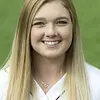
P
/ Softball
INF
/ Softball
OF
/ Softball
C
/ Softball
P
/ SoftballSaturday, August 22
Monday, August 17
Monday, August 10
Monday, August 03