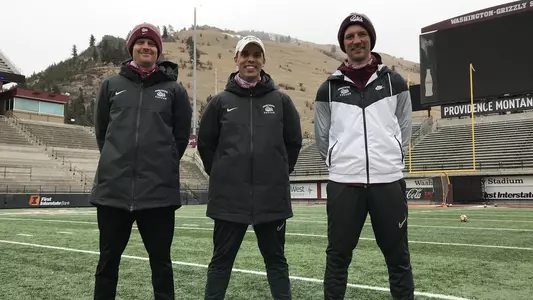
The cost of these dreams
3/26/2021 4:13:00 PM | Soccer
What is the price of chasing your dreams? For Eric Schmidt it was considerable, at least from a financial perspective.
Back then, a decade ago, when he was in his mid-20s, he was already a senior tax associate at Pricewaterhouse Coopers in Denver.
The former club soccer player at Colorado was living the American dream, as some would describe it, the one based on the belief that money leads to happiness. Get the first, the second will follow.
Get even more of the former, get even more of the latter, right?
But maybe the better question might be: What is the cost of not chasing your dreams?
"You're a number," he says of his time in the financial world. "You're based over 40 hours, and you at least have to be 100 percent utilized.
"I was basically around 180 to 200 percent utilized, which is billing hours over 40 hours. I was billing at least 70 to 80 hours a week, so that means I was working at least 90."
Schmidt, who is in his first month as a volunteer coach in the Montana soccer program, stepped away from that world nearly a decade ago.
He even has a retirement story. He went on vacation to Hawaii and ended up spending a month. PWC reached out, asked him when he was coming back. He mailed them his laptop.
"That's how I quit. I just mailed back my stuff and never went back," he says. "When I got back, everybody told me how much happier I looked.
"It was very evident to everybody who knows me that it was the right decision."
He grew up around the sport. Played for FC Boulder. Was on a national championship club team at Colorado as an undergrad.
After two years, he stepped away from the sport and went all in on school and his professional career. Three years later he had a degree and a master's in taxation from CU's Leeds School of Business.
He was on the radar of not only PWC but all of the Big Four.
"I basically went through a recruiting process. They wined and dined and give you gifts and give you sales pitches," he says. He committed to PWC as a sophomore, later signed a contract.
When he finally started working for the firm, the money was good. Really good. It had to be. There is probably no other way to retain people without it.
"It was basically a 7 a.m. to 2 a.m. job, then repeat. It was crazy," he says. But at least he was rewarded. "Financially but not emotionally or anything else.
"Working with young players and helping them realize their dreams, that's why I do this. It's not for the money," says the guy who isn't being paid anything in his current role.
He's here because Montana soccer coach Chris Citowicki was in a bind. A former assistant left for another job in January. And he had a spring season coming up, an actual championship season.
He was told he could hire a replacement assistant. But not until early summer. That left Citowicki and assistant J. Landham to coach a team of 30.
The math didn't add up, not to do it right for a team that had been picked atop the Big Sky Conference poll. To give them anything less than they had earned would be an injustice, so Citowicki got creative.
He used Twitter to call for help. Join our staff! Coach Division I women's soccer! We can't pay you anything! Live in Montana!
It forced Citowicki to live what he had been preaching to his team all fall, when the traditional season got canceled, then rescheduled for spring.
"We told the team, it doesn't matter what's happening, it's how you respond to it that's going to dictate your success," he says.
"Then of course this happens to me. We're in a hiring freeze, so what am I going to do? What matters is how we respond to it, so let's get creative here."
He thought it was a longshot. He was wrong. Interested coaches began reaching out from all across the U.S.
"I was surprised how many people were willing to leave other states to come out here for no money and work with us," said Citowicki. "It was pretty cool."
Take a step back financially to move forward career-wise? Schmidt knew a little something about that.
After leaving PWC, he followed his dream, and the price was considerable, at least from a financial perspective.
"It took going to work and grinding your life at PWC for me to realize what soccer meant to me," says Schmidt. "So at 25, I quit and decided to coach full time."
Maybe it's just in his blood. His grandfather left Lincoln, Neb., decades ago and purchased and took over a ranch in eastern Colorado, near Sterling. He was 15 at the time. The ranch is still owned by the family.
The lesson: Trust yourself. Go for it. Don't look back. And he hasn't.
He returned to Boulder, joined his old club as a coach, of U13, U14, U15 girls. He traded a leather office chair for cleats, open fields and sunshine. You have your American dream. Eric Schmidt has his.
But this is no born-to-coach story. Schmidt came through the boys' youth soccer system, then joined the men's club team at Colorado. On all those teams, one thing mattered above all else: winning.
That's the mentality he brought into his coaching roles in the club. And in that environment it worked.
Players came and went, in one end of an age-group, out the other. Relationships weren't as important as the teaching of technique, the implementation of tactics when the games rolled around.
It's the approach he took to his first job with a school-based team, at Monarch High in Louisville, Colo. Just win, baby.
"I was all about winning. My club teams won national titles and state titles. I won a national title in college. I'd been about winning for a long time, and that just worked," he says.
He brought that with him to Monarch his first year. "It was all about winning. That's all I cared about, prepping them to win and this is how you can win and here's why we didn't win."
His first team went 1-13. The education of the coach had truly begun.
After the season he sat down with his junior class, the ones who would be senior leaders the next year. Things got real.
"That's where all the dots connected," Schmidt says. "They wanted me to care more, to show that I cared more."
It could no longer be team simply serving as vehicle on the path to winning. It became team as family. Had to be.
There were team functions away from the field. He raised $65,000 over five years and put every penny back into the program. They bought new goals, outfitted the team in new kits.
"They looked good, they felt good. They felt valued and invested in," Schmidt says. "A lot of it for me was taking a more holistic approach, of caring about the person first.
"Whether we win or lose, we're all in this together and we all care about each other. Once I changed my mindset and demonstrated it, there was a lot more buy-in and I was a lot happier as a coach."
It nearly mirrors the journey, the process of discovery, of Citowicki, who went 1-17 in his first season at Division III St. Catherine in 2011.
He read books on the subject. He studied other coaches. But the true lessons could only be gained through experience. Call it on-the-job training. Trial and error. Learn, adapt, improve.
Schmidt was still a club coach, but he more and more saw the limits of that role. Club soccer serves a valuable function, but he was outgrowing it.
"You generally get a two-year rotation (of players), and it's plug-and-play," he says. "Clubs are all about how many bodies they can get in and get through.
"If you asked me nine years ago what I want to do in coaching, it would be different than what I'd say now. There is a lot more to the game than just those scenes. I wanted more out of my career."
Schmidt learned about Citowicki's tweet from Ava Samuelson, who was coached by Schmidt at Monarch High and signed with the Grizzlies in November, after being recruited by Citowicki.
She saw the similarities between the two coaches. "They thought it would be a very good environment for me to continue to grow," says Schmidt.
"It happened extremely quickly," says Citowicki. "The phone conversations were very good."
Finally, the big one, the conversation where all was laid bare.
"We talked about how committed this person has to be, not just a volunteer who shows up for practice," says Citowicki. "I need assistant-coach commitment but I can't pay you a dime.
"Are you willing to sacrifice that much and do that? He said yes and moved out here, like within 48 hours."
It was the lack of commitment, not by all but by some, that had Schmidt seeking coaching options outside of the club scene.
"That's a big reason I left my old environment. I was filming everything and doing video analysis, opponent analysis for U11 and U12 players," he says. "That's who I am.
"A lot of the other coaches in my club would show up at 3:50 for a 4 o'clock training session, lay out some cones, run whatever, pick it up and go home.
"That's now who I am as a coach or a person or who I want to be around. I'm highly passionate, highly organized and everything I do is 100 percent."
Did he spend 17 hours breaking down film of Idaho? Yes. Yes, he did. Did the Grizzlies blank the Vandals two weeks ago on the road in a pair of 1-0 shutouts? Yes. Yes, they did.
Idaho then went to Portland State last week and outscored the Vikings 10-0 over two matches, which makes Montana's results in Moscow look even more impressive.
"Just a very smart coach," says Citowicki. "He's got a very sharp eye for the game. The reason we shut down Idaho so well is partly because of his scouting report.
"We knew the dangerous players and how to take them away with which players on our team. We denied them their opportunities. He's delivered. He's proving to be very beneficial."
To see Citowicki, Landham and Schmidt operate in their offices is to see the Socratic Method come to life.
Every time one walks by Citowicki's office, the three of them invariably are in there, one of them at the white board, making his point, the other two engaged. It gets animated, impassioned. It's beautiful.
It's because of Citowicki. He wants to be challenged. He wants it to be an open forum. If you have a better idea, let's hear it. He's confident but always open to new ideas, even if they differ from his.
He's unique that way. He'll have the final word, but he doesn't have the ego that requires his assistants sit in their offices and do things his way and his way only because that's the right way.
It's collaborative to the nth degree. That's why it takes both a morning and afternoon summit with the three of them to even plan out a single training session.
"It took maybe until the second day I was here for it to click, that this is it, this is the dream," Schmidt says. "This is why I moved up here. This is what I want to be a part of.
"I wanted to be in an infectious soccer environment, with highly passionate individuals and highly passionate athletes."
He's descended the tax bracket to begin his move up the coaching ladder. Where it leads, he doesn't know.
"It's a really good fit for me," he says, "the commitment, the level of the players in the program, the methodologies, the staff. This is a really good place for me. This is what I want as a coach. It's amazing."
And you can't put a price on that.
Back then, a decade ago, when he was in his mid-20s, he was already a senior tax associate at Pricewaterhouse Coopers in Denver.
The former club soccer player at Colorado was living the American dream, as some would describe it, the one based on the belief that money leads to happiness. Get the first, the second will follow.
Get even more of the former, get even more of the latter, right?
But maybe the better question might be: What is the cost of not chasing your dreams?
"You're a number," he says of his time in the financial world. "You're based over 40 hours, and you at least have to be 100 percent utilized.
"I was basically around 180 to 200 percent utilized, which is billing hours over 40 hours. I was billing at least 70 to 80 hours a week, so that means I was working at least 90."
Schmidt, who is in his first month as a volunteer coach in the Montana soccer program, stepped away from that world nearly a decade ago.
He even has a retirement story. He went on vacation to Hawaii and ended up spending a month. PWC reached out, asked him when he was coming back. He mailed them his laptop.
"That's how I quit. I just mailed back my stuff and never went back," he says. "When I got back, everybody told me how much happier I looked.
"It was very evident to everybody who knows me that it was the right decision."
He grew up around the sport. Played for FC Boulder. Was on a national championship club team at Colorado as an undergrad.
After two years, he stepped away from the sport and went all in on school and his professional career. Three years later he had a degree and a master's in taxation from CU's Leeds School of Business.
He was on the radar of not only PWC but all of the Big Four.
"I basically went through a recruiting process. They wined and dined and give you gifts and give you sales pitches," he says. He committed to PWC as a sophomore, later signed a contract.
When he finally started working for the firm, the money was good. Really good. It had to be. There is probably no other way to retain people without it.
"It was basically a 7 a.m. to 2 a.m. job, then repeat. It was crazy," he says. But at least he was rewarded. "Financially but not emotionally or anything else.
"Working with young players and helping them realize their dreams, that's why I do this. It's not for the money," says the guy who isn't being paid anything in his current role.
He's here because Montana soccer coach Chris Citowicki was in a bind. A former assistant left for another job in January. And he had a spring season coming up, an actual championship season.
He was told he could hire a replacement assistant. But not until early summer. That left Citowicki and assistant J. Landham to coach a team of 30.
The math didn't add up, not to do it right for a team that had been picked atop the Big Sky Conference poll. To give them anything less than they had earned would be an injustice, so Citowicki got creative.
He used Twitter to call for help. Join our staff! Coach Division I women's soccer! We can't pay you anything! Live in Montana!
It forced Citowicki to live what he had been preaching to his team all fall, when the traditional season got canceled, then rescheduled for spring.
"We told the team, it doesn't matter what's happening, it's how you respond to it that's going to dictate your success," he says.
"Then of course this happens to me. We're in a hiring freeze, so what am I going to do? What matters is how we respond to it, so let's get creative here."
He thought it was a longshot. He was wrong. Interested coaches began reaching out from all across the U.S.
"I was surprised how many people were willing to leave other states to come out here for no money and work with us," said Citowicki. "It was pretty cool."
Take a step back financially to move forward career-wise? Schmidt knew a little something about that.
After leaving PWC, he followed his dream, and the price was considerable, at least from a financial perspective.
"It took going to work and grinding your life at PWC for me to realize what soccer meant to me," says Schmidt. "So at 25, I quit and decided to coach full time."
Maybe it's just in his blood. His grandfather left Lincoln, Neb., decades ago and purchased and took over a ranch in eastern Colorado, near Sterling. He was 15 at the time. The ranch is still owned by the family.
The lesson: Trust yourself. Go for it. Don't look back. And he hasn't.
He returned to Boulder, joined his old club as a coach, of U13, U14, U15 girls. He traded a leather office chair for cleats, open fields and sunshine. You have your American dream. Eric Schmidt has his.
But this is no born-to-coach story. Schmidt came through the boys' youth soccer system, then joined the men's club team at Colorado. On all those teams, one thing mattered above all else: winning.
That's the mentality he brought into his coaching roles in the club. And in that environment it worked.
Players came and went, in one end of an age-group, out the other. Relationships weren't as important as the teaching of technique, the implementation of tactics when the games rolled around.
It's the approach he took to his first job with a school-based team, at Monarch High in Louisville, Colo. Just win, baby.
"I was all about winning. My club teams won national titles and state titles. I won a national title in college. I'd been about winning for a long time, and that just worked," he says.
He brought that with him to Monarch his first year. "It was all about winning. That's all I cared about, prepping them to win and this is how you can win and here's why we didn't win."
His first team went 1-13. The education of the coach had truly begun.
After the season he sat down with his junior class, the ones who would be senior leaders the next year. Things got real.
"That's where all the dots connected," Schmidt says. "They wanted me to care more, to show that I cared more."
It could no longer be team simply serving as vehicle on the path to winning. It became team as family. Had to be.
There were team functions away from the field. He raised $65,000 over five years and put every penny back into the program. They bought new goals, outfitted the team in new kits.
"They looked good, they felt good. They felt valued and invested in," Schmidt says. "A lot of it for me was taking a more holistic approach, of caring about the person first.
"Whether we win or lose, we're all in this together and we all care about each other. Once I changed my mindset and demonstrated it, there was a lot more buy-in and I was a lot happier as a coach."
It nearly mirrors the journey, the process of discovery, of Citowicki, who went 1-17 in his first season at Division III St. Catherine in 2011.
He read books on the subject. He studied other coaches. But the true lessons could only be gained through experience. Call it on-the-job training. Trial and error. Learn, adapt, improve.
Schmidt was still a club coach, but he more and more saw the limits of that role. Club soccer serves a valuable function, but he was outgrowing it.
"You generally get a two-year rotation (of players), and it's plug-and-play," he says. "Clubs are all about how many bodies they can get in and get through.
"If you asked me nine years ago what I want to do in coaching, it would be different than what I'd say now. There is a lot more to the game than just those scenes. I wanted more out of my career."
Schmidt learned about Citowicki's tweet from Ava Samuelson, who was coached by Schmidt at Monarch High and signed with the Grizzlies in November, after being recruited by Citowicki.
She saw the similarities between the two coaches. "They thought it would be a very good environment for me to continue to grow," says Schmidt.
"It happened extremely quickly," says Citowicki. "The phone conversations were very good."
Finally, the big one, the conversation where all was laid bare.
"We talked about how committed this person has to be, not just a volunteer who shows up for practice," says Citowicki. "I need assistant-coach commitment but I can't pay you a dime.
"Are you willing to sacrifice that much and do that? He said yes and moved out here, like within 48 hours."
It was the lack of commitment, not by all but by some, that had Schmidt seeking coaching options outside of the club scene.
"That's a big reason I left my old environment. I was filming everything and doing video analysis, opponent analysis for U11 and U12 players," he says. "That's who I am.
"A lot of the other coaches in my club would show up at 3:50 for a 4 o'clock training session, lay out some cones, run whatever, pick it up and go home.
"That's now who I am as a coach or a person or who I want to be around. I'm highly passionate, highly organized and everything I do is 100 percent."
Did he spend 17 hours breaking down film of Idaho? Yes. Yes, he did. Did the Grizzlies blank the Vandals two weeks ago on the road in a pair of 1-0 shutouts? Yes. Yes, they did.
Idaho then went to Portland State last week and outscored the Vikings 10-0 over two matches, which makes Montana's results in Moscow look even more impressive.
"Just a very smart coach," says Citowicki. "He's got a very sharp eye for the game. The reason we shut down Idaho so well is partly because of his scouting report.
"We knew the dangerous players and how to take them away with which players on our team. We denied them their opportunities. He's delivered. He's proving to be very beneficial."
To see Citowicki, Landham and Schmidt operate in their offices is to see the Socratic Method come to life.
Every time one walks by Citowicki's office, the three of them invariably are in there, one of them at the white board, making his point, the other two engaged. It gets animated, impassioned. It's beautiful.
It's because of Citowicki. He wants to be challenged. He wants it to be an open forum. If you have a better idea, let's hear it. He's confident but always open to new ideas, even if they differ from his.
He's unique that way. He'll have the final word, but he doesn't have the ego that requires his assistants sit in their offices and do things his way and his way only because that's the right way.
It's collaborative to the nth degree. That's why it takes both a morning and afternoon summit with the three of them to even plan out a single training session.
"It took maybe until the second day I was here for it to click, that this is it, this is the dream," Schmidt says. "This is why I moved up here. This is what I want to be a part of.
"I wanted to be in an infectious soccer environment, with highly passionate individuals and highly passionate athletes."
He's descended the tax bracket to begin his move up the coaching ladder. Where it leads, he doesn't know.
"It's a really good fit for me," he says, "the commitment, the level of the players in the program, the methodologies, the staff. This is a really good place for me. This is what I want as a coach. It's amazing."
And you can't put a price on that.



Lady Griz Basketball Locker Room Unveiling - 5/1/26
Friday, May 01
Griz Track & Field - Montana Open Highlights - 4/25/26
Friday, May 01
Griz Softball vs. Idaho State Game-Winning Hit - 3/25/26
Friday, May 01
Griz Softball Championship Series Promo
Friday, May 01