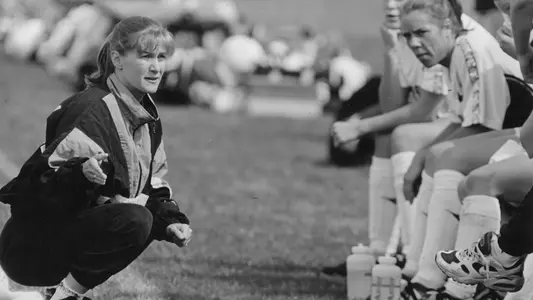
The Hall of Famers :: Betsy Duerksen
10/24/2023 10:26:00 AM | Soccer
One can only imagine what Lake Duerksen was thinking as she sensed her mom moving into position, inserting herself into a drill that was going nowhere.
Practice was going long, again, the Grizzlies still working on corner kicks, their weakness that season, the connection of a foot in the corner to a head in front of goal never quite working out, never quite syncing up as another attempt sailed wide or another jump was mistimed.
Failure. Another try. Failure. Another try. Failure. Another try. Failure again. The coach stood by, taking it all in, wondering why this was so difficult.
Practice went 10 minutes long, then 20, then 30. Then Betsy Duerksen, done with simply watching, instructing, moved in front of goal herself. This is how you do it, the coach told her players.
That's when alarm bells likely started going off for Lake. Mom, what are you doing? MOM, WHAT ARE YOU DOING?! Are you crazy?! You can't be doing this!
The corner kick was lofted toward the goal and Duerksen, seven months pregnant with her daughter, rose in the air and headed the ball past the goalkeeper and into the net as her players stood and watched, mouths open, frozen in the moment.
The point had been made, but it still hadn't been good enough for Duerksen. Not a single player had bodied her, had tried to move her off the goal line, had tried to outjump her to the ball, had competed like she demanded they do in everything she set before them at practice.
If Lake, two months from being able to meet this person face to face, had been caught off guard, imagine the players who witnessed the scene with their own eyes.
"She was mad because we took it easy on her," says the former Michelle Badilla-Gesek, who played for Montana's former soccer coach for five seasons, from 1995 to '99. "She started yelling at us. 'I just scored that unscathed! Not a single player touched me!'
"We were all deer in headlights. You're seven months pregnant! We're not going to touch you! That just encapsulates her competitive fire."
Speak to enough former players and it's clear: The Grizzlies who played for Duerksen from 1994, when she took nothing and molded it into a championship program, to her final season of 2003 were in awe of their coach. Feared their coach. Would do anything for their coach. Hated the idea of letting her down.
Ultimately, all that pressure, all that intensity, all those expectations Duerksen had as the foundation of her program led to a deep, abiding love, not only for her but for what she did in their lives.
She took girls and turned them into unstoppable women, forces of nature.
"She was one of the first coaches who showed me that being competitive is okay," says Julie (Holmes) Woodward, the long-time coach at Seattle University, who played for Duerksen at SU for three years before becoming the coach's first assistant at Montana from 1994 to '96.
"She taught me that you don't have to stifle it. You don't have to hide it. She grabbed every last ounce of potential out of every player she coached."
They were players who had largely been coached by men to that point, at a time when the seeds of Title IX had started to bear fruit in terms of opportunity and increased participation but had yet to result in many former players getting into coaching. It was just too early in the sport's evolution.
And then this woman, who was ahead of the curve, bulldozing a new path that others could follow, comes into your life, and it's just … different. It's life-changing. This wasn't simply a role model. This was someone who was just like you.
"I had not had a female coach for soccer," says Maggie Carey, who played for Duerksen from 1994 to '96. "Not only was she asking us to do things on the field, she could do them. She would play with us and she was still one of the best players I'd ever seen.
"It wasn't just a man barking orders at you. It was a woman who could do what she was asking us to do. I had never been coached in that way. Her expectations were so high. You just wanted to rise to the occasion."
Players would leave practice, sometimes in tears, oftentimes wondering who this coach was, the one who would not let up, who demanded perfection. And if that wasn't possible, then the relentless pursuit of it was, through competition, always through competition.
"I'm not going to say it wasn't hard and it wasn't difficult. She was intense," says the former Natalie Hiller, who both played under Duerksen and later coached with her at Montana.
"But she could bring together a group of young women from all different walks of life and figure out how to put us all on the same page. She was exceptional at making us believe we could be the best."
Hired at Montana in January 1994, just eight months before the Grizzlies would make their on-field debut, Duerksen guided Montana to a 7-8-0 record that first year, then seasons of 12, 15, 16, 15, 12 and 16 wins.
Her Grizzlies won the first Big Sky Conference championship in 1997, made the program's first NCAA tournament in 1999, won an NCAA match in 2000, something that hasn't been accomplished by the league's champion in more than two decades since.
"I didn't know how to do anything else besides win with her," says Hiller. "That's just what you did when you played for Betsy Duerksen. You won."
The flip that Duerksen switched in dozens and dozens of young women, the fire she ignited, the one most of them didn't know was there, first as the coach at Seattle from 1991 to '93, then for a decade at Montana, didn't go out once they moved on from the Grizzlies. It remained with them, shaped them.
"I didn't fully understand it in the moment," says Badilla-Gesek, now Michelle Zentz. "I'd hate it sometimes. We'd leave practice in tears because everything was formulated in terms of winning and losing. Every practice, every warm-up drill, you either won or you lost."
The punishment would follow, either running or pushups. Winning was rewarded, losing came with a price. "That was huge part of our success. She made us fiercely competitive. That's how she trained us, and that's carried over into our lives. I forget that people don't think they can do anything they want.
"That was instilled in us, that we're capable of anything, that we can push beyond any boundaries we thought we had. We were going to blow right past that. We had something very, very special in those years."
Last year, Badilla-Gesek did a 90-mile trek on the John Muir Trail in the Sierra Nevada range in California. Solo, self-supported. People told her she was crazy. She just smiled and laughed to herself. She couldn't blame them. They didn't know she was a Duerksen Girl.
How she had passed it down to her daughter, Odessa Zentz, who ranked first or second in the state as a senior at Helena High in 2022 in the 200, 400 and 800 meters, who swept the 400 and 800 at the state meet, who's now running at Northern Arizona, the next generation. Go ahead, doubt me.
"It comes from those years playing for Betsy," Badilla-Gesek says. "If I want to do it, of course I'm going to do it, of course I can. The thing she instilled in us back then is that there are no boundaries. You come to understand how necessary that was to create what she created.
"We were all held to an equally high standard, and that was hard. I didn't always like how she did it, but once we came together, we were a force. We didn't love her a lot of the time in the moment, but as soon as we were done, we absolutely loved her like a mother. It just took a bit of time and distance."
Time and distance, the things that are needed for a former coach to earn entry into the Grizzly Sports Hall of Fame in her first year on the ballot, two decades after she stepped down from her position following the 2003 season.
Time and distance, the things that are required to see how Duerksen got to Montana in the first place. How she became a Hall of Famer.
She was the sixth of seven kids, raised in Edina, Minnesota, to parents who put their children in every sport that was available, as parents of seven kids tend to do. Duerksen tried softball, ice skating, tennis, gymnastics. Then, when she was in second grade in the 70s, Edina for the first time offered soccer.
And all of sudden, nothing else mattered.
She was good from the start, so good. In high school in the early 80s, she joined a club team, Sota, then was invited to participate in Minnesota's Olympic Development Program.
Both experiences expanded her horizons, both geographically and her understanding of the soccer world and her place in it. At the national championships in St. Louis, she encountered some of the best players in the country and discovered she matched up just fine in tenacity, in athleticism.
She may not have had the same technical and tactical training they had had, growing up in Minnesota, but nobody was more competitive, more driven to be the best.
Her parents wanted her to 1) play college soccer, 2) go to a Catholic school and 3) get as large of a scholarship as she could, not necessarily in that order, because No. 1 and 2 weren't happening if No. 3 didn't come through. You know, the sixth of seven kids and all.
They sent letters to the handful of schools who even offered women's soccer at the time: North Carolina, Cal, Colorado College, Boston College. She took visits to Dartmouth, Harvard, Brown, all of them Ivy League but none could offer athletic aid. They were a fit academically but not financially.
Boston College started a women's soccer program in 1978, still the dark ages of collegiate athletics for women. It became a varsity sport in 1980. The Eagles were one of 12 teams invited to the first NCAA tournament in 1982 and returned to the 12-team tournament in 1983 under coach Mike LaVigne.
It's where Duerksen would land. "My parents wanted me to go to a Catholic school and they offered a good scholarship. Basically, my parents decided," she says. "They're Catholic and they're giving you enough money that we can afford it."
Duerksen's arrival in Boston in the fall of 1984 coincided with that of Susanna Kaplan, hired as head coach after working as an assistant five miles across town at Harvard.
In Kaplan and Duerksen's first two years together, Boston College would go 25-11-2 and make two more NCAA tournaments, advancing to the second round in 1985 following a double-overtime win over Brown when Duerksen, a midfielder, was a sophomore.
"She made an immediate impact," says the now Susanna Donahue, who has coached the last 21 years at The Rivers School just outside of Boston, where she was the National Soccer Coaches Association New England Coach of the Year in 2015.
"Great kid, unbelievably hard worker, just set the tone for everybody else. Her work rate was unbelievable. Just never gave up."
One fall, the Eagles were on the road to play at match at Connecticut. When the starters were announced, the then Betsy Ready was introduced as Betty Ready.
You know how teammates can be. "Everybody started calling her Betty Ready," says Donahue. "I said, are you ready to go, Betty Ready? She goes, I was born ready." Indeed, she was.
She would four times be named All-America by the NSCA, the first-ever Boston College athlete in any sport to accomplish that. She later was named "Female Athlete of the Decade" for the 1980s by the BC student newspaper The Heights. The male winner? Some guy named Doug Flutie.
The two-time Academic All-American earned a degree in human development, later a master's degree in social work through an NCAA post-graduate scholarship, awarded in recognition of her athletic and academic accomplishments.
She was inducted into the Boston College Varsity Club Hall of Fame in 1993.
Duerksen, who did some coaching after graduation, including at Boston College, was working as the director of social services at the Elizabeth Peabody House in Boston, not even thinking about coaching as a profession, when the envelope arrived.
It was light, almost as if it was empty, but what it held inside changed everything, for her and for the women she would begin challenging to be more than they ever thought possible.
She opened it and found a tiny piece of newspaper, a classified ad, and an equally small note from her brother. You should apply for this, he had written. It was an ad for the head coaching position at Seattle University, in the city where her brother was living.
She and her husband, Aaron, were tethered to Boston by nothing but their jobs, so Duerksen applied, got flown out to interview, hit it off with then Director of Athletics Nancy Gerou, who was looking to improve a program that had an all-time record of 35-86-12, and was offered the job.
Duerksen was just 24 years old. "All of a sudden I was a college coach. I had no idea what I was doing. It was a leap of faith," she said.
She had had plenty of coaches as a player but none that she considered a mentor. She hadn't studied the profession or gone to coaching clinics. All she had done was read some books on John Wooden. Beyond that, she coached the way she played. And who can blame an All-American for that?
"(Wooden's) philosophy was not to measure yourself based on what you achieve but how hard you work, how much positive energy you bring. Those are things you have full control over, and that's freeing, right?" she says.
"We all have the ability to come into any situation with a positive energy and the ability to give it your heart and soul. There is nothing stopping anyone from always bringing positive effort and energy and attitude to what they are doing.
"That's what always drove me as an athlete and I probably transferred that over to coaching. Just get in there, work your butt off, enjoy yourself, be positive with your teammates, try to get a little bit better every day. That's something anybody can do."
Her edge, the thing that made it possible for her to push, push, push, right up to the line, and have her players respond time and time again? She cared. She cared about them as people, cared about their lives, their families, their school work, their joys and their struggles.
Do that, she learned, and they'll go over (or through) mountains for you.
"Her competitiveness and her care and her ability to get the most out of every player was extremely special," says Woodward, who played at Seattle one year prior to Duerksen's arrival, then three under the new coach. "She was committed to us and making sure we would reach our full potential."
There was no subtlety with Duerksen. She told you what you wanted to hear and what you sometimes didn't. It's how she wanted it as a player, so she decided to do the same now that she was a coach. Don't fluff it up, sugarcoat it, just say what's on your mind to help the player improve.
"She was a very direct communicator. It wasn't criticizing, it was wanting to make players better," adds Woodward. "She told you what you did well and what you could do to be better."
The team that had won 35 games in its history went 44-20-2 in three seasons under Duerksen and advanced to the NAIA national semifinals in 1993.
Aaron? He did what he could to support his wife, including selling elevators (selling elevators?). Then he got his big professional break. General Electric wanted him to go through its training program, step one for a career in the company's medical division.
It was a major break for the family but would come with a personal cost.
As quickly as college coaching had arrived, a classified ad in the mail, an interview, a job offer, Duerksen was done after just three seasons. Aaron had sacrificed for her. Now it was time for her to do the same for him. She informed her team just before it left for the NAIA championships in St. Louis.
She had preached to her players that it was team over individual. Always. Now she was just living that out off the field, family over self.
After his training, Aaron was presented with three locations to begin his career: Baltimore, Salt Lake City or Montana. Duerksen had gone on family vacations to Montana growing up. If she was going to give up soccer and coaching, landing in Montana to start a family felt like a decent tradeoff.
While Duerksen was turning around the fortunes of the Seattle soccer program in the early 90s, Montana Director of Athletics Bill Moos had a problem: his department's numbers didn't square with Title IX requirements. The Grizzlies needed to add a women's sport.
He chose one that the Montana High School Association had just started sponsoring championships for in 1991: girls soccer.
"We needed to get our numbers in line, but implementing a women's soccer program would also serve the purpose of addressing the needs of young girls in the state and opportunities for them," he says.
In late 1993, he advertised for a coach who would be willing to build a program in short order. He wanted to see the Grizzlies on the field in the fall of 1994.
Duerksen heard the news from a former Seattle player after she and Aaron had purchased a home in Bozeman. Because Aaron's sales territory was the entire state, the couple was free to live anywhere. With that in mind, Duerksen, once ready to leave coaching behind, felt herself getting pulled back in.
She applied, along with more than 100 other interested coaches, she interviewed, she got the job. The family's possessions, still in boxes at their house in Bozeman, would have to find a new home in Missoula.
"I was impressed with Betsy's energy, her knowledge of the game and felt she had a passion for Montana. I could tell it was a place she really wanted to be. We hit it off," said Moos.
"To start up a program takes something a little more than replacing a coach. She really had what I thought was the full package to get the program started and established and then start to move it forward."
She was young, she was energetic, it was January 1994 and she was expected to field a team to begin playing that August. She had no players, she had no home field and she was pregnant for the first time. Due date: early August, just before fall camp. No matter. Let's do this!
"I had no idea what I was getting myself into. I was young and bold. I thought I could do anything. Now I look back and I was crazy to take that on," she said.
She was surrounded at Montana by successful coaches everywhere she looked: Don Read, Robin Selvig, Dick Scott, Blaine Taylor.
"We won 11 Big Sky championships in my five years," says Moos. "What was great about that is that we were such a family. Betsy comes in and joins the group and everybody embraced her and helped her."
The winter that Duerksen arrived on campus, Selvig was building another women's basketball Big Sky champion and NCAA tournament team with a unique twist: all 16 of his players were from the state of Montana.
Duerksen would have no such built-in advantage. Soccer was just too far behind basketball at the high school level. Moos wanted it to be a program for Montanans, but he also was realistic.
"That was another piece why she was attractive to me. She had a great knowledge of Washington and the Pacific Northwest, where soccer had been established while Montana high school was just getting started," said Moos. "She was able to assemble a pretty good squad."
When asked how her program got to be so good so quickly, Duerksen deflects most praise. Instead, she points to where other programs were at the time, the programs she was chasing.
Washington State started playing soccer in 1989 and in 1994 would be under a new coach. Washington started playing soccer in 1991 and in 1994 would be under a new coach as well. Oregon State started soccer in 1988, Oregon didn't have a team until, under then AD Moos, the Ducks added one in 1996.
At the Big Sky level, Weber State begin playing in 1996, Idaho State, Idaho and Eastern Washington in 1998.
Dave Mathieson played quarterback for Washington State in the early 1960s and went on to play for the Chicago Bears. When his soccer-loving daughter, Courtney, was developing into a Division I talent in the early 90s, he did everything he could to get his beloved Cougars to take notice.
They passed. Or more like they threw an interception that Duerksen picked off and returned for a touchdown. Courtney Mathieson scored eight goals as a freshman for the Grizzlies in their debut season of 1994 and scored 43 for her career, a record that still stands.
She scored against Washington State in a 2-1 Montana win in 1995, again in 1997 in a 4-0 Griz victory. She was inducted in the Grizzly Sports Hall of Fame in 2013.
Montana's top players of the 90s? Duerksen snuck most of them out of Washington, from right under the noses of the Huskies and Cougars: Mathieson (Redmond), Railene Thorson (Seattle), Karen Hardy (Renton), Jodi Campbell (Seattle), Stacy and Shannon Forslund (Tacoma).
Duerksen got Lisa Oyen, the first-ever Big Sky Conference Defensive MVP in 1997, from Oregon City.
"We were able to get a bunch of players from the Pacific Northwest that should have gone to U-Dub or Wazzu but somehow we got them. Thank god their coaches weren't on top of it," says Duerksen.
After playing for Duerksen for three seasons at Seattle, Woodward became Montana's first assistant coach, arriving on campus to find what Duerksen found: a whole lot of nothing and a whole lot of work to do.
"I never knew I wanted to go into coaching, but when she asked me to go, I didn't skip a beat," says Woodward, who was hired by Seattle in 1997 and has been the coach at the school ever since, leading her program from NAIA to Division II to Division I. In 26-plus years, she has 344 wins.
"I am eternally grateful. I learned so much working for her. I think I learned from one of the best coaches there is in the game."
She offers a counter-argument to Duerksen's contention that she was able to recruit program-changing talent away from the then Pac-10. Maybe Duerksen was just looking for herself, a young player who, for lack of exposure or lack of proper development, wasn't being noticed by coaches from other schools.
"That was a quality that made Betsy special," says Woodward. "I think she saw potential in athletes. She wanted to see for herself instead of hearing this name or that name. She had the ability to see a player's potential."
But that first season? They were going to have to piece together a team as best they could. They took some players from the university's club team. They took some from open tryouts. They brought in a few who had played for Duerksen at Seattle.
And at least one was rescued from the purgatory of Moscow. The one in Idaho.
Maggie Carey grew up in Boise, but college programs at the time were few and far between. She looked at walking on at Oregon State but would never have been able to afford out-of-state tuition. So, she enrolled at the University of Idaho in Moscow, soccer gone for what she thought was forever.
She was a freshman at the school when Duerksen was hired and began making cold calls to club coaches in the region to find out if anyone might still be available or had missed out on the chance to play college soccer, not because of skill but because of lack of opportunity or exposure.
Ring-ring-ring.
"I still remember when I got the phone call at my sorority," says Carey. "I had no idea who she was."
Carey, nearly 30 years later, still tears up at the retelling of the story. "It's odd that someone who rode the bench her last year still looks to Betsy like she changed my life forever. What she did was give me an opportunity to play when I had already had my dream crushed.
"I thought my career was over. I was in Moscow, where it gets dark at 4 o'clock and I was in a sorority and miserable. To go to Montana and play soccer in college was a dream I never thought was possible."
Everybody from the 1994 team had her own story, of how she became a Grizzly. When the roster was complete, there were 21 players, 19 of them underclassmen. The two upperclassmen, transfers from Seattle, were ineligible to play.
"Betsy was pretty fierce and strong and knew what she wanted and what the program was going to need," says Woodward. "Her goals for that first season were loftier than mine. I remember looking around and saying, okay, we're kind of throwing a team together. Then I saw our schedule."
Gonzaga, Nebraska, Arizona. And that was just the season's first three matches. Montana, without a conference to play in, would play its final home match on September 18, then spend the rest of the season on the road. Lone wolf, indeed.
"It was challenging at the time, but I think it propelled the program," says Woodward.
"We all came in together and bonded because of it," says Carey. "We've stayed close because we all came in together and survived this Bad News Bears-type first season. There were no upperclassmen, so there was no hierarchy. We all came in as equals. I think that made us really close."
Justice Duerksen, Aaron and Betsy's first of three children, was born on August 12, three days before the team's first practice, less than a month before the team's first game against Gonzaga.
"Within two weeks, Betsy was back out playing with us. It was crazy," says Carey. "She set a pretty kick-ass example for us."
Their home pitch that first fall was Rick Bean Field at Fort Missoula. Their training gear was oversized hand-me-downs from the football team. They had no conference to call home.
None of that mattered to Duerksen, who brought the professionalism from Day 1. Any reason anyone had that Montana shouldn't be competitive from its very first match was just making excuses.
"For so many of us, we had never had a woman who was such an exceptional player who was then coaching us," says Carey, who has gone on to make a name for herself as a writer and comedy director in Hollywood. "It raised the level of play and competition in a way that none of us had had before.
"She never asked us to do anything we weren't capable of. Any of her frustrations was, you guys should be rising to the occasion, you should be pushing yourself more, you should expect more from yourself. She didn't let you off the hook.
"It wasn't warm and fuzzy, but that's not what we needed. We needed someone to push us as athletes. I had never had a coach like that, someone who demanded more from you. I've taken those lessons and applied them to my entire life and the career I have now."
Their watches were all set to Betsy Time. If it was 3 o'clock, Betsy Time was 2:50. Be 10 minutes early for everything, or else. "Everyone was terrified of being late," says Carey, who found herself in an empty house one morning, waking up to the realization that her housemates had all left for practice.
She had 15 minutes to get from their house near campus to South Campus Stadium, a mile and a half away. She didn't have a car.
"I was sprinting through the University District with my soccer gear on my back, desperate that I would get there on time and not make my teammates run," says Carey. "I made it. I was hyperventilating and in tears, but I got there."
On a Friday evening, on September 9, 1994, Montana made its debut as a program against Gonzaga in front of a curious crowd of 350 at Fort Missoula, a team playing its first game against a program that had begun playing in 1991.
Advantage: Bulldogs. That lasted less than seven minutes, as early goals by Stacy Forslund and Rachel Kriley were matched by second-half goals from Mathieson and Meagan Wheeler. Final: Montana 4, Gonzaga 0. The Grizzlies outshot the Bulldogs 27-8.
Nearly 650 fans showed up the next afternoon as Montana hosted a Nebraska team that would go 14-4-0 that season. The Grizzlies lost 2-1 in double overtime. Montana would go 7-8-0 that first season, with wins over Northwestern and New Mexico.
"It was pretty amazing how quickly they got real good," says Selvig, whose program went to eight NCAA tournaments in the 90s. "It really caught your attention how quickly they became very good. That's a tough thing to do. She was demanding. Her teams were very fun to watch play, very competitive."
Playing off campus, Montana still averaged more than 450 fans for its home matches in 1994. The interest was there. Now it was time to take the next step: a true home field.
"The community really came to the forefront in supporting our ambitions," says Moos. "That included building (South Campus Stadium). Much of that was done gift-in-kind and really turned out to be a fabulous facility."
In the first seven seasons after South Campus Stadium was built, Montana went 48-12-0 at home.
"We picked rocks off that field. We rolled the sod on that field. A lot of us were used to playing on half soccer field, half a baseball field," says Carey. "To have a field was incredible. It meant a lot. It felt like we had arrived."
The Grizzlies also became a beacon of hope for high school players who now had a realistic dream of playing in their own state.
"What it did for soccer was ignite more excitement and curiosity about the sport. For those of us who already played it, it made it feel like there was the possibility that you could go on to the next level," says Hiller, who prepped at Big Sky High in Missoula.
Nikki Grossberg, of Helena, was the lone Grizzly from Montana on Duerksen's first team. The coach found her next Montanan on a trip to Whitefish to watch Badilla-Gesek. "She and Julie came to one of our games," she says. "We were well aware they were there."
Badilla-Gesek was 5-foot-1 and athletic but she hadn't had the technical training that the players Duerksen was recruiting from Seattle had had. So, she made an impression in her own way.
"I had a great vertical. There was a corner and I got up really high," she says. "My goalkeeper told me that as soon as I did that, both she and Julie were looking at each other and talking and writing down in their notes.
"I felt so optimistic. When they reached out to me, I was floored. I felt like I had won the lottery because I didn't have anything else on the table."
Badilla-Gesek would experience the rise of the program up close during her career, as Montana went from first-year feistiness to a team that the Power 5's wanted nothing to do with.
Montana went 12-7-0 in 1995, then defeated Oregon, Oregon State, Arizona and Arizona State by a combined score of 14-2 in 1996 while going 15-4-1. It was Montana's third year as a program.
A female head coach in a male-ruled profession wasn't just competing, her teams were dominating.
"Her coaching style was aligned with who she was as a player, and she was an amazing soccer player," says Badilla-Gesek. "Here we were, these 18- to 21-year-olds, and she would jump into scrimmages and kick our ass. She was so good.
"For her to be 100 percent who she was, her coaching was just an extension of who she was. She was authentically her as a coach. That blows my mind. We didn't just compete and hold our own. We beat teams and didn't expect any differently."
They, at least the players, made sure there was time for fun. At least an attempt at fun.
Carey, always the ringleader, always the instigator, the player her teammates voted Most Inspirational as a junior and senior despite playing limited minutes in just 11 matches, had an idea for an April Fool's joke.
What if someone could get their hands on the keys to the field, what if they could carry a full-sized goal right down the middle of Higgins Avenue and deposit it in the Duerksens' front yard, so it would be there when they awoke on April 1?
That would be pretty funny, right? That would at least make their coach crack a smile, right? "No. She did not think it was funny," says Carey. "We had to sprint the next day and run the M."
There was plenty of excitement around Duerksen's 1997 team for two reasons. All those freshmen in 1994, Thorson, Forslund, Grossberg, Mathieson among them, were now experienced seniors. And the Grizzlies finally had a league to call home. It was the first year of Big Sky Conference soccer.
"We had to tell people to that point, no, we're good. We were always this fringe, outlier sport. Now we were finally on a level playing field," says Badilla-Gesek.
Montana had early 4-0 and 10-0 wins over Gonzaga and Oregon State, then ended the season on an 11-match winning streak, which started with road wins at Washington, Arizona and Arizona State and ended with a domination of the Big Sky.
The Grizzlies went 5-0-0 in league, outscoring Weber State, Sacramento State, Portland State, Northern Arizona and Cal State Northridge 20-1. Montana hosted the first Big Sky tournament and outscored Portland State 4-0 in the semifinals, Weber State 4-2 in the championship match.
"To have a conference championship was awesome," says Badilla-Gesek. "The Big Sky wasn't our best competition, but it made us feel more part of the school, more part of the other programs.
"Basketball had conference championships, volleyball had conference championships. That championship made us feel like we were on the level with our peers."
The Big Sky didn't yet have an automatic bid to the then 32-team NCAA tournament, so the Grizzlies, despite going 16-5-0 that fall, would have to wait until 1999 for that first to occur.
After shutting out Cal State Northridge and Northern Arizona in Missoula to win the 1999 Big Sky tournament, Montana was sent to College Station to face Texas A&M.
This was the Grizzlies on the national stage for the first time, and they took a 1-0 lead to the locker room on a Heidi Melville goal in the 43rd minute. The Aggies rallied for a 2-1 win with a pair of second-half goals.
The message, if it wasn't already, was clear: Montana could compete. With anyone. "It established the fact that the possibility was there," says Hiller. "You walk out on the A&M field and it's just exciting. We knew we wanted to be there again."
If the 1997 team had a special vibe to it, the 2000 edition did as well. Eight starters were back and most of the team's scoring threats.
After beating Gonzaga, Utah, Minnesota and Oregon during nonconference, Montana responded to a 3-2 overtime loss at Sacramento State early in league the way champions do.
The Grizzlies won their last five regular-season matches, then won the Big Sky tournament with 5-0 and 1-0 victories over Sacramento State and Northern Arizona.
With an automatic bid to the NCAA tournament in hand, Montana still had to prove its way into the official field of 48 with a 6-0 home win over Northwestern State in a play-in match.
The Grizzlies had won eight straight, outscoring their opponents 31-3, when they boarded a bus bound for Pullman, Wash., where Montana would face Washington State in a first-round match.
"Anytime you have that momentum of winning and not just winning but doing it with an exclamation point, we just felt a little unstoppable," says Hiller.
The Cougars were good. They were 13-6-0, with five losses to ranked opponents, four of those by a single goal, the other in overtime.
The morning of the match, Montana awoke to snow on the ground. "At least for me, that was inspirational," says Hiller. "I played my best games in the worst weather."
Hiller made four saves in the first half and the match was scoreless at halftime. "I remember standing in goal thinking to myself, the game is going to be won on a sloppy goal just because it was so messy," Hiller says.
In the 67th minute, Liz Roberts found Shannon Forslund, who scored her 15th and final career goal. Montana led 1-0.
"After we scored the goal, the pressure was on them," says Hiller. "We got them out of their game and on their heels. It was an epic game. It was fun." It was a memorable 1-0 victory, made more rare by each passing season when it doesn't get repeated by the Big Sky champion.
Four days later, the dream run would come to an end with a loss to Hope Solo and Washington.
When the 2001 season opened, the Duerksens had three children, Justice, Lake and Liam. Montana was one result away from a regular-season title in 2002, the Grizzlies played in the Big Sky championship match in 2003.
On October 10 of that season, Montana, down 2-0 midway through the second half, staged a big rally and forced its match at Gonzaga into overtime. The Bulldogs would score the game-winner in the second overtime.
When Duerksen finally fell asleep that night, something that always came hard after a defeat, whether she was playing or coaching, she for the first time was thinking the end of her years leading the Grizzlies might be closer than anyone could have known.
It wasn't that the loss dropped her team to 4-7-2, though that certainly ate at her. She called Aaron that night from her hotel room in Spokane, needing a pick-me-up. He did his best, excitedly detailing how Lake had scored seven goals in her little-kid soccer match earlier that day.
It was the worst thing a mom could hear, how one of her children was thriving while she was away, in the very sport she loved and grew up playing, unable to experience it.
It was too much. Betsy Duerksen had always been wired to be the best, or at least make the attempt to be the best, at everything she did. Now her program was falling off and she was missing out on what she believed was the most important thing in her life: her family.
She was sacrificing on both ends and in turn not getting the reward in either area of her life. For the first time, she started thinking about stepping down from her coaching position.
"Aaron was all over the place with his job, we're both traveling and leaving our kids with these nannies we didn't even know very well," she says. "I loved the job. Loved the job. But I felt obligated to do a better job raising my kids than I was doing.
"You can't do them both well. You have to pick one. I didn't feel I was doing my job or raising my kids particularly well."
It was the easiest decision of her life but the most difficult to follow through with. How could she turn her back on the program she had built from nothing? How could she tell the players who had come to Montana to be coached by her that they would have to put their trust in someone else, a new coach?
At the end of the 2003 season, she walked into Wayne Hogan's office and told Montana's Director of Athletics it was time. She was done.
Ten seasons, a record of 117-69-7. Four Big Sky Conference championships, three tournament titles, two NCAA tournament appearances. And a foundation in place that has made the Montana soccer program one of the department's most successful the last two decades.
"She started the program, she established it. There is some carryover of success. I have a lot of respect for her and what she did," says Selvig, one Grizzly Sports Hall of Famer of another.
"I've always said, it's one thing to get there, another thing to stay there," says Moos, who hired Duerksen. "Montana women's soccer has done that and that's a tribute to Betsy and the foundation she built and the success she had relatively quickly."
The family stayed put and Duerksen was the Missoula Strikers' most over-qualified coach as she worked with Justice's team.
In the summer of 2005, when Aaron was awarded a promotion with GE Medical, the family moved to San Clemente, California, a surf town that sits against the Pacific Ocean, midway between Los Angeles and San Diego. The family lived just a few blocks from the beach, from the crashing waves.
Some people would call it paradise. Duerksen's okay with it. "I'm the only one who gets cranky about the sun coming out again. I like the cooler weather. I miss the seasons. I miss snow," she says. "I would move back to Montana if I could get (Aaron) to move back."
When SoCal becomes a little too SoCal, she has her outlet, her escape: the family's cabin at Holland Lake. She's there every summer, getting every ounce she can from Montana, refueling herself on the one thing that always delivers. "It's good for my soul to come back and get mountains and rivers."
Justice played two years at Seattle, two more at UC San Diego, then played professionally in Germany. Liam played at Chico State. Lake, good enough that she was offered a Division I scholarship, followed her artist's heart instead.
Duerksen has remained in the sport. She worked side-by-side with Gregg Berhalter, the current coach of the U.S. men's national team, for two years when Liam and Berhalter's oldest son were playing club soccer together, when Berhalter was a member of the LA Galaxy.
Berhalter had just finished earning his coaching license from the German Youth Federation, where he had previously played professionally. Every day was a coaching clinic for the woman who managed to win 161 matches in 13 seasons at Seattle and Montana while simply going with what felt right.
"He was probably the best coaching mentor I had and that was like when I was 40 years old," Duerksen says. "During all that, I fell in love coaching at the youth soccer level."
Today she works with Pateadores Soccer Club. You might think she gravitated toward its ECNL teams, the elite players, the last step for the most talented of them before going off to play at the collegiate level.
Actually, she's gone the other way, to younger and younger age groups. She has nine- and 10-year-olds these days, teaching them the fundamentals of the game. "These kids know more than kids I had coming into college. They know so much about the game. It's amazing. It's so fun. I love it.
"Some of them might make the national team. They are great athletes and so into it."
Back in 1987, North Carolina coach Anson Dorrance, who the year before had begun doubling up as the second-ever coach of the U.S. women's national team, invited Duerksen to a training camp for the national team in Blaine in Duerksen's home state of Minnesota.
She was playing with the best but not quite among the best, through no fault of her own.
"I remember meeting with him and him saying, athletically you're good enough and competitive-wise you're good enough, but technically and tactically you're behind. I just didn't have enough background," she says.
There is a peace that comes over a person while talking with Duerksen these days. It's a benefit of simply being in her presence. She exudes contentment. It's a rare trait. You get the sense she has few regrets from any of the big decisions she's made in her life, of getting into coaching, of getting out.
She loved coaching. She loves her family. She loves her new role in coaching, in player development.
But there is one, the type that will never go away. "That's a regret I have. I think I was close to being on the women's national team but I didn't have the preparation underneath it," she says. The group that was chosen would go on to win the 1991 World Cup, the first held for women.
That's what drives her these days, why she pours so much of herself into 9- and 10-year-olds, making sure they have everything they need, that if they do have the talent and the drive, they can go as far as they want to take it.
If she had had the same thing at their age, who knows where she could have gone, how far her skills could have taken her? It's regret transformed into something positive.
"It's on me to make sure they learn everything necessary so if they end up being good enough, driven enough, athletic enough, that I have prepared them well to push them forward best I can," she says.
"The younger you can get them, the easier it is to teach them the game. (12-year-olds) already have some built-in mental constraints of, I can't do that. From a soccer standpoint, having these nine- and 10-year-olds, they are not inhibited yet. They are not tainted. They really believe they can do anything."
People have long wondered, ever since she stepped away from her job at Montana: when will she get back into the college game? She says it's never going to happen, not now. She's found her sweet spot on the coaching ladder. It may be near the bottom but it's where she can make an outsized impact.
It was never the goal anyway, to see how high she could rise. She's just wanted to make a difference.
After another day of practice, she arrives home, checks her phone and sees another text from a former player at Seattle or Montana, filling her in, letting know what she's up to and how important Duerksen was in their life, how she changed it for the better.
One day, those will begin to arrive from players who are just beginning their soccer journey, who are 9 or 10, who are hoping their coach can get the very best out of them, as Betsy Duerksen has been doing for most of her life with the players she's been blessed with.
And that's how she sees it. "Coaching any age is a blessing. To be involved in someone's life in an intense kind of way is a blessing, whether 10-years-old or college. If anyone one day says, you changed my life? Wow, I couldn't hope to do anything more for a person."
Practice was going long, again, the Grizzlies still working on corner kicks, their weakness that season, the connection of a foot in the corner to a head in front of goal never quite working out, never quite syncing up as another attempt sailed wide or another jump was mistimed.
Failure. Another try. Failure. Another try. Failure. Another try. Failure again. The coach stood by, taking it all in, wondering why this was so difficult.
Practice went 10 minutes long, then 20, then 30. Then Betsy Duerksen, done with simply watching, instructing, moved in front of goal herself. This is how you do it, the coach told her players.
That's when alarm bells likely started going off for Lake. Mom, what are you doing? MOM, WHAT ARE YOU DOING?! Are you crazy?! You can't be doing this!
The corner kick was lofted toward the goal and Duerksen, seven months pregnant with her daughter, rose in the air and headed the ball past the goalkeeper and into the net as her players stood and watched, mouths open, frozen in the moment.
The point had been made, but it still hadn't been good enough for Duerksen. Not a single player had bodied her, had tried to move her off the goal line, had tried to outjump her to the ball, had competed like she demanded they do in everything she set before them at practice.
If Lake, two months from being able to meet this person face to face, had been caught off guard, imagine the players who witnessed the scene with their own eyes.
"She was mad because we took it easy on her," says the former Michelle Badilla-Gesek, who played for Montana's former soccer coach for five seasons, from 1995 to '99. "She started yelling at us. 'I just scored that unscathed! Not a single player touched me!'
"We were all deer in headlights. You're seven months pregnant! We're not going to touch you! That just encapsulates her competitive fire."
Speak to enough former players and it's clear: The Grizzlies who played for Duerksen from 1994, when she took nothing and molded it into a championship program, to her final season of 2003 were in awe of their coach. Feared their coach. Would do anything for their coach. Hated the idea of letting her down.
Ultimately, all that pressure, all that intensity, all those expectations Duerksen had as the foundation of her program led to a deep, abiding love, not only for her but for what she did in their lives.
She took girls and turned them into unstoppable women, forces of nature.
"She was one of the first coaches who showed me that being competitive is okay," says Julie (Holmes) Woodward, the long-time coach at Seattle University, who played for Duerksen at SU for three years before becoming the coach's first assistant at Montana from 1994 to '96.
"She taught me that you don't have to stifle it. You don't have to hide it. She grabbed every last ounce of potential out of every player she coached."
They were players who had largely been coached by men to that point, at a time when the seeds of Title IX had started to bear fruit in terms of opportunity and increased participation but had yet to result in many former players getting into coaching. It was just too early in the sport's evolution.
And then this woman, who was ahead of the curve, bulldozing a new path that others could follow, comes into your life, and it's just … different. It's life-changing. This wasn't simply a role model. This was someone who was just like you.
"I had not had a female coach for soccer," says Maggie Carey, who played for Duerksen from 1994 to '96. "Not only was she asking us to do things on the field, she could do them. She would play with us and she was still one of the best players I'd ever seen.
"It wasn't just a man barking orders at you. It was a woman who could do what she was asking us to do. I had never been coached in that way. Her expectations were so high. You just wanted to rise to the occasion."
Players would leave practice, sometimes in tears, oftentimes wondering who this coach was, the one who would not let up, who demanded perfection. And if that wasn't possible, then the relentless pursuit of it was, through competition, always through competition.
"I'm not going to say it wasn't hard and it wasn't difficult. She was intense," says the former Natalie Hiller, who both played under Duerksen and later coached with her at Montana.
"But she could bring together a group of young women from all different walks of life and figure out how to put us all on the same page. She was exceptional at making us believe we could be the best."
Hired at Montana in January 1994, just eight months before the Grizzlies would make their on-field debut, Duerksen guided Montana to a 7-8-0 record that first year, then seasons of 12, 15, 16, 15, 12 and 16 wins.
Her Grizzlies won the first Big Sky Conference championship in 1997, made the program's first NCAA tournament in 1999, won an NCAA match in 2000, something that hasn't been accomplished by the league's champion in more than two decades since.
"I didn't know how to do anything else besides win with her," says Hiller. "That's just what you did when you played for Betsy Duerksen. You won."
The flip that Duerksen switched in dozens and dozens of young women, the fire she ignited, the one most of them didn't know was there, first as the coach at Seattle from 1991 to '93, then for a decade at Montana, didn't go out once they moved on from the Grizzlies. It remained with them, shaped them.
"I didn't fully understand it in the moment," says Badilla-Gesek, now Michelle Zentz. "I'd hate it sometimes. We'd leave practice in tears because everything was formulated in terms of winning and losing. Every practice, every warm-up drill, you either won or you lost."
The punishment would follow, either running or pushups. Winning was rewarded, losing came with a price. "That was huge part of our success. She made us fiercely competitive. That's how she trained us, and that's carried over into our lives. I forget that people don't think they can do anything they want.
"That was instilled in us, that we're capable of anything, that we can push beyond any boundaries we thought we had. We were going to blow right past that. We had something very, very special in those years."
Last year, Badilla-Gesek did a 90-mile trek on the John Muir Trail in the Sierra Nevada range in California. Solo, self-supported. People told her she was crazy. She just smiled and laughed to herself. She couldn't blame them. They didn't know she was a Duerksen Girl.
How she had passed it down to her daughter, Odessa Zentz, who ranked first or second in the state as a senior at Helena High in 2022 in the 200, 400 and 800 meters, who swept the 400 and 800 at the state meet, who's now running at Northern Arizona, the next generation. Go ahead, doubt me.
"It comes from those years playing for Betsy," Badilla-Gesek says. "If I want to do it, of course I'm going to do it, of course I can. The thing she instilled in us back then is that there are no boundaries. You come to understand how necessary that was to create what she created.
"We were all held to an equally high standard, and that was hard. I didn't always like how she did it, but once we came together, we were a force. We didn't love her a lot of the time in the moment, but as soon as we were done, we absolutely loved her like a mother. It just took a bit of time and distance."
Time and distance, the things that are needed for a former coach to earn entry into the Grizzly Sports Hall of Fame in her first year on the ballot, two decades after she stepped down from her position following the 2003 season.
Time and distance, the things that are required to see how Duerksen got to Montana in the first place. How she became a Hall of Famer.
She was the sixth of seven kids, raised in Edina, Minnesota, to parents who put their children in every sport that was available, as parents of seven kids tend to do. Duerksen tried softball, ice skating, tennis, gymnastics. Then, when she was in second grade in the 70s, Edina for the first time offered soccer.
And all of sudden, nothing else mattered.
She was good from the start, so good. In high school in the early 80s, she joined a club team, Sota, then was invited to participate in Minnesota's Olympic Development Program.
Both experiences expanded her horizons, both geographically and her understanding of the soccer world and her place in it. At the national championships in St. Louis, she encountered some of the best players in the country and discovered she matched up just fine in tenacity, in athleticism.
She may not have had the same technical and tactical training they had had, growing up in Minnesota, but nobody was more competitive, more driven to be the best.
Her parents wanted her to 1) play college soccer, 2) go to a Catholic school and 3) get as large of a scholarship as she could, not necessarily in that order, because No. 1 and 2 weren't happening if No. 3 didn't come through. You know, the sixth of seven kids and all.
They sent letters to the handful of schools who even offered women's soccer at the time: North Carolina, Cal, Colorado College, Boston College. She took visits to Dartmouth, Harvard, Brown, all of them Ivy League but none could offer athletic aid. They were a fit academically but not financially.
Boston College started a women's soccer program in 1978, still the dark ages of collegiate athletics for women. It became a varsity sport in 1980. The Eagles were one of 12 teams invited to the first NCAA tournament in 1982 and returned to the 12-team tournament in 1983 under coach Mike LaVigne.
It's where Duerksen would land. "My parents wanted me to go to a Catholic school and they offered a good scholarship. Basically, my parents decided," she says. "They're Catholic and they're giving you enough money that we can afford it."
Duerksen's arrival in Boston in the fall of 1984 coincided with that of Susanna Kaplan, hired as head coach after working as an assistant five miles across town at Harvard.
In Kaplan and Duerksen's first two years together, Boston College would go 25-11-2 and make two more NCAA tournaments, advancing to the second round in 1985 following a double-overtime win over Brown when Duerksen, a midfielder, was a sophomore.
"She made an immediate impact," says the now Susanna Donahue, who has coached the last 21 years at The Rivers School just outside of Boston, where she was the National Soccer Coaches Association New England Coach of the Year in 2015.
"Great kid, unbelievably hard worker, just set the tone for everybody else. Her work rate was unbelievable. Just never gave up."
One fall, the Eagles were on the road to play at match at Connecticut. When the starters were announced, the then Betsy Ready was introduced as Betty Ready.
You know how teammates can be. "Everybody started calling her Betty Ready," says Donahue. "I said, are you ready to go, Betty Ready? She goes, I was born ready." Indeed, she was.
She would four times be named All-America by the NSCA, the first-ever Boston College athlete in any sport to accomplish that. She later was named "Female Athlete of the Decade" for the 1980s by the BC student newspaper The Heights. The male winner? Some guy named Doug Flutie.
The two-time Academic All-American earned a degree in human development, later a master's degree in social work through an NCAA post-graduate scholarship, awarded in recognition of her athletic and academic accomplishments.
She was inducted into the Boston College Varsity Club Hall of Fame in 1993.
Duerksen, who did some coaching after graduation, including at Boston College, was working as the director of social services at the Elizabeth Peabody House in Boston, not even thinking about coaching as a profession, when the envelope arrived.
It was light, almost as if it was empty, but what it held inside changed everything, for her and for the women she would begin challenging to be more than they ever thought possible.
She opened it and found a tiny piece of newspaper, a classified ad, and an equally small note from her brother. You should apply for this, he had written. It was an ad for the head coaching position at Seattle University, in the city where her brother was living.
She and her husband, Aaron, were tethered to Boston by nothing but their jobs, so Duerksen applied, got flown out to interview, hit it off with then Director of Athletics Nancy Gerou, who was looking to improve a program that had an all-time record of 35-86-12, and was offered the job.
Duerksen was just 24 years old. "All of a sudden I was a college coach. I had no idea what I was doing. It was a leap of faith," she said.
She had had plenty of coaches as a player but none that she considered a mentor. She hadn't studied the profession or gone to coaching clinics. All she had done was read some books on John Wooden. Beyond that, she coached the way she played. And who can blame an All-American for that?
"(Wooden's) philosophy was not to measure yourself based on what you achieve but how hard you work, how much positive energy you bring. Those are things you have full control over, and that's freeing, right?" she says.
"We all have the ability to come into any situation with a positive energy and the ability to give it your heart and soul. There is nothing stopping anyone from always bringing positive effort and energy and attitude to what they are doing.
"That's what always drove me as an athlete and I probably transferred that over to coaching. Just get in there, work your butt off, enjoy yourself, be positive with your teammates, try to get a little bit better every day. That's something anybody can do."
Her edge, the thing that made it possible for her to push, push, push, right up to the line, and have her players respond time and time again? She cared. She cared about them as people, cared about their lives, their families, their school work, their joys and their struggles.
Do that, she learned, and they'll go over (or through) mountains for you.
"Her competitiveness and her care and her ability to get the most out of every player was extremely special," says Woodward, who played at Seattle one year prior to Duerksen's arrival, then three under the new coach. "She was committed to us and making sure we would reach our full potential."
There was no subtlety with Duerksen. She told you what you wanted to hear and what you sometimes didn't. It's how she wanted it as a player, so she decided to do the same now that she was a coach. Don't fluff it up, sugarcoat it, just say what's on your mind to help the player improve.
"She was a very direct communicator. It wasn't criticizing, it was wanting to make players better," adds Woodward. "She told you what you did well and what you could do to be better."
The team that had won 35 games in its history went 44-20-2 in three seasons under Duerksen and advanced to the NAIA national semifinals in 1993.
Aaron? He did what he could to support his wife, including selling elevators (selling elevators?). Then he got his big professional break. General Electric wanted him to go through its training program, step one for a career in the company's medical division.
It was a major break for the family but would come with a personal cost.
As quickly as college coaching had arrived, a classified ad in the mail, an interview, a job offer, Duerksen was done after just three seasons. Aaron had sacrificed for her. Now it was time for her to do the same for him. She informed her team just before it left for the NAIA championships in St. Louis.
She had preached to her players that it was team over individual. Always. Now she was just living that out off the field, family over self.
After his training, Aaron was presented with three locations to begin his career: Baltimore, Salt Lake City or Montana. Duerksen had gone on family vacations to Montana growing up. If she was going to give up soccer and coaching, landing in Montana to start a family felt like a decent tradeoff.
While Duerksen was turning around the fortunes of the Seattle soccer program in the early 90s, Montana Director of Athletics Bill Moos had a problem: his department's numbers didn't square with Title IX requirements. The Grizzlies needed to add a women's sport.
He chose one that the Montana High School Association had just started sponsoring championships for in 1991: girls soccer.
"We needed to get our numbers in line, but implementing a women's soccer program would also serve the purpose of addressing the needs of young girls in the state and opportunities for them," he says.
In late 1993, he advertised for a coach who would be willing to build a program in short order. He wanted to see the Grizzlies on the field in the fall of 1994.
Duerksen heard the news from a former Seattle player after she and Aaron had purchased a home in Bozeman. Because Aaron's sales territory was the entire state, the couple was free to live anywhere. With that in mind, Duerksen, once ready to leave coaching behind, felt herself getting pulled back in.
She applied, along with more than 100 other interested coaches, she interviewed, she got the job. The family's possessions, still in boxes at their house in Bozeman, would have to find a new home in Missoula.
"I was impressed with Betsy's energy, her knowledge of the game and felt she had a passion for Montana. I could tell it was a place she really wanted to be. We hit it off," said Moos.
"To start up a program takes something a little more than replacing a coach. She really had what I thought was the full package to get the program started and established and then start to move it forward."
She was young, she was energetic, it was January 1994 and she was expected to field a team to begin playing that August. She had no players, she had no home field and she was pregnant for the first time. Due date: early August, just before fall camp. No matter. Let's do this!
"I had no idea what I was getting myself into. I was young and bold. I thought I could do anything. Now I look back and I was crazy to take that on," she said.
She was surrounded at Montana by successful coaches everywhere she looked: Don Read, Robin Selvig, Dick Scott, Blaine Taylor.
"We won 11 Big Sky championships in my five years," says Moos. "What was great about that is that we were such a family. Betsy comes in and joins the group and everybody embraced her and helped her."
The winter that Duerksen arrived on campus, Selvig was building another women's basketball Big Sky champion and NCAA tournament team with a unique twist: all 16 of his players were from the state of Montana.
Duerksen would have no such built-in advantage. Soccer was just too far behind basketball at the high school level. Moos wanted it to be a program for Montanans, but he also was realistic.
"That was another piece why she was attractive to me. She had a great knowledge of Washington and the Pacific Northwest, where soccer had been established while Montana high school was just getting started," said Moos. "She was able to assemble a pretty good squad."
When asked how her program got to be so good so quickly, Duerksen deflects most praise. Instead, she points to where other programs were at the time, the programs she was chasing.
Washington State started playing soccer in 1989 and in 1994 would be under a new coach. Washington started playing soccer in 1991 and in 1994 would be under a new coach as well. Oregon State started soccer in 1988, Oregon didn't have a team until, under then AD Moos, the Ducks added one in 1996.
At the Big Sky level, Weber State begin playing in 1996, Idaho State, Idaho and Eastern Washington in 1998.
Dave Mathieson played quarterback for Washington State in the early 1960s and went on to play for the Chicago Bears. When his soccer-loving daughter, Courtney, was developing into a Division I talent in the early 90s, he did everything he could to get his beloved Cougars to take notice.
They passed. Or more like they threw an interception that Duerksen picked off and returned for a touchdown. Courtney Mathieson scored eight goals as a freshman for the Grizzlies in their debut season of 1994 and scored 43 for her career, a record that still stands.
She scored against Washington State in a 2-1 Montana win in 1995, again in 1997 in a 4-0 Griz victory. She was inducted in the Grizzly Sports Hall of Fame in 2013.
Montana's top players of the 90s? Duerksen snuck most of them out of Washington, from right under the noses of the Huskies and Cougars: Mathieson (Redmond), Railene Thorson (Seattle), Karen Hardy (Renton), Jodi Campbell (Seattle), Stacy and Shannon Forslund (Tacoma).
Duerksen got Lisa Oyen, the first-ever Big Sky Conference Defensive MVP in 1997, from Oregon City.
"We were able to get a bunch of players from the Pacific Northwest that should have gone to U-Dub or Wazzu but somehow we got them. Thank god their coaches weren't on top of it," says Duerksen.
After playing for Duerksen for three seasons at Seattle, Woodward became Montana's first assistant coach, arriving on campus to find what Duerksen found: a whole lot of nothing and a whole lot of work to do.
"I never knew I wanted to go into coaching, but when she asked me to go, I didn't skip a beat," says Woodward, who was hired by Seattle in 1997 and has been the coach at the school ever since, leading her program from NAIA to Division II to Division I. In 26-plus years, she has 344 wins.
"I am eternally grateful. I learned so much working for her. I think I learned from one of the best coaches there is in the game."
She offers a counter-argument to Duerksen's contention that she was able to recruit program-changing talent away from the then Pac-10. Maybe Duerksen was just looking for herself, a young player who, for lack of exposure or lack of proper development, wasn't being noticed by coaches from other schools.
"That was a quality that made Betsy special," says Woodward. "I think she saw potential in athletes. She wanted to see for herself instead of hearing this name or that name. She had the ability to see a player's potential."
But that first season? They were going to have to piece together a team as best they could. They took some players from the university's club team. They took some from open tryouts. They brought in a few who had played for Duerksen at Seattle.
And at least one was rescued from the purgatory of Moscow. The one in Idaho.
Maggie Carey grew up in Boise, but college programs at the time were few and far between. She looked at walking on at Oregon State but would never have been able to afford out-of-state tuition. So, she enrolled at the University of Idaho in Moscow, soccer gone for what she thought was forever.
She was a freshman at the school when Duerksen was hired and began making cold calls to club coaches in the region to find out if anyone might still be available or had missed out on the chance to play college soccer, not because of skill but because of lack of opportunity or exposure.
Ring-ring-ring.
"I still remember when I got the phone call at my sorority," says Carey. "I had no idea who she was."
Carey, nearly 30 years later, still tears up at the retelling of the story. "It's odd that someone who rode the bench her last year still looks to Betsy like she changed my life forever. What she did was give me an opportunity to play when I had already had my dream crushed.
"I thought my career was over. I was in Moscow, where it gets dark at 4 o'clock and I was in a sorority and miserable. To go to Montana and play soccer in college was a dream I never thought was possible."
Everybody from the 1994 team had her own story, of how she became a Grizzly. When the roster was complete, there were 21 players, 19 of them underclassmen. The two upperclassmen, transfers from Seattle, were ineligible to play.
"Betsy was pretty fierce and strong and knew what she wanted and what the program was going to need," says Woodward. "Her goals for that first season were loftier than mine. I remember looking around and saying, okay, we're kind of throwing a team together. Then I saw our schedule."
Gonzaga, Nebraska, Arizona. And that was just the season's first three matches. Montana, without a conference to play in, would play its final home match on September 18, then spend the rest of the season on the road. Lone wolf, indeed.
"It was challenging at the time, but I think it propelled the program," says Woodward.
"We all came in together and bonded because of it," says Carey. "We've stayed close because we all came in together and survived this Bad News Bears-type first season. There were no upperclassmen, so there was no hierarchy. We all came in as equals. I think that made us really close."
Justice Duerksen, Aaron and Betsy's first of three children, was born on August 12, three days before the team's first practice, less than a month before the team's first game against Gonzaga.
"Within two weeks, Betsy was back out playing with us. It was crazy," says Carey. "She set a pretty kick-ass example for us."
Their home pitch that first fall was Rick Bean Field at Fort Missoula. Their training gear was oversized hand-me-downs from the football team. They had no conference to call home.
None of that mattered to Duerksen, who brought the professionalism from Day 1. Any reason anyone had that Montana shouldn't be competitive from its very first match was just making excuses.
"For so many of us, we had never had a woman who was such an exceptional player who was then coaching us," says Carey, who has gone on to make a name for herself as a writer and comedy director in Hollywood. "It raised the level of play and competition in a way that none of us had had before.
"She never asked us to do anything we weren't capable of. Any of her frustrations was, you guys should be rising to the occasion, you should be pushing yourself more, you should expect more from yourself. She didn't let you off the hook.
"It wasn't warm and fuzzy, but that's not what we needed. We needed someone to push us as athletes. I had never had a coach like that, someone who demanded more from you. I've taken those lessons and applied them to my entire life and the career I have now."
Their watches were all set to Betsy Time. If it was 3 o'clock, Betsy Time was 2:50. Be 10 minutes early for everything, or else. "Everyone was terrified of being late," says Carey, who found herself in an empty house one morning, waking up to the realization that her housemates had all left for practice.
She had 15 minutes to get from their house near campus to South Campus Stadium, a mile and a half away. She didn't have a car.
"I was sprinting through the University District with my soccer gear on my back, desperate that I would get there on time and not make my teammates run," says Carey. "I made it. I was hyperventilating and in tears, but I got there."
On a Friday evening, on September 9, 1994, Montana made its debut as a program against Gonzaga in front of a curious crowd of 350 at Fort Missoula, a team playing its first game against a program that had begun playing in 1991.
Advantage: Bulldogs. That lasted less than seven minutes, as early goals by Stacy Forslund and Rachel Kriley were matched by second-half goals from Mathieson and Meagan Wheeler. Final: Montana 4, Gonzaga 0. The Grizzlies outshot the Bulldogs 27-8.
Nearly 650 fans showed up the next afternoon as Montana hosted a Nebraska team that would go 14-4-0 that season. The Grizzlies lost 2-1 in double overtime. Montana would go 7-8-0 that first season, with wins over Northwestern and New Mexico.
"It was pretty amazing how quickly they got real good," says Selvig, whose program went to eight NCAA tournaments in the 90s. "It really caught your attention how quickly they became very good. That's a tough thing to do. She was demanding. Her teams were very fun to watch play, very competitive."
Playing off campus, Montana still averaged more than 450 fans for its home matches in 1994. The interest was there. Now it was time to take the next step: a true home field.
"The community really came to the forefront in supporting our ambitions," says Moos. "That included building (South Campus Stadium). Much of that was done gift-in-kind and really turned out to be a fabulous facility."
In the first seven seasons after South Campus Stadium was built, Montana went 48-12-0 at home.
"We picked rocks off that field. We rolled the sod on that field. A lot of us were used to playing on half soccer field, half a baseball field," says Carey. "To have a field was incredible. It meant a lot. It felt like we had arrived."
The Grizzlies also became a beacon of hope for high school players who now had a realistic dream of playing in their own state.
"What it did for soccer was ignite more excitement and curiosity about the sport. For those of us who already played it, it made it feel like there was the possibility that you could go on to the next level," says Hiller, who prepped at Big Sky High in Missoula.
Nikki Grossberg, of Helena, was the lone Grizzly from Montana on Duerksen's first team. The coach found her next Montanan on a trip to Whitefish to watch Badilla-Gesek. "She and Julie came to one of our games," she says. "We were well aware they were there."
Badilla-Gesek was 5-foot-1 and athletic but she hadn't had the technical training that the players Duerksen was recruiting from Seattle had had. So, she made an impression in her own way.
"I had a great vertical. There was a corner and I got up really high," she says. "My goalkeeper told me that as soon as I did that, both she and Julie were looking at each other and talking and writing down in their notes.
"I felt so optimistic. When they reached out to me, I was floored. I felt like I had won the lottery because I didn't have anything else on the table."
Badilla-Gesek would experience the rise of the program up close during her career, as Montana went from first-year feistiness to a team that the Power 5's wanted nothing to do with.
Montana went 12-7-0 in 1995, then defeated Oregon, Oregon State, Arizona and Arizona State by a combined score of 14-2 in 1996 while going 15-4-1. It was Montana's third year as a program.
A female head coach in a male-ruled profession wasn't just competing, her teams were dominating.
"Her coaching style was aligned with who she was as a player, and she was an amazing soccer player," says Badilla-Gesek. "Here we were, these 18- to 21-year-olds, and she would jump into scrimmages and kick our ass. She was so good.
"For her to be 100 percent who she was, her coaching was just an extension of who she was. She was authentically her as a coach. That blows my mind. We didn't just compete and hold our own. We beat teams and didn't expect any differently."
They, at least the players, made sure there was time for fun. At least an attempt at fun.
Carey, always the ringleader, always the instigator, the player her teammates voted Most Inspirational as a junior and senior despite playing limited minutes in just 11 matches, had an idea for an April Fool's joke.
What if someone could get their hands on the keys to the field, what if they could carry a full-sized goal right down the middle of Higgins Avenue and deposit it in the Duerksens' front yard, so it would be there when they awoke on April 1?
That would be pretty funny, right? That would at least make their coach crack a smile, right? "No. She did not think it was funny," says Carey. "We had to sprint the next day and run the M."
There was plenty of excitement around Duerksen's 1997 team for two reasons. All those freshmen in 1994, Thorson, Forslund, Grossberg, Mathieson among them, were now experienced seniors. And the Grizzlies finally had a league to call home. It was the first year of Big Sky Conference soccer.
"We had to tell people to that point, no, we're good. We were always this fringe, outlier sport. Now we were finally on a level playing field," says Badilla-Gesek.
Montana had early 4-0 and 10-0 wins over Gonzaga and Oregon State, then ended the season on an 11-match winning streak, which started with road wins at Washington, Arizona and Arizona State and ended with a domination of the Big Sky.
The Grizzlies went 5-0-0 in league, outscoring Weber State, Sacramento State, Portland State, Northern Arizona and Cal State Northridge 20-1. Montana hosted the first Big Sky tournament and outscored Portland State 4-0 in the semifinals, Weber State 4-2 in the championship match.
"To have a conference championship was awesome," says Badilla-Gesek. "The Big Sky wasn't our best competition, but it made us feel more part of the school, more part of the other programs.
"Basketball had conference championships, volleyball had conference championships. That championship made us feel like we were on the level with our peers."
The Big Sky didn't yet have an automatic bid to the then 32-team NCAA tournament, so the Grizzlies, despite going 16-5-0 that fall, would have to wait until 1999 for that first to occur.
After shutting out Cal State Northridge and Northern Arizona in Missoula to win the 1999 Big Sky tournament, Montana was sent to College Station to face Texas A&M.
This was the Grizzlies on the national stage for the first time, and they took a 1-0 lead to the locker room on a Heidi Melville goal in the 43rd minute. The Aggies rallied for a 2-1 win with a pair of second-half goals.
The message, if it wasn't already, was clear: Montana could compete. With anyone. "It established the fact that the possibility was there," says Hiller. "You walk out on the A&M field and it's just exciting. We knew we wanted to be there again."
If the 1997 team had a special vibe to it, the 2000 edition did as well. Eight starters were back and most of the team's scoring threats.
After beating Gonzaga, Utah, Minnesota and Oregon during nonconference, Montana responded to a 3-2 overtime loss at Sacramento State early in league the way champions do.
The Grizzlies won their last five regular-season matches, then won the Big Sky tournament with 5-0 and 1-0 victories over Sacramento State and Northern Arizona.
With an automatic bid to the NCAA tournament in hand, Montana still had to prove its way into the official field of 48 with a 6-0 home win over Northwestern State in a play-in match.
The Grizzlies had won eight straight, outscoring their opponents 31-3, when they boarded a bus bound for Pullman, Wash., where Montana would face Washington State in a first-round match.
"Anytime you have that momentum of winning and not just winning but doing it with an exclamation point, we just felt a little unstoppable," says Hiller.
The Cougars were good. They were 13-6-0, with five losses to ranked opponents, four of those by a single goal, the other in overtime.
The morning of the match, Montana awoke to snow on the ground. "At least for me, that was inspirational," says Hiller. "I played my best games in the worst weather."
Hiller made four saves in the first half and the match was scoreless at halftime. "I remember standing in goal thinking to myself, the game is going to be won on a sloppy goal just because it was so messy," Hiller says.
In the 67th minute, Liz Roberts found Shannon Forslund, who scored her 15th and final career goal. Montana led 1-0.
"After we scored the goal, the pressure was on them," says Hiller. "We got them out of their game and on their heels. It was an epic game. It was fun." It was a memorable 1-0 victory, made more rare by each passing season when it doesn't get repeated by the Big Sky champion.
Four days later, the dream run would come to an end with a loss to Hope Solo and Washington.
When the 2001 season opened, the Duerksens had three children, Justice, Lake and Liam. Montana was one result away from a regular-season title in 2002, the Grizzlies played in the Big Sky championship match in 2003.
On October 10 of that season, Montana, down 2-0 midway through the second half, staged a big rally and forced its match at Gonzaga into overtime. The Bulldogs would score the game-winner in the second overtime.
When Duerksen finally fell asleep that night, something that always came hard after a defeat, whether she was playing or coaching, she for the first time was thinking the end of her years leading the Grizzlies might be closer than anyone could have known.
It wasn't that the loss dropped her team to 4-7-2, though that certainly ate at her. She called Aaron that night from her hotel room in Spokane, needing a pick-me-up. He did his best, excitedly detailing how Lake had scored seven goals in her little-kid soccer match earlier that day.
It was the worst thing a mom could hear, how one of her children was thriving while she was away, in the very sport she loved and grew up playing, unable to experience it.
It was too much. Betsy Duerksen had always been wired to be the best, or at least make the attempt to be the best, at everything she did. Now her program was falling off and she was missing out on what she believed was the most important thing in her life: her family.
She was sacrificing on both ends and in turn not getting the reward in either area of her life. For the first time, she started thinking about stepping down from her coaching position.
"Aaron was all over the place with his job, we're both traveling and leaving our kids with these nannies we didn't even know very well," she says. "I loved the job. Loved the job. But I felt obligated to do a better job raising my kids than I was doing.
"You can't do them both well. You have to pick one. I didn't feel I was doing my job or raising my kids particularly well."
It was the easiest decision of her life but the most difficult to follow through with. How could she turn her back on the program she had built from nothing? How could she tell the players who had come to Montana to be coached by her that they would have to put their trust in someone else, a new coach?
At the end of the 2003 season, she walked into Wayne Hogan's office and told Montana's Director of Athletics it was time. She was done.
Ten seasons, a record of 117-69-7. Four Big Sky Conference championships, three tournament titles, two NCAA tournament appearances. And a foundation in place that has made the Montana soccer program one of the department's most successful the last two decades.
"She started the program, she established it. There is some carryover of success. I have a lot of respect for her and what she did," says Selvig, one Grizzly Sports Hall of Famer of another.
"I've always said, it's one thing to get there, another thing to stay there," says Moos, who hired Duerksen. "Montana women's soccer has done that and that's a tribute to Betsy and the foundation she built and the success she had relatively quickly."
The family stayed put and Duerksen was the Missoula Strikers' most over-qualified coach as she worked with Justice's team.
In the summer of 2005, when Aaron was awarded a promotion with GE Medical, the family moved to San Clemente, California, a surf town that sits against the Pacific Ocean, midway between Los Angeles and San Diego. The family lived just a few blocks from the beach, from the crashing waves.
Some people would call it paradise. Duerksen's okay with it. "I'm the only one who gets cranky about the sun coming out again. I like the cooler weather. I miss the seasons. I miss snow," she says. "I would move back to Montana if I could get (Aaron) to move back."
When SoCal becomes a little too SoCal, she has her outlet, her escape: the family's cabin at Holland Lake. She's there every summer, getting every ounce she can from Montana, refueling herself on the one thing that always delivers. "It's good for my soul to come back and get mountains and rivers."
Justice played two years at Seattle, two more at UC San Diego, then played professionally in Germany. Liam played at Chico State. Lake, good enough that she was offered a Division I scholarship, followed her artist's heart instead.
Duerksen has remained in the sport. She worked side-by-side with Gregg Berhalter, the current coach of the U.S. men's national team, for two years when Liam and Berhalter's oldest son were playing club soccer together, when Berhalter was a member of the LA Galaxy.
Berhalter had just finished earning his coaching license from the German Youth Federation, where he had previously played professionally. Every day was a coaching clinic for the woman who managed to win 161 matches in 13 seasons at Seattle and Montana while simply going with what felt right.
"He was probably the best coaching mentor I had and that was like when I was 40 years old," Duerksen says. "During all that, I fell in love coaching at the youth soccer level."
Today she works with Pateadores Soccer Club. You might think she gravitated toward its ECNL teams, the elite players, the last step for the most talented of them before going off to play at the collegiate level.
Actually, she's gone the other way, to younger and younger age groups. She has nine- and 10-year-olds these days, teaching them the fundamentals of the game. "These kids know more than kids I had coming into college. They know so much about the game. It's amazing. It's so fun. I love it.
"Some of them might make the national team. They are great athletes and so into it."
Back in 1987, North Carolina coach Anson Dorrance, who the year before had begun doubling up as the second-ever coach of the U.S. women's national team, invited Duerksen to a training camp for the national team in Blaine in Duerksen's home state of Minnesota.
She was playing with the best but not quite among the best, through no fault of her own.
"I remember meeting with him and him saying, athletically you're good enough and competitive-wise you're good enough, but technically and tactically you're behind. I just didn't have enough background," she says.
There is a peace that comes over a person while talking with Duerksen these days. It's a benefit of simply being in her presence. She exudes contentment. It's a rare trait. You get the sense she has few regrets from any of the big decisions she's made in her life, of getting into coaching, of getting out.
She loved coaching. She loves her family. She loves her new role in coaching, in player development.
But there is one, the type that will never go away. "That's a regret I have. I think I was close to being on the women's national team but I didn't have the preparation underneath it," she says. The group that was chosen would go on to win the 1991 World Cup, the first held for women.
That's what drives her these days, why she pours so much of herself into 9- and 10-year-olds, making sure they have everything they need, that if they do have the talent and the drive, they can go as far as they want to take it.
If she had had the same thing at their age, who knows where she could have gone, how far her skills could have taken her? It's regret transformed into something positive.
"It's on me to make sure they learn everything necessary so if they end up being good enough, driven enough, athletic enough, that I have prepared them well to push them forward best I can," she says.
"The younger you can get them, the easier it is to teach them the game. (12-year-olds) already have some built-in mental constraints of, I can't do that. From a soccer standpoint, having these nine- and 10-year-olds, they are not inhibited yet. They are not tainted. They really believe they can do anything."
People have long wondered, ever since she stepped away from her job at Montana: when will she get back into the college game? She says it's never going to happen, not now. She's found her sweet spot on the coaching ladder. It may be near the bottom but it's where she can make an outsized impact.
It was never the goal anyway, to see how high she could rise. She's just wanted to make a difference.
After another day of practice, she arrives home, checks her phone and sees another text from a former player at Seattle or Montana, filling her in, letting know what she's up to and how important Duerksen was in their life, how she changed it for the better.
One day, those will begin to arrive from players who are just beginning their soccer journey, who are 9 or 10, who are hoping their coach can get the very best out of them, as Betsy Duerksen has been doing for most of her life with the players she's been blessed with.
And that's how she sees it. "Coaching any age is a blessing. To be involved in someone's life in an intense kind of way is a blessing, whether 10-years-old or college. If anyone one day says, you changed my life? Wow, I couldn't hope to do anything more for a person."
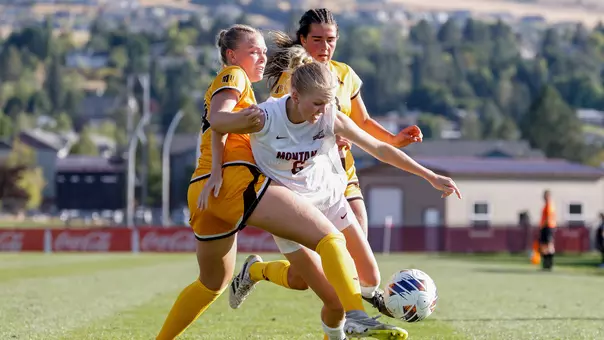

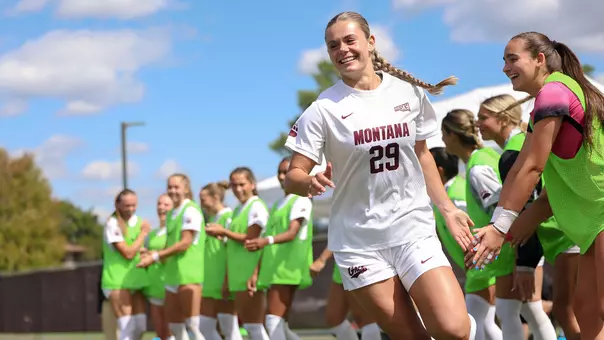
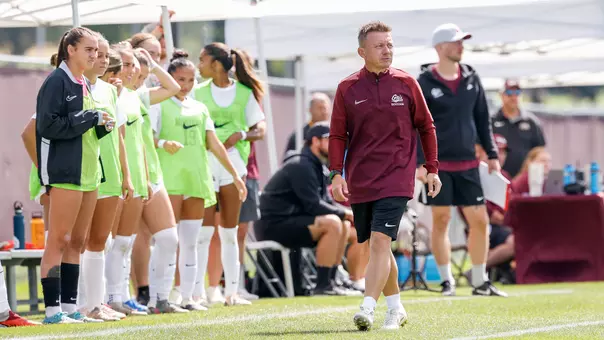
Tuesday, September 15
Monday, September 14
Wednesday, September 09
Monday, September 07