
Leaving it better than she found it
4/17/2023 6:16:00 PM | Golf
This is what racism looks like.
A girl walks into a grocery store. It's the fall of 2020. Covid is here. Everyone knows the name George Floyd. The reckoning that came with his death is still occurring. It's tense everywhere as lockdowns and restrictions and pandemic fatigue and calls for social justice have changed the country, upended it.
She can feel the weight of the stares before she ever sees the eyes that are locked on her, following her, judging her as she moves throughout the aisles in the store. She wears not one mask in public but two, her personal preference at a time when masks are just another trigger.
She's Filipino and Vietnamese at a time when being anything Asian comes with an immediate verdict for enough people to make it feel like a majority: guilty until proven innocent. Guilty of what? Nothing more than looking like she does.
She was born in this country, to parents who served their nation in the U.S. Navy. But the people who are staring, who want her to feel uncomfortable, to know they're not 100 percent certain she isn't at least partly responsible for what's happening, aren't interested in learning her story.
That would take time, communication, an open mind, a willingness to listen, to hear the other side, a willingness to admit their views might be wrong. It's easier this way, to hold on to the anger, the hate. She wants to be judged for who she is, not by the color of her skin. Is that too big of an ask?
It was mostly looks, unapproving, mostly from afar. Until the day someone said something. She feared for her safety. In March 2021, three spas in the Atlanta area were targeted in a shooting that killed eight, six of whom were women of Asian descent. Her grandmother at the time had a salon in California.
The shootings happened four days before the Montana women's golf team and Jessica Ponce were going to play at the Red Rocks Invitational.
"The shooting at the salon, that was a tough one for me to get through," says Ponce. "Here I'm worrying about the next tournament but I'm worrying about my grandmother. You never know."
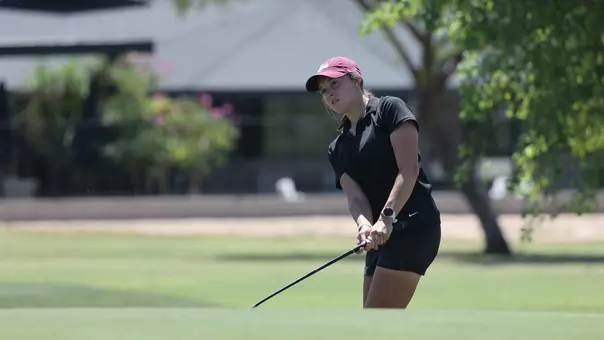
Ponce is playing at the Big Sky Conference Championship this week. She'll graduate next month with a degree in psychology, a minor in international development and studies.
And she'll depart with a department and a campus better off because she refused to stand on the sidelines and watch. Because she knew there had to be others out there like her, going through the same thing. She knew she could make a difference, make things better. She knew she had to try.
She'll admit that the Jessica Ponce who arrived on campus as a freshman in the late summer of 2019 would not recognize the woman she'd become. Part of it was her upbringing. Some of it was a response to the things she experienced after the arrival of Covid as a young woman of Asian descent.
She spent the first 12 years of her life in California, grandparents on both sides of her family a short drive away. It never failed: every weekend, everyone got together. "There were a lot of cultural influences in my house. The cultural identity was always strong," she says.
At the age of 12 she moved with her parents, her younger sister and her younger brother to Beaverton, Ore., the strength of extended family now broken. "The five of us, that's all we had. That's where I learned how to be placed in a new environment and find my own community," she says.
When she arrived on campus, it was a struggle, just the demographics of her new campus, her new hometown, her new home state.
"I did feel the homesickness. It was a struggle mentally and in some respects physically to kind of adapt to this new environment," she says.
"I've grown up where a lot of culture is prominent. I grew up in a multicultural household. Not having that and not having my family with me was a little difficult to navigate."
Freshman Jessica Ponce decided the easiest thing to do would be to simplify her world to her dorm room, the classroom and the golf course. That would just be for the best. That was the space that was available for her, that would be comfortable. She could do that for four years.
But that's not how she was raised, by Israel and Linda. You embrace who you are, the light of your individuality, not hide it under a bushel. Just because her background and her ethnicity weren't like many others on campus, that didn't mean it didn't matter, that she didn't matter.
She knew she couldn't be the only one battling the same feelings.
She joined the Pacific Islanders Club on campus, rose to a leadership position, came to learn that it was okay to have pride in culture, to celebrate it, even in the small minority. "That was the group that helped me come out of my shell," she says.
She was on the course on March 12 her freshman year, in St. George, Utah, when the team was told the tournament was over after 18 holes. They needed to get home. Then she was on her way back to Beaverton. Campus was closing, sports were shutting down.
Everything that resulted, from Covid to anti-Asian attacks to George Floyd to social unrest, only pushed her to go more in. All in. Because if not her, who?
She would become a student ambassador for the College of Humanities and Sciences, an undergrad coordinator for UM's Inclusive Excellence for Student Success, a member of the Department of Athletics Diversity and Inclusion Committee.
So much for sitting in her room between trips to class and the golf course.
"Jess is so impressive, such a thoughtful, compassionate leader," says Montana volleyball coach Allison Lawrence, who is on the ADIC with Ponce. "She's passionate about social justice and such an advocate for student-athletes and all students on our campus.
"She's changed how I think about our department, about how to be an advocate as a coach. She's special. She's giving herself to things that have little visibility yet it's quietly affecting people every day in positive ways."
Job titles are left at the door. The Director of Athletics' chair is no larger than the senior's, the head coach's no more important than the freshman's. That's why the ADIC has been so successful. Everyone is on equal footing, no one's voice more important than someone else's.
"In athletics, you have this power structure, with coaches at the top, student-athletes at the bottom. Even within the team, with seniors and freshmen," she says. "On this committee, it's like we're all equal and we all have a say.
"To have those interactions, where you don't see the power structure, it's so valuable. It makes conversation easy-flowing. Once we break free from our comfort zones, that's when we can have the best conversations."
The girl who once wanted to blend into the background, to avoid the spotlight, now wanted the bullhorn. And then she wanted to pass it off to anyone else who had something to say, all voices welcome and useful.
"I'm glad I take space in places where I can help give voice to the voiceless and help individuals who have something to say," she says. "2019 Jess would not have ever dreamed of being in these kinds of positions or putting herself in spots where attention is on her.
"I'm gravitating toward positions that bring more people into the community and create this environment where people feel welcome, can feel comfortable being who they are."
That's what made the fall of 2020 so difficult. People would see her, judge her, and she never got the opportunity to bridge the gap. She's taken those frustrations and helped make campus a better place, a more welcoming place.
"Once we shut people out and put up barriers, that's when you get misunderstanding," she says. "That's when you start making assumptions. That's where hate can come from. It's like a domino effect. Once negativity starts, it grows until you address it.
"Sometimes you have to hear the difficult conversations. That's the best way for this university to improve, to not have the same conversations that point to one perspective. We can all get value from learning from each other, whether we agree or disagree on certain topics."
Can that ruffle some feathers? Sure, but the end result is almost always better than pre-ruffling. "She hasn't been afraid to say, these are the areas we need go get better, and I'm going to put in the work to do it," says Lawrence. "That takes a lot of courage, a lot of maturity."
The process is a lot like golf. Try too hard to make a difference on campus and you alienate people. Don't try hard enough and nothing gets done. Try too hard on the course? That never works. Either does taking it too easy.
"You've got to find the rhythm or the frequency," she says. "It's a strange in-between. Finding that balance is how anyone plays well.
"Golf has taught me so much about life and how I approach things. It's given me insight into what I want to do in life. As (coach Kris Nord) says, life's not always fair. It's how we react to it that determines whether we make a par or crumble and make a double. Golf has been my teacher for a long time."
Ponce and the Grizzlies played a mostly fall-only schedule in 2019-20, a spring-only schedule in 2020-21.
Last year, playing at all nine of the team's events, Ponce finished the year with a stroke average of 77.1, second behind only Kylie Esh.
She tied for first at the Griz Invitational in the fall. In the spring she had a memorable performance at the Big Sky Conference Championship.
She shot an opening-round 72, which left her tied for fifth after 18 holes, new territory for a player who finished tied for 42nd in her only other previous Big Sky Championship, in 2021.
"My mindset was a little different. It was an appreciation of being there again," she said. "I tried my best not to look at the score. I stayed away from my phone. Other people were my eyes. I just focused on the golf."
Ponce followed with a 75 in Round 2. Esh's 71 left two Montana golfers tied for sixth after 36 holes, new territory indeed.
"That was cool to see, two Griz individuals taking spots in the top 10. I tried to take the approach of appreciating the good golf right now. If more good golf comes along, I'll take that on," she says.
Rock steady to the end, Ponce closed with a 73 to tie for sixth. Her three-day 220 tied for the fourth-best score at the Championship in program history, just three off the best ever for a Montana golfer.
This week she's in Scottsdale, Ariz., trying to do it again. "I have that prior knowledge of being there and playing well, so there is that little bit of expectation for myself. Okay, this is what I did last year, it's time to do better," she says.
"I'm doing everything I can mentally to get in a space that isn't too focused on pressure to perform or fulfilling people's expectations but rather focusing on the skills I know that I have. The balls will drop and birdies will come and good shots will be hit. That's where I'm at heading into this last one."
But she knows that whether she finishes fourth, 24th or 44th, this week won't determine the value of her time on the team, her time on campus. That's pretty much already been set.
"She's a good example of what I think a college athlete should be like. She does everything well. She works hard at her academics, she works hard at her golf," says Nord.
He's the golf coach who used to be the tennis coach at Montana, so he knows what it's like to be unseen as a program.
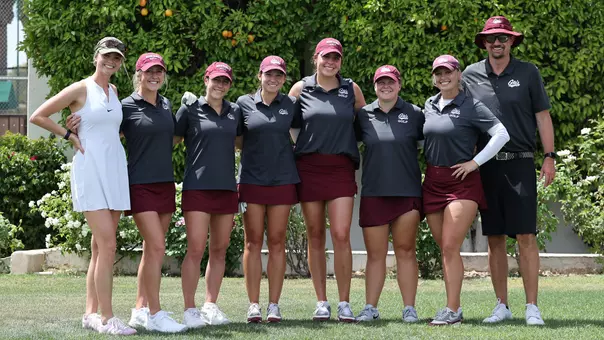
"I'll have people stop and ask me, we have a golf team? Yeah, we're out on the margins, but our attitude isn't out on the margins. These girls want to represent this program and this school well," he says.
"Jess is truly our leader. She's organized, she's a pleasure to be around, she's consistent. And she wants to stick her nose in the fight and make things better. I think her wish is to go make a difference."
Once this week is over, she'll focus on finishing off her degree. It's time to take golf and move it down the list of priorities.
"I'm going to be a little selfish and do things I maybe couldn't have done before," she says, "whether it's with my degree or catching up with my family relationships. The clubs are going to stay aside for a little bit but not too long.
"At some point the competitive drive in me is going to come back and I'm going to want to be back out on the golf course for five straight hours competing."
For starters, that will likely be in the Bay Area. She's has a job opportunity she is in the process of finalizing, and her sister lives there, a student at the University of San Francisco. More family is up the road in Sacramento.
In the fall she will apply for the JET Programme, or the Japan Exchange and Teaching Programme. Because her motivation never has and never will be about chasing money.
"That's the kind of work I've grown to love. Helping the community, being a good person, leaving a place better than I found it," she says. "I have a lot of trust in myself that whatever life throws at me, I'll figure it out."
If you're golfing with Ponce one day, after she picks those clubs back up, and the weather is warm enough that everyone is in short-sleeves, you'll see a couple of distinctive tattoos on the inside of her left arm. Above the elbow is a drawing of the planet Saturn, below is a branch of a cherry blossom.
When times are tough, they are permanent reminders of songs that have gotten her through difficult times.
The Saturn tattoo reminds her that "we each have our own galaxies in us and we are destined for our own futures and our own uniqueness," she says. The cherry blossom in full bloom? Well, that only emerges after a long, hard winter.
It reminds her that, no matter what, keep fighting until the cherry blossoms come. Eventually they will. It's how she hopes she's leaving the University of Montana, a campus in full bloom of possibilities, better off than when she arrived.
A girl walks into a grocery store. It's the fall of 2020. Covid is here. Everyone knows the name George Floyd. The reckoning that came with his death is still occurring. It's tense everywhere as lockdowns and restrictions and pandemic fatigue and calls for social justice have changed the country, upended it.
She can feel the weight of the stares before she ever sees the eyes that are locked on her, following her, judging her as she moves throughout the aisles in the store. She wears not one mask in public but two, her personal preference at a time when masks are just another trigger.
She's Filipino and Vietnamese at a time when being anything Asian comes with an immediate verdict for enough people to make it feel like a majority: guilty until proven innocent. Guilty of what? Nothing more than looking like she does.
She was born in this country, to parents who served their nation in the U.S. Navy. But the people who are staring, who want her to feel uncomfortable, to know they're not 100 percent certain she isn't at least partly responsible for what's happening, aren't interested in learning her story.
That would take time, communication, an open mind, a willingness to listen, to hear the other side, a willingness to admit their views might be wrong. It's easier this way, to hold on to the anger, the hate. She wants to be judged for who she is, not by the color of her skin. Is that too big of an ask?
It was mostly looks, unapproving, mostly from afar. Until the day someone said something. She feared for her safety. In March 2021, three spas in the Atlanta area were targeted in a shooting that killed eight, six of whom were women of Asian descent. Her grandmother at the time had a salon in California.
The shootings happened four days before the Montana women's golf team and Jessica Ponce were going to play at the Red Rocks Invitational.
"The shooting at the salon, that was a tough one for me to get through," says Ponce. "Here I'm worrying about the next tournament but I'm worrying about my grandmother. You never know."
Ponce is playing at the Big Sky Conference Championship this week. She'll graduate next month with a degree in psychology, a minor in international development and studies.
And she'll depart with a department and a campus better off because she refused to stand on the sidelines and watch. Because she knew there had to be others out there like her, going through the same thing. She knew she could make a difference, make things better. She knew she had to try.
She'll admit that the Jessica Ponce who arrived on campus as a freshman in the late summer of 2019 would not recognize the woman she'd become. Part of it was her upbringing. Some of it was a response to the things she experienced after the arrival of Covid as a young woman of Asian descent.
She spent the first 12 years of her life in California, grandparents on both sides of her family a short drive away. It never failed: every weekend, everyone got together. "There were a lot of cultural influences in my house. The cultural identity was always strong," she says.
At the age of 12 she moved with her parents, her younger sister and her younger brother to Beaverton, Ore., the strength of extended family now broken. "The five of us, that's all we had. That's where I learned how to be placed in a new environment and find my own community," she says.
When she arrived on campus, it was a struggle, just the demographics of her new campus, her new hometown, her new home state.
"I did feel the homesickness. It was a struggle mentally and in some respects physically to kind of adapt to this new environment," she says.
"I've grown up where a lot of culture is prominent. I grew up in a multicultural household. Not having that and not having my family with me was a little difficult to navigate."
Freshman Jessica Ponce decided the easiest thing to do would be to simplify her world to her dorm room, the classroom and the golf course. That would just be for the best. That was the space that was available for her, that would be comfortable. She could do that for four years.
But that's not how she was raised, by Israel and Linda. You embrace who you are, the light of your individuality, not hide it under a bushel. Just because her background and her ethnicity weren't like many others on campus, that didn't mean it didn't matter, that she didn't matter.
She knew she couldn't be the only one battling the same feelings.
She joined the Pacific Islanders Club on campus, rose to a leadership position, came to learn that it was okay to have pride in culture, to celebrate it, even in the small minority. "That was the group that helped me come out of my shell," she says.
She was on the course on March 12 her freshman year, in St. George, Utah, when the team was told the tournament was over after 18 holes. They needed to get home. Then she was on her way back to Beaverton. Campus was closing, sports were shutting down.
Everything that resulted, from Covid to anti-Asian attacks to George Floyd to social unrest, only pushed her to go more in. All in. Because if not her, who?
She would become a student ambassador for the College of Humanities and Sciences, an undergrad coordinator for UM's Inclusive Excellence for Student Success, a member of the Department of Athletics Diversity and Inclusion Committee.
So much for sitting in her room between trips to class and the golf course.
"Jess is so impressive, such a thoughtful, compassionate leader," says Montana volleyball coach Allison Lawrence, who is on the ADIC with Ponce. "She's passionate about social justice and such an advocate for student-athletes and all students on our campus.
"She's changed how I think about our department, about how to be an advocate as a coach. She's special. She's giving herself to things that have little visibility yet it's quietly affecting people every day in positive ways."
Job titles are left at the door. The Director of Athletics' chair is no larger than the senior's, the head coach's no more important than the freshman's. That's why the ADIC has been so successful. Everyone is on equal footing, no one's voice more important than someone else's.
"In athletics, you have this power structure, with coaches at the top, student-athletes at the bottom. Even within the team, with seniors and freshmen," she says. "On this committee, it's like we're all equal and we all have a say.
"To have those interactions, where you don't see the power structure, it's so valuable. It makes conversation easy-flowing. Once we break free from our comfort zones, that's when we can have the best conversations."
The girl who once wanted to blend into the background, to avoid the spotlight, now wanted the bullhorn. And then she wanted to pass it off to anyone else who had something to say, all voices welcome and useful.
"I'm glad I take space in places where I can help give voice to the voiceless and help individuals who have something to say," she says. "2019 Jess would not have ever dreamed of being in these kinds of positions or putting herself in spots where attention is on her.
"I'm gravitating toward positions that bring more people into the community and create this environment where people feel welcome, can feel comfortable being who they are."
That's what made the fall of 2020 so difficult. People would see her, judge her, and she never got the opportunity to bridge the gap. She's taken those frustrations and helped make campus a better place, a more welcoming place.
"Once we shut people out and put up barriers, that's when you get misunderstanding," she says. "That's when you start making assumptions. That's where hate can come from. It's like a domino effect. Once negativity starts, it grows until you address it.
"Sometimes you have to hear the difficult conversations. That's the best way for this university to improve, to not have the same conversations that point to one perspective. We can all get value from learning from each other, whether we agree or disagree on certain topics."
Can that ruffle some feathers? Sure, but the end result is almost always better than pre-ruffling. "She hasn't been afraid to say, these are the areas we need go get better, and I'm going to put in the work to do it," says Lawrence. "That takes a lot of courage, a lot of maturity."
The process is a lot like golf. Try too hard to make a difference on campus and you alienate people. Don't try hard enough and nothing gets done. Try too hard on the course? That never works. Either does taking it too easy.
"You've got to find the rhythm or the frequency," she says. "It's a strange in-between. Finding that balance is how anyone plays well.
"Golf has taught me so much about life and how I approach things. It's given me insight into what I want to do in life. As (coach Kris Nord) says, life's not always fair. It's how we react to it that determines whether we make a par or crumble and make a double. Golf has been my teacher for a long time."
Ponce and the Grizzlies played a mostly fall-only schedule in 2019-20, a spring-only schedule in 2020-21.
Last year, playing at all nine of the team's events, Ponce finished the year with a stroke average of 77.1, second behind only Kylie Esh.
She tied for first at the Griz Invitational in the fall. In the spring she had a memorable performance at the Big Sky Conference Championship.
She shot an opening-round 72, which left her tied for fifth after 18 holes, new territory for a player who finished tied for 42nd in her only other previous Big Sky Championship, in 2021.
"My mindset was a little different. It was an appreciation of being there again," she said. "I tried my best not to look at the score. I stayed away from my phone. Other people were my eyes. I just focused on the golf."
Ponce followed with a 75 in Round 2. Esh's 71 left two Montana golfers tied for sixth after 36 holes, new territory indeed.
"That was cool to see, two Griz individuals taking spots in the top 10. I tried to take the approach of appreciating the good golf right now. If more good golf comes along, I'll take that on," she says.
Rock steady to the end, Ponce closed with a 73 to tie for sixth. Her three-day 220 tied for the fourth-best score at the Championship in program history, just three off the best ever for a Montana golfer.
This week she's in Scottsdale, Ariz., trying to do it again. "I have that prior knowledge of being there and playing well, so there is that little bit of expectation for myself. Okay, this is what I did last year, it's time to do better," she says.
"I'm doing everything I can mentally to get in a space that isn't too focused on pressure to perform or fulfilling people's expectations but rather focusing on the skills I know that I have. The balls will drop and birdies will come and good shots will be hit. That's where I'm at heading into this last one."
But she knows that whether she finishes fourth, 24th or 44th, this week won't determine the value of her time on the team, her time on campus. That's pretty much already been set.
"She's a good example of what I think a college athlete should be like. She does everything well. She works hard at her academics, she works hard at her golf," says Nord.
He's the golf coach who used to be the tennis coach at Montana, so he knows what it's like to be unseen as a program.
"I'll have people stop and ask me, we have a golf team? Yeah, we're out on the margins, but our attitude isn't out on the margins. These girls want to represent this program and this school well," he says.
"Jess is truly our leader. She's organized, she's a pleasure to be around, she's consistent. And she wants to stick her nose in the fight and make things better. I think her wish is to go make a difference."
Once this week is over, she'll focus on finishing off her degree. It's time to take golf and move it down the list of priorities.
"I'm going to be a little selfish and do things I maybe couldn't have done before," she says, "whether it's with my degree or catching up with my family relationships. The clubs are going to stay aside for a little bit but not too long.
"At some point the competitive drive in me is going to come back and I'm going to want to be back out on the golf course for five straight hours competing."
For starters, that will likely be in the Bay Area. She's has a job opportunity she is in the process of finalizing, and her sister lives there, a student at the University of San Francisco. More family is up the road in Sacramento.
In the fall she will apply for the JET Programme, or the Japan Exchange and Teaching Programme. Because her motivation never has and never will be about chasing money.
"That's the kind of work I've grown to love. Helping the community, being a good person, leaving a place better than I found it," she says. "I have a lot of trust in myself that whatever life throws at me, I'll figure it out."
If you're golfing with Ponce one day, after she picks those clubs back up, and the weather is warm enough that everyone is in short-sleeves, you'll see a couple of distinctive tattoos on the inside of her left arm. Above the elbow is a drawing of the planet Saturn, below is a branch of a cherry blossom.
When times are tough, they are permanent reminders of songs that have gotten her through difficult times.
The Saturn tattoo reminds her that "we each have our own galaxies in us and we are destined for our own futures and our own uniqueness," she says. The cherry blossom in full bloom? Well, that only emerges after a long, hard winter.
It reminds her that, no matter what, keep fighting until the cherry blossoms come. Eventually they will. It's how she hopes she's leaving the University of Montana, a campus in full bloom of possibilities, better off than when she arrived.


Players Mentioned

/ Golf

/ Golf
Lady Griz Basketball Locker Room Unveiling - 5/1/26
Friday, May 01
Griz Track & Field - Montana Open Highlights - 4/25/26
Friday, May 01
Griz Softball vs. Idaho State Game-Winning Hit - 3/25/26
Friday, May 01
Griz Softball Championship Series Promo
Friday, May 01