Oh captain, their captain
5/2/2019 2:51:00 PM | Soccer
What is a captain when it comes to sports? Montana's Chris Citowicki has been coaching soccer for more than a decade now and he's still searching for the definitive answer to that question.
What is the captain's role? What should they be responsible for? And does a team really even need to formally bestow the honorific, or is it just a copycat move, something that's always been done?
"I feel people do it just because other people do it. But I feel there needs to be some structure to it," he says. "I'm trying to have a method and purpose behind it."
When Montana's season, its first under Citowicki, ended in November against Washington State in the first round of the NCAA tournament, it wasn't long before Citowicki started hearing it.
Janessa Fowler and Taryn Miller, both seniors, had been the captains on that team. So ... who are the new captains going to be?
It's hard to believe that it was still less than a year ago that Citowicki was hired. The announcement was made last May 7.
The timing of it -- he arrived on campus in June, less than two months before the start of the season -- ensured that everything about last season would have a let's do the best we can do with the time we have available to prepare feel to it.
That included the naming of two worthy captains. With that box checked, Citowicki moved on to the next of the 723 tasks that still remained on his to-do list.
But Citowicki is a thinker, someone who questions the way things are being done. Not because he necessarily believes they're wrong. He just wonders if there might be a better way.
So when the 2018 season ended at Washington State's Lower Soccer Field and he heard the question for the first time -- What are we going to do about captains for next year? -- Citowicki did what he does best. He paused and gave it some thought. A lot of thought.
Because for the first time since he'd been hired, he had time on his side. Anyway, what was the rush? Ultimately Citowicki would use the natural world to describe the decision he came to.
The team began its spring-semester training -- gasp! -- without a captain being named. Another example that reveals Montana just isn't like all the rest.
"A lot of programs like to name someone as soon as possible. They want to name a captain so things can operate in the spring. They want to have a leader in place," he said. "I decided to do nothing."
Citowicki is no sheep, mindlessly following the lead of other coaches who have written these things on stone tablets over the decades. Thou must name a captain(s) prior to the start of offseason training. Your program depends upon it. Players must know whom to follow.
And he doesn't want sheep making up his roster.
"The way we've been describing it is that instead of having sheep, we want to be a pack of wolves," he says. "Sheep will follow whatever the leader says, and I don't want that or need that in a program."
Not surprisingly, his returning players had their doubts. Not because they'd ever really considered it the way Citowicki had. They'd just been conditioned to genuflect at the idea of having a captain.
But what if there was another way?
"Once we got rolling with things in the spring, nobody even asked about it anymore," Citowicki said. "Without a leader in place, you have to thrive. Every wolf in the pack needs to take care of itself in addition to, at some point, following the alpha.
"For us it's been about taking ownership of everything you do, figuring things out on your own instead of running to the captain for everything."
And that process allowed the emergence of a captain to come about organically. It wasn't forced out of adherence to standard coaching dogma.
"Do your own work. Then out of that group of individuals who have now taken a lot of ownership of things, at some point they'll look around and say, That's the leader we want," added Citowicki.
That point in time for Montana didn't come until late March, when Citowicki sent a group text message to his 15 wolves. His question: Who do you 100 percent trust to be your leader?
Fifteen replies came back, all the same: Claire Howard, they texted. She is the person I would run through a wall for. "And I 100 percent agree with it," says Citowicki, who had found his captain for the coming season.
"You need to be a communicator and organizer, and Claire just has everyone's respect. It's just a feeling you have about a person you want to follow because of everything she stands for and represents."
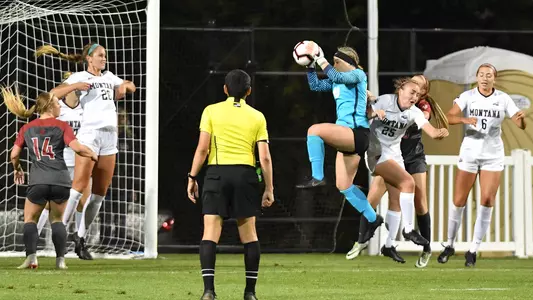
On the field, Howard, a goalkeeper, was voted honorable mention All-Big Sky Conference as both a redshirt freshman and sophomore.
She already has posted 17 career shutouts, just seven off Kailey Norman's program record of 24, and her 0.91 goals-against average through two seasons would be a program record.
But a team's best players aren't always the best options for captaincy. There is more to it than that. Much more.
"Over the past year I've tried to have a pulse on everybody on the team, not just with my class or the upperclassmen," Howard said. "I've really tried to develop a relationship with everybody.
"On the field, I want to be the voice that everyone can hear. Off the field I want to have the type of relationship that everyone knows they can come to me regardless of the situation."
She didn't take those steps because she wanted to be named captain. She was voted captain because it's the type of move a leader makes.
As for what the captain position will look like under Citowicki, there will be the element you'll see -- the game-day armband, the pregame meeting with the officials, the ability to talk to the referee as the team's on-field spokesperson -- and the more important ones you never will.
"The practice environment is massive. You need to keep it up here," says Citowicki, raising his hand over his head to indicate the level of training that needs to occur on a daily basis.
"We've had a lot of discussions with the team that this is how we train and at what level and what it is we're working towards. Somebody has to enforce that during the course of practice in addition to the coaches."
The spring semester was about more than revealing a captain though. Culture is everything to Citowicki, the foundation of a program, and it takes time to put it in place.
And time was something in short supply in the buildup to last season. It wasn't a rush job, last fall wasn't, but the coach always had the spring in mind, the time when everything would slow down, everyone could exhale and the coach could truly begin creating his version of Montana Soccer.
Betsy Duerksen had hers. Neil Sedgwick had his. Mark Plakorus had his.
"The spring was amazing. I can't describe it any other way. It was incredible," Citowicki says. "In terms of on-field development? Huge strides. Everybody is a lot better than they were in the fall. You can see it in the way they move and the way they play.
"From a culture standpoint, it's a very tight team that has come together. We all understand what we're doing and the direction we're moving and how we're going to do it. Everything I wanted to happen did happen, in exactly the way it should have."
It was the off-the-field element, the program's culture, which was the top priority during the spring. It won't always be that way, because once it's defined and set in place by the Citowicki Era's founders, it should be something that lasts.
Future springs can have more of a focus on the technical and tactical sides, but there will always be work to be done with culture. Like a soccer ball left unattended, it can deflate if it's ignored.
"The spring was nice because we were able to slow down," said Howard. "If we needed to have a meeting one day instead of practice, just to see where Chris's head was at and his philosophy on things, we were able to do that.
"We were able to stop, ask questions and learn more about him and the way he wants to run the program, which was super beneficial."
Citowicki got commitments from 11 incoming freshmen last fall. All bought in to his vision for his program and what it could do for them and how they could be a part of it.
With time to think over the holidays, he came to a realization. He'd coached Montana and its players last season, but they were all here when he arrived. He'd never actually recruited them.
So he set about making that right as soon as the semester began in January.
"I never sat down with Raye (Burton) or Alexa (Coyle) or Kennedy (Yost) or Sami (Siems) and recruited them. They weren't my recruits," Citowicki says.
So he brought them in, one by one, and re-recruited them to Montana, introducing them to his program like they'd never put on a Griz uniform.
Not everyone who was on the team at the end of the fall season will be back. But those who are? Yeah, they're in. They're all in.
"We wanted to figure out if everyone fit this program," said Citowicki. "Now we have complete buy-in from everybody on the roster. To get to where we are from February to now is incredible.
"There is a feeling amongst us now that is very hard to describe. It's a feeling that we're tight and we're going to be successful."
There are just 15 of them now and not a senior on the list, which makes the process so exciting. Those players will be joined in July by a dozen newcomers, 11 freshmen and one transfer who will be a junior.
"The foundation is in place. This group has built it. Now (the newcomers) can walk right into the program, and it will be everything I've been telling them," said Citowicki.
A captain has emerged, the details of a new playing surface at South Campus Stadium are being finalized, the heavy lifting has been done over the last few months.
Though that's a misnomer. It wasn't lifting as much as it was the laying in place of an ethos. One that will last. And the wins and championships -- last season was just the start -- will follow.
"The only thing I know -- and it's not scientifically proven -- but programs with good cultures usually end up having better results," said Citowicki.
"You can see it all over the place. When you have a strong culture where people work hard for each other? There is a better chance you will win the game, because when everything is against you, teams tend to pull together and get it done."
What is the captain's role? What should they be responsible for? And does a team really even need to formally bestow the honorific, or is it just a copycat move, something that's always been done?
"I feel people do it just because other people do it. But I feel there needs to be some structure to it," he says. "I'm trying to have a method and purpose behind it."
When Montana's season, its first under Citowicki, ended in November against Washington State in the first round of the NCAA tournament, it wasn't long before Citowicki started hearing it.
Janessa Fowler and Taryn Miller, both seniors, had been the captains on that team. So ... who are the new captains going to be?
It's hard to believe that it was still less than a year ago that Citowicki was hired. The announcement was made last May 7.
The timing of it -- he arrived on campus in June, less than two months before the start of the season -- ensured that everything about last season would have a let's do the best we can do with the time we have available to prepare feel to it.
That included the naming of two worthy captains. With that box checked, Citowicki moved on to the next of the 723 tasks that still remained on his to-do list.
But Citowicki is a thinker, someone who questions the way things are being done. Not because he necessarily believes they're wrong. He just wonders if there might be a better way.
So when the 2018 season ended at Washington State's Lower Soccer Field and he heard the question for the first time -- What are we going to do about captains for next year? -- Citowicki did what he does best. He paused and gave it some thought. A lot of thought.
Because for the first time since he'd been hired, he had time on his side. Anyway, what was the rush? Ultimately Citowicki would use the natural world to describe the decision he came to.
The team began its spring-semester training -- gasp! -- without a captain being named. Another example that reveals Montana just isn't like all the rest.
"A lot of programs like to name someone as soon as possible. They want to name a captain so things can operate in the spring. They want to have a leader in place," he said. "I decided to do nothing."
Citowicki is no sheep, mindlessly following the lead of other coaches who have written these things on stone tablets over the decades. Thou must name a captain(s) prior to the start of offseason training. Your program depends upon it. Players must know whom to follow.
And he doesn't want sheep making up his roster.
"The way we've been describing it is that instead of having sheep, we want to be a pack of wolves," he says. "Sheep will follow whatever the leader says, and I don't want that or need that in a program."
Not surprisingly, his returning players had their doubts. Not because they'd ever really considered it the way Citowicki had. They'd just been conditioned to genuflect at the idea of having a captain.
But what if there was another way?
"Once we got rolling with things in the spring, nobody even asked about it anymore," Citowicki said. "Without a leader in place, you have to thrive. Every wolf in the pack needs to take care of itself in addition to, at some point, following the alpha.
"For us it's been about taking ownership of everything you do, figuring things out on your own instead of running to the captain for everything."
And that process allowed the emergence of a captain to come about organically. It wasn't forced out of adherence to standard coaching dogma.
"Do your own work. Then out of that group of individuals who have now taken a lot of ownership of things, at some point they'll look around and say, That's the leader we want," added Citowicki.
That point in time for Montana didn't come until late March, when Citowicki sent a group text message to his 15 wolves. His question: Who do you 100 percent trust to be your leader?
Fifteen replies came back, all the same: Claire Howard, they texted. She is the person I would run through a wall for. "And I 100 percent agree with it," says Citowicki, who had found his captain for the coming season.
"You need to be a communicator and organizer, and Claire just has everyone's respect. It's just a feeling you have about a person you want to follow because of everything she stands for and represents."
On the field, Howard, a goalkeeper, was voted honorable mention All-Big Sky Conference as both a redshirt freshman and sophomore.
She already has posted 17 career shutouts, just seven off Kailey Norman's program record of 24, and her 0.91 goals-against average through two seasons would be a program record.
But a team's best players aren't always the best options for captaincy. There is more to it than that. Much more.
"Over the past year I've tried to have a pulse on everybody on the team, not just with my class or the upperclassmen," Howard said. "I've really tried to develop a relationship with everybody.
"On the field, I want to be the voice that everyone can hear. Off the field I want to have the type of relationship that everyone knows they can come to me regardless of the situation."
She didn't take those steps because she wanted to be named captain. She was voted captain because it's the type of move a leader makes.
As for what the captain position will look like under Citowicki, there will be the element you'll see -- the game-day armband, the pregame meeting with the officials, the ability to talk to the referee as the team's on-field spokesperson -- and the more important ones you never will.
"The practice environment is massive. You need to keep it up here," says Citowicki, raising his hand over his head to indicate the level of training that needs to occur on a daily basis.
"We've had a lot of discussions with the team that this is how we train and at what level and what it is we're working towards. Somebody has to enforce that during the course of practice in addition to the coaches."
The spring semester was about more than revealing a captain though. Culture is everything to Citowicki, the foundation of a program, and it takes time to put it in place.
And time was something in short supply in the buildup to last season. It wasn't a rush job, last fall wasn't, but the coach always had the spring in mind, the time when everything would slow down, everyone could exhale and the coach could truly begin creating his version of Montana Soccer.
Betsy Duerksen had hers. Neil Sedgwick had his. Mark Plakorus had his.
"The spring was amazing. I can't describe it any other way. It was incredible," Citowicki says. "In terms of on-field development? Huge strides. Everybody is a lot better than they were in the fall. You can see it in the way they move and the way they play.
"From a culture standpoint, it's a very tight team that has come together. We all understand what we're doing and the direction we're moving and how we're going to do it. Everything I wanted to happen did happen, in exactly the way it should have."
It was the off-the-field element, the program's culture, which was the top priority during the spring. It won't always be that way, because once it's defined and set in place by the Citowicki Era's founders, it should be something that lasts.
Future springs can have more of a focus on the technical and tactical sides, but there will always be work to be done with culture. Like a soccer ball left unattended, it can deflate if it's ignored.
"The spring was nice because we were able to slow down," said Howard. "If we needed to have a meeting one day instead of practice, just to see where Chris's head was at and his philosophy on things, we were able to do that.
"We were able to stop, ask questions and learn more about him and the way he wants to run the program, which was super beneficial."
Citowicki got commitments from 11 incoming freshmen last fall. All bought in to his vision for his program and what it could do for them and how they could be a part of it.
With time to think over the holidays, he came to a realization. He'd coached Montana and its players last season, but they were all here when he arrived. He'd never actually recruited them.
So he set about making that right as soon as the semester began in January.
"I never sat down with Raye (Burton) or Alexa (Coyle) or Kennedy (Yost) or Sami (Siems) and recruited them. They weren't my recruits," Citowicki says.
So he brought them in, one by one, and re-recruited them to Montana, introducing them to his program like they'd never put on a Griz uniform.
Not everyone who was on the team at the end of the fall season will be back. But those who are? Yeah, they're in. They're all in.
"We wanted to figure out if everyone fit this program," said Citowicki. "Now we have complete buy-in from everybody on the roster. To get to where we are from February to now is incredible.
"There is a feeling amongst us now that is very hard to describe. It's a feeling that we're tight and we're going to be successful."
There are just 15 of them now and not a senior on the list, which makes the process so exciting. Those players will be joined in July by a dozen newcomers, 11 freshmen and one transfer who will be a junior.
"The foundation is in place. This group has built it. Now (the newcomers) can walk right into the program, and it will be everything I've been telling them," said Citowicki.
A captain has emerged, the details of a new playing surface at South Campus Stadium are being finalized, the heavy lifting has been done over the last few months.
Though that's a misnomer. It wasn't lifting as much as it was the laying in place of an ethos. One that will last. And the wins and championships -- last season was just the start -- will follow.
"The only thing I know -- and it's not scientifically proven -- but programs with good cultures usually end up having better results," said Citowicki.
"You can see it all over the place. When you have a strong culture where people work hard for each other? There is a better chance you will win the game, because when everything is against you, teams tend to pull together and get it done."
Players Mentioned




Tuesday, September 01
Monday, August 31
Monday, August 31
Monday, August 31