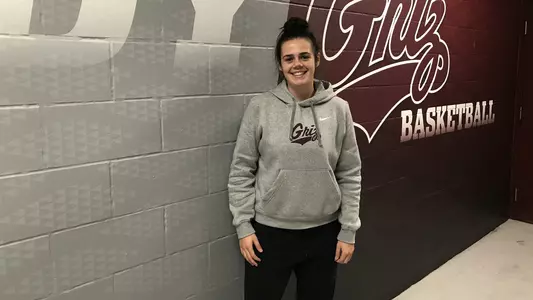
Freshman orientation with Bria Dixson
10/3/2020 4:26:00 PM | Women's Basketball
Her brother, the one who would become her best friend, the one she lost last October, was the first. When she came along two years later, nothing would keep them apart, as if he'd known she was on her way, as if he'd spent that time waiting for her.
Not even nap time, when he'd leave his bed and make his way into her crib, to sleep side by side, their hearts probably beating in unison, her breath going out as he inhaled, wanting every part of her to himself.
"It was really tender," says their dad. "He just had a sweet heart about him. He loved his sisters so much."
So close in spirit but so different in temperament. She would get into sports, savoring the competition, the opportunity to put on a show, to take people to new levels of disbelief at what she could do with a ball in her hands. He played as well, mostly because it made his parents so proud.
There they are, on the same tee-ball team, she at shortstop, chattering away, encouraging every teammate who needed a lift, arriving as she did without an OFF or MUTE button. He would be in the outfield, distracted by the birds overhead, the insects underfoot.
"He could care less about sports, but he did it for us," says their dad.
His sister says he arrived in this world, the one he would leave at the age of 19, without a competitive bone in his body. His concern was never the score or who won or who lost, the only two things that mattered to her, her world reduced to a binary: one team is victorious, the other team isn't.
"He played coed, and all the girls thought he was so cute. It was kind of annoying," she says. "We would play a soccer game and he would come up to me and show me a piece of paper. What's that? It's a girl's number." Forget the score. He'd won the day by his calculation.
Their paths, still close enough they could reach out and hold hands for support as they made their way, split early on. She was dribbling a pair of basketballs by the age of two. He didn't get it. So he'd put on his Spiderman outfit and climb up the door casings in the family home in Portland.
Gianni Dixson got into video games, living the thrill within the cocoon of his imagination, just him, by himself, which fit his personality. He was no loner, but for the most part he was all he needed.
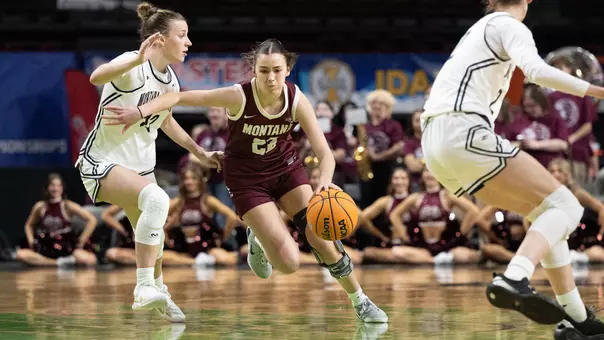
Bria Dixson? She needed teammates, those who are alive, who she can feed off of and bring along with her. She needs a ball in her hands, sweat on her skin that tells her she's alive. Always the performer, she craves a crowd, one whose emotions she can direct with the things she can do on the basketball court.
See father and daughter, sitting on the couch, watching their VHS copy of Pete Maravich Homework Basketball Drills for the umteenth time, the black tape inside spinning around as her mind does the same thing, picturing a time she might be able to apply in a game the magic she is seeing on the screen.
But not just any game. The girls' game as part of a doubleheader, the prelude to a boys' game between the top two teams in the state, one that had a standing-room-only crowd arrive early enough that they witnessed -- or thought they had: Did I just see that? -- Pistol Pete come to life.
"She came down and did this no-look pass, just whipped it, and people erupted," says her dad, Denny. "The crowd was like, ooooohhh! They didn't expect that type of stuff from a girl."
That's the way it's always been. The bigger the stage, the bigger the performance. It's part of the reason she's here, where fans, more than 3,000 on average, come not only out of loyalty but to have their emotions stirred. Consider her the straw, the one that relishes having it in her hands.
There were other programs who wanted her. Her other finalist, also from the Big Sky Conference, averaged 315 fans at its home games last winter. When that team played the Lady Griz at Dahlberg Arena in February, more than 3,100 showed up.
"I want to be in front of people," Dixson says. "I want to hit those eight threes in a game and have the crowd erupt. That's why I'm here. The culture around this program is insane, and I wanted to be a part of it."
Her coaches go cliché when speaking about her, saying she wears her heart on her sleeve, and that's true. It's why she'll be one of your favorite players, the type that sucks you into the ups and downs of the game and brings you along for the ride.
She'll get upset. You'll get upset. She'll hit that eighth 3-pointer. You'll exalt. And she'll acknowledge your support. You'll leave the gym feeling you were part of the action. That's her gift.
If her heart is on her sleeve, it's also on her left arm, in the form of a tattoo. It has three elements: the words Grande Fratello, Italian for big brother, and two treble cleffs, looking like two G's, positioned atop a Spiderman web, her own creation to honor the memory of her brother, whom she called Gigi.
When she was leading the state of Oregon in scoring as a freshman at Franklin High, she used to say that basketball was her life. And it was. Until last October, when that would no longer be the case. She was forced to reassess, process a new reality in which basketball hardly registered or mattered at all.
Her brother was here one day, gone the next. She never got the opportunity to say goodbye to her best friend, her former crib-mate, so unexpected was his passing. It was a shock to everyone.
Basketball would be her escape from the fog she found herself living in. But some days, the pressure of being the best holdover from a state championship team the season before at Benson High was too much. She couldn't step foot in the gym.
"It's not anything a kid should have to cope with," she says. "Most adults don't even understand that loss. As a 17-year-old, it was extremely hard. It's still extremely hard."
After his death, the remaining family moves on, each day adding to the total they've lived without their son, their brother. The number grows but the time that's passed has done little to soothe the pain. Distance has not meant solace. And that will never change.
"He is ingrained in me as a person. That hole will always be there. It's not like a first love and then you move on and find someone new," Bria says. "That's my brother. I will never have that again. It doesn't matter who comes into my life and who goes, I won't ever have that again."
If family defines the timeline of her life, basketball has as well, from the time she went all in as a fifth grader and started playing year-round. "Basketball fed my soul," she says.
She is a clear product of her parents: Denny, one of six kids who enthusiastically adopted the sport into their family, and Angela, the youngest of six, who passed down the genes that would present themselves in her first daughter's ability to lead others.
"She is really strong, just a powerhouse," says Denny, a self-employed exterminator, of his wife, a corporate human resources manager for AIMCO. "Be like your mom, I told my kids. Stay in school, get your master's, be a big shot. You'll never have to be a little shot like your dad."
Their families lived 10 blocks away, their moms members of the same Bunco club. They met at a restaurant, where he and his brother had gone out for spaghetti. She was a waitress but not assigned to their table. He asked his waitress if that could be changed. "The rest is history," he says.
They would grow close, father and daughter, not only because they were the most similar of the five but because it took one parent to keep up with Bria while the other was able to get Gianni and Andie everywhere they needed to be.
She was getting hooked on the sport at the time Shoni Schimmel, raised on the Confederated Tribes of the Umatilla Indian Reservation in northeast Oregon, moved to Portland and started drawing crowds to Franklin High, before she went on to become an all-American at Louisville and play in the WNBA.
Dixson, who would make posters to bring to the games, became as big a fan of Schimmel's as the caravan of people who would make the trip across the state, from the reservation to Portland for Schimmel's games.
She would remember the plays Schimmel made and bring them home. Before the car's engine had begun to cool, there would be Bria and Andie, the only person she allowed to wear her jersey, playing together in front of the family home, the older sister indoctrinating the younger in the ways of the sport.
The youngest of three would try to follow in her sister's footsteps, but her talents and passions would ultimately win out and take her in a new direction, toward singing and acting.
But Bria's focus never wavered, as dialed in on basketball as her eyes on the rim when shooting another deep ball, pursuing goals, glory and the occasionally payday.
It's her dad's fault for offering her $100 every time she hit 10 3-pointers in a game. "I started praying when she got up to eight," he says. "Come on, God, you know how poor I am. Didn't matter. She hit it a few times."
She won a middle-school state championship as an eighth grader, scoring 42 points in the title game in Bend. "She's a baller. Always been a hooper," says Denny, who was able to provide dinner for the family afterwards. His daughter only hit eight 3-pointers.
If she gets her basketball jones from her dad and her strength and leadership from her mom, she gets her 5-feet-7 inches from both.
Sixty-seven inches is 67 inches, and no number of flashy passes in transition was going to turn a recruiter's head. She wanted to play college basketball, so she knew she needed something else, something that would separate her from the other 67-inch players out there who had the same dream.
She settled on the 3-point shot. "In the eighth grade, that's when I realized that if I put in the work, I could be really good at it. I knew I was going to be tiny, so I knew I had to be good at something," she says.
The secret to her success? Stopping by LA Fitness every morning on her way to school, but it wasn't just the benefit of repetition. The club only had men's basketballs available to check out. They were both larger and heavier than those she would pick up after school at practice.
That might be the reason for her stroke. "I don't have the prettiest shot. My left thumb is in it and pushes the ball a bit. But it's quick and goes in. People have tried to change it, but if it goes in the hoop, that's what you want."
She'd get her hundreds of shots up in the morning. By afternoon, she would feel unstoppable. "I'd get to our games or practice and it would translate to me being able to shoot a few feet behind the (3-point) line because the ball was lighter and smaller. My confidence went way up," she says.
Her mom was the youngest of six kids. The oldest of those six had a son, Josh Green. He got the head coaching job at Franklin the same year his cousin was a freshman. They talked about it and decided not to tell anyone about their family ties. "She wanted to earn it," he says.
On a team that had gone 10-101 over the previous five seasons, Dixson was a revelation. She earned it and then some. She put up 33 against Battle Ground, 36 against Hudson's Bay, making everyone think Shoni Schimmel all over again. Then she scored a season-high 37 against Cleveland.
But it wasn't a team of fellow ballers. Almost all of the other players were seasonal at best. They picked up a basketball in November, put it down four months later. That the team went 9-13 that season is a testament to the heavy scoring load Dixson not only took on but was able to pull off.
"I developed a deep 3-point shot because I had to. A lot of pressure was on me. I had to score those 20-some points per game for us to even have a chance, and we still lost most of the time," she says. "I had someone hanging on me all the time, so my release became really quick."
Her game was a mixture of pull-up-and-shoot and catch-and-shoot.
Green still has a video from one game, when his point guard got three steps over half court and let it fly. In the corner of the video, the coach puts his hands on his head in frustration and turns to say something to his assistant. Probably: What is she doing!? Behind him the ball splashes through the net.
You know the look. How Robin Selvig would groan at some of the shooting choices made by McCalle Feller years ago, only to watch the ball go in, then say, "Nice shot, McCalle!" What else is a coach going to do? Some players just have the green light, and they know it.
If this has you thinking she is all-score, no-team, then you don't yet have the complete picture of Bria Dixson, who did not once as a freshman or sophomore ask Green after a game how many points she had scored. She always wanted to know about assists, steals, rebounds.
"She gets just as fired up making a pass that leads to a basket for a teammate as she does hitting an open three," says first-year Lady Griz coach Mike Petrino, who has had Dixson on campus for two months. "She is the first to acknowledge players and is always encouraging teammates.
"In all my years, she is the most vocal freshman I've ever been around. She is not afraid to talk and has elevated our communication in practice. The upperclassmen have fed off it. It's been really good for us."
Madi Schoening, the team's lone senior, calls Dixson "your biggest cheerleader."
Interesting thing about Green and Petrino. The former was a student at Central Catholic in Portland when the latter was in his early years as a teacher at the school. Green was in Petrino's Street Law class.
After Dixson's freshman season, both men were at the Oregon state basketball tournament when the student noticed his former teacher, who had just wrapped up his first year as an assistant coach at Montana.
They watched some games together before Green asked Petrino if he could send the coach some video of one of his players for an evaluation. It was Dixson.
Petrino knew well the Lady Griz had made just 120 3-pointers that season on 25.7 percent shooting. Only 25 Division I programs made fewer, only 11 shot a lower percentage. It was an area of glaring need, just as it remains today.
That was the season Northern Colorado's Savannah Smith began toying with Big Sky defenses from the point guard position. She wasn't just a distributor. She could do it all, tormenting opponents in any number of ways.
High on-ball screens were death by 40-minute paper cut for an opposing coaching staff. It seems simple enough: two offensive players, two defensive players, a small section of the floor. But the options become myriad for a savvy ball-handler based on the actions of the defenders.
Smith could stop and pop if the on-ball defender went under the screen, turn the corner and create havoc off the dribble if the defender chased over the top. Switch it? Smith on a mismatched defender? All you could do was feel sorry for the unlucky one before Smith began her evisceration.
That's not to say Dixson is the next Smith, just that there is enough there to get the imagination fired up.
"There have been a lot of players like that in our conference, but I don't know how many we've had," says Lady Griz assistant coach Jordan Sullivan.
"A player like that makes it so much harder for the defense to guard you. You can't have one set plan to do something when they can do that. It will be nice to have that in our bucket of tricks now."
Dixson's game evolved by necessity. By the second half of her first year, she was no longer a freshman catching teams by surprise. The box-and-one became the typical defense she and Franklin faced.
"She touched the ball and it was an automatic double team. Every opponent just tried to take her out of the game," says Green. "Her role really shifted from shooting to finding the assist or the best pass she could make. She adapted really well by changing her game up."
The more her game grew, the more interested Montana became. By the fall of her sophomore year, she was in Missoula for an on-campus visit. There was nothing perfunctory about it. She wasn't just there to take the tours. She was all in.
The team's 6 a.m. practice? She was in the gym, from start to finish. Saturday morning's Homecoming Hustle five-kilometer road race? She signed up at the last minute and ran. That afternoon's home football game? She was there, vocal as ever, getting chills that she was the one being courted.
An early tell: She left town with some Griz gear that she had purchased. On her other visits she went home empty-handed. Whether she knew it or not, she had found her dream school. "Part of me always knew," she says.
"What stood out was that they cared about me more as a person than as a basketball player. When you go Division I, it's a business, but they never made it feel like that.
"I had people here who made me feel like I was part of their family and that they loved and cared about me. That made it easy. It wasn't even about the basketball."
But recruiting is part Shark Tank, isn't it? She had an offer ... but didn't she owe it to herself to see what else might be out there? Hadn't she earned that through her hard work and dedication? Shouldn't she play through her junior year and see what else might come her way?
The Lady Griz had to keep their options open as well, which they told her. After all, there were other players out there with her skill set who would go just as head-over-heels as she had but accept an offer on the spot, not reply with, Thanks, I'll let you know.
It got tense, particularly on her end. She wanted in, but Montana had made promises to other players to bring them to Missoula on visits. Dixson would just have to wait and sweat it out.
If only she had listened to her dad.
"Even though these other schools are coming after you, you have to remember the faithfulness they've shown you over the years," he told her. "She'd have games in Chicago, Vegas, California, here at the End of the Oregon Trail, and they'd be there.
"I told her faithfulness is worth millions of dollars, and Montana showed that to you, they didn't just say something. It's like love. You can say you love somebody, but if your actions don't follow through, it's just a word. They proved themselves and believed in her."
Their mutual love was consecrated first by verbal commitment, then National Letter of Intent last November.
For a number of reasons, Dixson transferred from Franklin to Benson Polytechnic High prior to her junior year.
She had been teammates with most of Benson's players in middle school and knew their commitment level. Green had left for a job in California. And she's a hands-on learner. As a junior at Benson High, which has majors, she learned how to wire a house. Last year she learned how to do it commercially.
She was joining a team that had made the Class 6A state title game the year before, where it lost by 19 points to Southridge, a juggernaut headlined by 6-foot-4 Cameron Brink, who is now a freshman at Stanford.
The teams were a combined 49-7 when they met once again in the title game in Dixson's junior year. Though everyone expected Southridge to roll to its third consecutive state title, this was no David-and-Goliath matchup. Benson had five players who would go on to play college basketball.
Brink and Southridge never had a chance. Benson led 33-20 at the half and shocked (most of) the world with a one-sided 66-42 victory.
"We didn't feel like we were the underdogs," said Dixson, who had 12 points and seven assists in the title game. "We packed the middle and double-teamed (Brink) every time she touched the ball. They didn't know what to do because everything went through Cam."
She made a truism of a claim her dad made this week: "Every team she's played on has gotten better." Indeed: from a 19-point loss the season before she arrived to a 24-point win with her on the floor.
There was a photo taken after the championship game, of the family, on the court, five of the biggest smiles in the gym, with an additional thumbs-up from Bria's dad.
It was one of just four basketball games her brother was able to attend of the hundreds she's played, between club and school. Seven months later he was gone, making that photo, at once such a keepsake of shared family happiness, so heartbreaking.
The first month and a half after her brother's death, Dixson managed two hours of sleep each night, if she was lucky. She was a shell of her former self. It had been her life, but basketball was the last thing on her mind. She even considered sitting out her senior season to get a handle on her grief.
Her dad, always the wise one, talked her out of it. "He said, 'If he was here, would you be playing?' Well, duh, but he's not," she says. "'He'd be pissed at you if you don't play. That's what you love. It has been your whole life. It has been since you were two.'"
So, she played on with heavy heart, but Benson was nowhere near what it had been the season before. And then it went downhill. A season that started with a roster of 10 limped through the final weeks with five because of injury. Dixson herself played through a torn groin that hindered her for seven weeks.
At the end, there were two seniors and three freshmen left standing, left fighting, almost no room for error. And Dixson and Benson still made the playoffs, spots that only go to the top two teams in each league.
After the season her coach said, "How she navigated (her brother's death) throughout the course of the season to lead us in spite of her own pain, in my eyes, she is one of the greatest leaders I've ever coached."
Grief has been complicated, both for her and the people who have tried to console her over the last year.
The outpouring of support last October and November was overwhelming. Then people moved on with their lives. They assumed she had as well, in a way. Or at least had gotten through the worst of it, when the shock is still raw and just getting through a day is a small victory.
"It gets easier to deal with, but I don't think it ever hurts any less," she says. "It's been a lot of months and it still feels like it happened yesterday. At the same time, it feels like I haven't seen him or heard his laugh in forever.
"My heart hurts the same. I think about him the same as I did three weeks after it happened. If I dwell on it and let it take over me, it takes over me."
She began composing poetry last winter as a way to capture and express her feelings, writing mostly for her own escape, she being the only person who truly understood how she felt.
I wish my tears could speak because maybe then I would be able to explain how this pain feels.
I could write novels. Each chapter representing a different emotion.
I don't know how else to express my emotions.
Punching things does not bring you back. Crying doesn't release the pain.
I talk but most don't understand. I yell and I feel like you can't hear me.
I act as if nothing is wrong and then everyone assumes I am okay.
Tell me G, can you hear me? Tell me everything will be okay.
I need a silver lining because all I see is grey.
That's her biggest challenge these days, guiding people, who only want to help but don't always know the best way, how to treat her, how to act around her. It's a difficult lesson to impart. Even she doesn't know what she needs each day, each hour.
"I don't need you to fix me. I'm not broken. I just need you to hear me," she says. "I wish it was simple but it's not black and white. There is so much grey area and it changes every hour. People want to help, and I don't always know what to tell them.
"I put up this front, and I wish people could see through it sometimes. Okay, I know you're not okay. What's going on? And I don't let them. So it's kind of me going against myself. I want their help but I'm telling them and showing them I'm fine.
"That's what it's like with grief. I'll open up and tell them I'm struggling. They'll tell me I'm strong. I don't want you to tell me I'm strong! I'm not strong. This is not something I'm fighting through. I don't have a choice. I wake up in the morning and have to make it the best day I can."
She's always been vocal, always been supportive, but she's taken it up a level since last fall. It's a lesson for all of us. Why does it have to take a life-changing event, oftentimes traumatic, for us to decide to become the best version of ourselves? What are we waiting for?
"My appreciation for time and the impact I can have here has changed. When I'm out on the court, I want to be the best teammate I can be," she says, "because you never know what can happen. That's what this whole thing has taught me, life's fragility.
"I'm able-bodied and I'm playing a game I love while getting my education. There is so much to be thankful for and we get so caught up in the negative. There is a lot of negative in life but there are so many small things you have to appreciate."
She's asked one final question. What does she want out of her time at Montana? Lifetime friendships. Championship rings (notice the plural). To be known as one of the best 3-point shooters in program history.
"I just want to appreciate my time and enjoy it," she says. "And I want to be remembered." Done. And she hasn't even played a game yet.
Not even nap time, when he'd leave his bed and make his way into her crib, to sleep side by side, their hearts probably beating in unison, her breath going out as he inhaled, wanting every part of her to himself.
"It was really tender," says their dad. "He just had a sweet heart about him. He loved his sisters so much."
So close in spirit but so different in temperament. She would get into sports, savoring the competition, the opportunity to put on a show, to take people to new levels of disbelief at what she could do with a ball in her hands. He played as well, mostly because it made his parents so proud.
There they are, on the same tee-ball team, she at shortstop, chattering away, encouraging every teammate who needed a lift, arriving as she did without an OFF or MUTE button. He would be in the outfield, distracted by the birds overhead, the insects underfoot.
"He could care less about sports, but he did it for us," says their dad.
His sister says he arrived in this world, the one he would leave at the age of 19, without a competitive bone in his body. His concern was never the score or who won or who lost, the only two things that mattered to her, her world reduced to a binary: one team is victorious, the other team isn't.
"He played coed, and all the girls thought he was so cute. It was kind of annoying," she says. "We would play a soccer game and he would come up to me and show me a piece of paper. What's that? It's a girl's number." Forget the score. He'd won the day by his calculation.
Their paths, still close enough they could reach out and hold hands for support as they made their way, split early on. She was dribbling a pair of basketballs by the age of two. He didn't get it. So he'd put on his Spiderman outfit and climb up the door casings in the family home in Portland.
Gianni Dixson got into video games, living the thrill within the cocoon of his imagination, just him, by himself, which fit his personality. He was no loner, but for the most part he was all he needed.
Bria Dixson? She needed teammates, those who are alive, who she can feed off of and bring along with her. She needs a ball in her hands, sweat on her skin that tells her she's alive. Always the performer, she craves a crowd, one whose emotions she can direct with the things she can do on the basketball court.
See father and daughter, sitting on the couch, watching their VHS copy of Pete Maravich Homework Basketball Drills for the umteenth time, the black tape inside spinning around as her mind does the same thing, picturing a time she might be able to apply in a game the magic she is seeing on the screen.
But not just any game. The girls' game as part of a doubleheader, the prelude to a boys' game between the top two teams in the state, one that had a standing-room-only crowd arrive early enough that they witnessed -- or thought they had: Did I just see that? -- Pistol Pete come to life.
"She came down and did this no-look pass, just whipped it, and people erupted," says her dad, Denny. "The crowd was like, ooooohhh! They didn't expect that type of stuff from a girl."
That's the way it's always been. The bigger the stage, the bigger the performance. It's part of the reason she's here, where fans, more than 3,000 on average, come not only out of loyalty but to have their emotions stirred. Consider her the straw, the one that relishes having it in her hands.
There were other programs who wanted her. Her other finalist, also from the Big Sky Conference, averaged 315 fans at its home games last winter. When that team played the Lady Griz at Dahlberg Arena in February, more than 3,100 showed up.
"I want to be in front of people," Dixson says. "I want to hit those eight threes in a game and have the crowd erupt. That's why I'm here. The culture around this program is insane, and I wanted to be a part of it."
Her coaches go cliché when speaking about her, saying she wears her heart on her sleeve, and that's true. It's why she'll be one of your favorite players, the type that sucks you into the ups and downs of the game and brings you along for the ride.
She'll get upset. You'll get upset. She'll hit that eighth 3-pointer. You'll exalt. And she'll acknowledge your support. You'll leave the gym feeling you were part of the action. That's her gift.
If her heart is on her sleeve, it's also on her left arm, in the form of a tattoo. It has three elements: the words Grande Fratello, Italian for big brother, and two treble cleffs, looking like two G's, positioned atop a Spiderman web, her own creation to honor the memory of her brother, whom she called Gigi.
When she was leading the state of Oregon in scoring as a freshman at Franklin High, she used to say that basketball was her life. And it was. Until last October, when that would no longer be the case. She was forced to reassess, process a new reality in which basketball hardly registered or mattered at all.
Her brother was here one day, gone the next. She never got the opportunity to say goodbye to her best friend, her former crib-mate, so unexpected was his passing. It was a shock to everyone.
Basketball would be her escape from the fog she found herself living in. But some days, the pressure of being the best holdover from a state championship team the season before at Benson High was too much. She couldn't step foot in the gym.
"It's not anything a kid should have to cope with," she says. "Most adults don't even understand that loss. As a 17-year-old, it was extremely hard. It's still extremely hard."
After his death, the remaining family moves on, each day adding to the total they've lived without their son, their brother. The number grows but the time that's passed has done little to soothe the pain. Distance has not meant solace. And that will never change.
"He is ingrained in me as a person. That hole will always be there. It's not like a first love and then you move on and find someone new," Bria says. "That's my brother. I will never have that again. It doesn't matter who comes into my life and who goes, I won't ever have that again."
If family defines the timeline of her life, basketball has as well, from the time she went all in as a fifth grader and started playing year-round. "Basketball fed my soul," she says.
She is a clear product of her parents: Denny, one of six kids who enthusiastically adopted the sport into their family, and Angela, the youngest of six, who passed down the genes that would present themselves in her first daughter's ability to lead others.
"She is really strong, just a powerhouse," says Denny, a self-employed exterminator, of his wife, a corporate human resources manager for AIMCO. "Be like your mom, I told my kids. Stay in school, get your master's, be a big shot. You'll never have to be a little shot like your dad."
Their families lived 10 blocks away, their moms members of the same Bunco club. They met at a restaurant, where he and his brother had gone out for spaghetti. She was a waitress but not assigned to their table. He asked his waitress if that could be changed. "The rest is history," he says.
They would grow close, father and daughter, not only because they were the most similar of the five but because it took one parent to keep up with Bria while the other was able to get Gianni and Andie everywhere they needed to be.
She was getting hooked on the sport at the time Shoni Schimmel, raised on the Confederated Tribes of the Umatilla Indian Reservation in northeast Oregon, moved to Portland and started drawing crowds to Franklin High, before she went on to become an all-American at Louisville and play in the WNBA.
Dixson, who would make posters to bring to the games, became as big a fan of Schimmel's as the caravan of people who would make the trip across the state, from the reservation to Portland for Schimmel's games.
She would remember the plays Schimmel made and bring them home. Before the car's engine had begun to cool, there would be Bria and Andie, the only person she allowed to wear her jersey, playing together in front of the family home, the older sister indoctrinating the younger in the ways of the sport.
The youngest of three would try to follow in her sister's footsteps, but her talents and passions would ultimately win out and take her in a new direction, toward singing and acting.
But Bria's focus never wavered, as dialed in on basketball as her eyes on the rim when shooting another deep ball, pursuing goals, glory and the occasionally payday.
It's her dad's fault for offering her $100 every time she hit 10 3-pointers in a game. "I started praying when she got up to eight," he says. "Come on, God, you know how poor I am. Didn't matter. She hit it a few times."
She won a middle-school state championship as an eighth grader, scoring 42 points in the title game in Bend. "She's a baller. Always been a hooper," says Denny, who was able to provide dinner for the family afterwards. His daughter only hit eight 3-pointers.
If she gets her basketball jones from her dad and her strength and leadership from her mom, she gets her 5-feet-7 inches from both.
Sixty-seven inches is 67 inches, and no number of flashy passes in transition was going to turn a recruiter's head. She wanted to play college basketball, so she knew she needed something else, something that would separate her from the other 67-inch players out there who had the same dream.
She settled on the 3-point shot. "In the eighth grade, that's when I realized that if I put in the work, I could be really good at it. I knew I was going to be tiny, so I knew I had to be good at something," she says.
The secret to her success? Stopping by LA Fitness every morning on her way to school, but it wasn't just the benefit of repetition. The club only had men's basketballs available to check out. They were both larger and heavier than those she would pick up after school at practice.
That might be the reason for her stroke. "I don't have the prettiest shot. My left thumb is in it and pushes the ball a bit. But it's quick and goes in. People have tried to change it, but if it goes in the hoop, that's what you want."
She'd get her hundreds of shots up in the morning. By afternoon, she would feel unstoppable. "I'd get to our games or practice and it would translate to me being able to shoot a few feet behind the (3-point) line because the ball was lighter and smaller. My confidence went way up," she says.
Her mom was the youngest of six kids. The oldest of those six had a son, Josh Green. He got the head coaching job at Franklin the same year his cousin was a freshman. They talked about it and decided not to tell anyone about their family ties. "She wanted to earn it," he says.
On a team that had gone 10-101 over the previous five seasons, Dixson was a revelation. She earned it and then some. She put up 33 against Battle Ground, 36 against Hudson's Bay, making everyone think Shoni Schimmel all over again. Then she scored a season-high 37 against Cleveland.
But it wasn't a team of fellow ballers. Almost all of the other players were seasonal at best. They picked up a basketball in November, put it down four months later. That the team went 9-13 that season is a testament to the heavy scoring load Dixson not only took on but was able to pull off.
"I developed a deep 3-point shot because I had to. A lot of pressure was on me. I had to score those 20-some points per game for us to even have a chance, and we still lost most of the time," she says. "I had someone hanging on me all the time, so my release became really quick."
Her game was a mixture of pull-up-and-shoot and catch-and-shoot.
Green still has a video from one game, when his point guard got three steps over half court and let it fly. In the corner of the video, the coach puts his hands on his head in frustration and turns to say something to his assistant. Probably: What is she doing!? Behind him the ball splashes through the net.
You know the look. How Robin Selvig would groan at some of the shooting choices made by McCalle Feller years ago, only to watch the ball go in, then say, "Nice shot, McCalle!" What else is a coach going to do? Some players just have the green light, and they know it.
If this has you thinking she is all-score, no-team, then you don't yet have the complete picture of Bria Dixson, who did not once as a freshman or sophomore ask Green after a game how many points she had scored. She always wanted to know about assists, steals, rebounds.
"She gets just as fired up making a pass that leads to a basket for a teammate as she does hitting an open three," says first-year Lady Griz coach Mike Petrino, who has had Dixson on campus for two months. "She is the first to acknowledge players and is always encouraging teammates.
"In all my years, she is the most vocal freshman I've ever been around. She is not afraid to talk and has elevated our communication in practice. The upperclassmen have fed off it. It's been really good for us."
Madi Schoening, the team's lone senior, calls Dixson "your biggest cheerleader."
Interesting thing about Green and Petrino. The former was a student at Central Catholic in Portland when the latter was in his early years as a teacher at the school. Green was in Petrino's Street Law class.
After Dixson's freshman season, both men were at the Oregon state basketball tournament when the student noticed his former teacher, who had just wrapped up his first year as an assistant coach at Montana.
They watched some games together before Green asked Petrino if he could send the coach some video of one of his players for an evaluation. It was Dixson.
Petrino knew well the Lady Griz had made just 120 3-pointers that season on 25.7 percent shooting. Only 25 Division I programs made fewer, only 11 shot a lower percentage. It was an area of glaring need, just as it remains today.
That was the season Northern Colorado's Savannah Smith began toying with Big Sky defenses from the point guard position. She wasn't just a distributor. She could do it all, tormenting opponents in any number of ways.
High on-ball screens were death by 40-minute paper cut for an opposing coaching staff. It seems simple enough: two offensive players, two defensive players, a small section of the floor. But the options become myriad for a savvy ball-handler based on the actions of the defenders.
Smith could stop and pop if the on-ball defender went under the screen, turn the corner and create havoc off the dribble if the defender chased over the top. Switch it? Smith on a mismatched defender? All you could do was feel sorry for the unlucky one before Smith began her evisceration.
That's not to say Dixson is the next Smith, just that there is enough there to get the imagination fired up.
"There have been a lot of players like that in our conference, but I don't know how many we've had," says Lady Griz assistant coach Jordan Sullivan.
"A player like that makes it so much harder for the defense to guard you. You can't have one set plan to do something when they can do that. It will be nice to have that in our bucket of tricks now."
Dixson's game evolved by necessity. By the second half of her first year, she was no longer a freshman catching teams by surprise. The box-and-one became the typical defense she and Franklin faced.
"She touched the ball and it was an automatic double team. Every opponent just tried to take her out of the game," says Green. "Her role really shifted from shooting to finding the assist or the best pass she could make. She adapted really well by changing her game up."
The more her game grew, the more interested Montana became. By the fall of her sophomore year, she was in Missoula for an on-campus visit. There was nothing perfunctory about it. She wasn't just there to take the tours. She was all in.
The team's 6 a.m. practice? She was in the gym, from start to finish. Saturday morning's Homecoming Hustle five-kilometer road race? She signed up at the last minute and ran. That afternoon's home football game? She was there, vocal as ever, getting chills that she was the one being courted.
An early tell: She left town with some Griz gear that she had purchased. On her other visits she went home empty-handed. Whether she knew it or not, she had found her dream school. "Part of me always knew," she says.
"What stood out was that they cared about me more as a person than as a basketball player. When you go Division I, it's a business, but they never made it feel like that.
"I had people here who made me feel like I was part of their family and that they loved and cared about me. That made it easy. It wasn't even about the basketball."
But recruiting is part Shark Tank, isn't it? She had an offer ... but didn't she owe it to herself to see what else might be out there? Hadn't she earned that through her hard work and dedication? Shouldn't she play through her junior year and see what else might come her way?
The Lady Griz had to keep their options open as well, which they told her. After all, there were other players out there with her skill set who would go just as head-over-heels as she had but accept an offer on the spot, not reply with, Thanks, I'll let you know.
It got tense, particularly on her end. She wanted in, but Montana had made promises to other players to bring them to Missoula on visits. Dixson would just have to wait and sweat it out.
If only she had listened to her dad.
"Even though these other schools are coming after you, you have to remember the faithfulness they've shown you over the years," he told her. "She'd have games in Chicago, Vegas, California, here at the End of the Oregon Trail, and they'd be there.
"I told her faithfulness is worth millions of dollars, and Montana showed that to you, they didn't just say something. It's like love. You can say you love somebody, but if your actions don't follow through, it's just a word. They proved themselves and believed in her."
Their mutual love was consecrated first by verbal commitment, then National Letter of Intent last November.
For a number of reasons, Dixson transferred from Franklin to Benson Polytechnic High prior to her junior year.
She had been teammates with most of Benson's players in middle school and knew their commitment level. Green had left for a job in California. And she's a hands-on learner. As a junior at Benson High, which has majors, she learned how to wire a house. Last year she learned how to do it commercially.
She was joining a team that had made the Class 6A state title game the year before, where it lost by 19 points to Southridge, a juggernaut headlined by 6-foot-4 Cameron Brink, who is now a freshman at Stanford.
The teams were a combined 49-7 when they met once again in the title game in Dixson's junior year. Though everyone expected Southridge to roll to its third consecutive state title, this was no David-and-Goliath matchup. Benson had five players who would go on to play college basketball.
Brink and Southridge never had a chance. Benson led 33-20 at the half and shocked (most of) the world with a one-sided 66-42 victory.
"We didn't feel like we were the underdogs," said Dixson, who had 12 points and seven assists in the title game. "We packed the middle and double-teamed (Brink) every time she touched the ball. They didn't know what to do because everything went through Cam."
She made a truism of a claim her dad made this week: "Every team she's played on has gotten better." Indeed: from a 19-point loss the season before she arrived to a 24-point win with her on the floor.
There was a photo taken after the championship game, of the family, on the court, five of the biggest smiles in the gym, with an additional thumbs-up from Bria's dad.
It was one of just four basketball games her brother was able to attend of the hundreds she's played, between club and school. Seven months later he was gone, making that photo, at once such a keepsake of shared family happiness, so heartbreaking.
The first month and a half after her brother's death, Dixson managed two hours of sleep each night, if she was lucky. She was a shell of her former self. It had been her life, but basketball was the last thing on her mind. She even considered sitting out her senior season to get a handle on her grief.
Her dad, always the wise one, talked her out of it. "He said, 'If he was here, would you be playing?' Well, duh, but he's not," she says. "'He'd be pissed at you if you don't play. That's what you love. It has been your whole life. It has been since you were two.'"
So, she played on with heavy heart, but Benson was nowhere near what it had been the season before. And then it went downhill. A season that started with a roster of 10 limped through the final weeks with five because of injury. Dixson herself played through a torn groin that hindered her for seven weeks.
At the end, there were two seniors and three freshmen left standing, left fighting, almost no room for error. And Dixson and Benson still made the playoffs, spots that only go to the top two teams in each league.
After the season her coach said, "How she navigated (her brother's death) throughout the course of the season to lead us in spite of her own pain, in my eyes, she is one of the greatest leaders I've ever coached."
Grief has been complicated, both for her and the people who have tried to console her over the last year.
The outpouring of support last October and November was overwhelming. Then people moved on with their lives. They assumed she had as well, in a way. Or at least had gotten through the worst of it, when the shock is still raw and just getting through a day is a small victory.
"It gets easier to deal with, but I don't think it ever hurts any less," she says. "It's been a lot of months and it still feels like it happened yesterday. At the same time, it feels like I haven't seen him or heard his laugh in forever.
"My heart hurts the same. I think about him the same as I did three weeks after it happened. If I dwell on it and let it take over me, it takes over me."
She began composing poetry last winter as a way to capture and express her feelings, writing mostly for her own escape, she being the only person who truly understood how she felt.
I wish my tears could speak because maybe then I would be able to explain how this pain feels.
I could write novels. Each chapter representing a different emotion.
I don't know how else to express my emotions.
Punching things does not bring you back. Crying doesn't release the pain.
I talk but most don't understand. I yell and I feel like you can't hear me.
I act as if nothing is wrong and then everyone assumes I am okay.
Tell me G, can you hear me? Tell me everything will be okay.
I need a silver lining because all I see is grey.
That's her biggest challenge these days, guiding people, who only want to help but don't always know the best way, how to treat her, how to act around her. It's a difficult lesson to impart. Even she doesn't know what she needs each day, each hour.
"I don't need you to fix me. I'm not broken. I just need you to hear me," she says. "I wish it was simple but it's not black and white. There is so much grey area and it changes every hour. People want to help, and I don't always know what to tell them.
"I put up this front, and I wish people could see through it sometimes. Okay, I know you're not okay. What's going on? And I don't let them. So it's kind of me going against myself. I want their help but I'm telling them and showing them I'm fine.
"That's what it's like with grief. I'll open up and tell them I'm struggling. They'll tell me I'm strong. I don't want you to tell me I'm strong! I'm not strong. This is not something I'm fighting through. I don't have a choice. I wake up in the morning and have to make it the best day I can."
She's always been vocal, always been supportive, but she's taken it up a level since last fall. It's a lesson for all of us. Why does it have to take a life-changing event, oftentimes traumatic, for us to decide to become the best version of ourselves? What are we waiting for?
"My appreciation for time and the impact I can have here has changed. When I'm out on the court, I want to be the best teammate I can be," she says, "because you never know what can happen. That's what this whole thing has taught me, life's fragility.
"I'm able-bodied and I'm playing a game I love while getting my education. There is so much to be thankful for and we get so caught up in the negative. There is a lot of negative in life but there are so many small things you have to appreciate."
She's asked one final question. What does she want out of her time at Montana? Lifetime friendships. Championship rings (notice the plural). To be known as one of the best 3-point shooters in program history.
"I just want to appreciate my time and enjoy it," she says. "And I want to be remembered." Done. And she hasn't even played a game yet.
Players Mentioned

G
/ Women's Basketball
G
/ Women's Basketball
F
/ Women's BasketballThursday, June 04
Friday, May 01
Friday, May 01
Friday, May 01