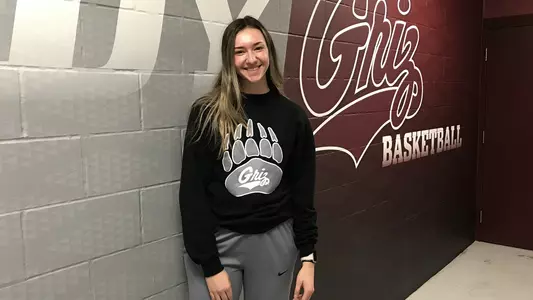
Freshman orientation with Karsen Murphy
10/30/2020 7:00:00 PM | Women's Basketball
Jerry Jimison, a three-year starter for the Montana State football team in the '60s and an All-Big Sky Conference defensive lineman for the Bobcats as a senior in 1967, never lost a game to Montana.
"Do you need the scores?" he asks politely, perhaps innocently. At least it seems. But there is something there, an undercurrent, a pride of accomplishment. You can sense it: he wants to reveal all the details.
He's told we already have them. The mayor of Glendive is more than 500 miles away, but the air of disappointment comes through the phone loud and clear.
There was the 24-7 win in 1965 in Bozeman, on a day Jan Stenerud kicked a 59-yard field goal, the 38-0 win in Missoula in 1966.
He doesn't know for sure, but he would guess Sheila MacDonald, then a junior at Montana, was in the stands at Dornblaser Stadium that afternoon, the first Saturday of November.
She was his Homecoming date when both were seniors at Dawson County High. She was their class's valedictorian. He would be voted the school's top athlete. A teenaged power couple.
Both were just getting started.
Sheila (MacDonald) Stearns, UM's Homecoming queen as a senior, would ultimately become the state's longest-tenured commissioner of higher education, serving from 2003 to 2012.
He's in his fifth term as mayor of Glendive.
In Jimison's senior season, in 1967, Montana State won 14-8 in Bozeman, celebrating on the grass of Gatton Field after holding the Grizzlies out of the end zone with a goal-line stand in the fourth quarter.
The crowd was listed at 10,000, which was standing room only for the old stadium.
"There were fewer Bobcat and Grizzly fans back in the '50s and '60s, but the ones that were were still pretty boisterous and loyal," Jimison says.
"Now you could probably multiply that number by 10, but it was still a big rivalry in those days."
In June 1969, Jimison would marry the woman he would hold dear for the next 49 years and seven months at Danforth Chapel on the Montana State campus, his loyalty to the school as deep as anyone who has ever left Bozeman with a degree.
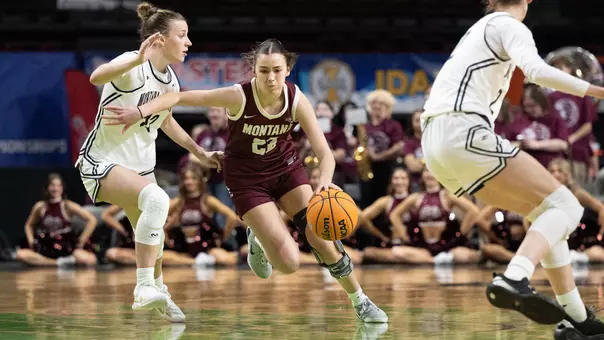
That his granddaughter, Karsen Murphy, is a freshman on the Lady Griz basketball team, makes for a fun storyline, of split allegiances, or so it would seem.
He's asked about it. He shuts it down. It doesn't even generate a few laughs.
There is no banter about his devotion to the blue and gold, of cheering for the rival school, of not wanting to spend any money in Missoula.
He has 12 grandchildren. He wants the best for all of them, no matter where they go, no matter what they do. Blood trumps everything in his world.
"Amen. I would wish that on all my grandkids," he says. "Getting an opportunity to play for one of the best basketball programs in the nation is an amazing feat.
"Karsen has certainly earned and deserves all that she has been awarded. I will be in Dahlberg Arena with a Grizzly shirt on when Karsen steps on the court."
There is another potential storyline: she is the product of parents who both played college basketball, Wade at Dawson Community College in Glendive, Michaela, Jerry Jimison's daughter, at the former Western Montana College.
But that's surface-level stuff, an easy way to connect some dots but no way to tell a complete story. This one requires a little more digging to find the source.
"LaDonna had a lot to do for setting the tone for (Karsen's) drive," says Wade, who coaches football and is the head boys' basketball coach at Dawson County High in Glendive.
Wait, who's LaDonna? What sport did she play? None? And she's the person on whom this article pivots?
Indeed. Her influence threads throughout. And you thought Jimison was a self-made man, without influence?
"She obviously made me a successful person," he says of his late wife, who passed away in January 2019 after a long battle with ovarian cancer. "She pushed you to do more than you thought you could.
"She was a motivator, sort of like a coach, like (Montana's) Jack Swarthout or (Montana State's) Jim
Sweeney, those people who came in and took over programs and pushed them up that extra notch they needed."
She was one of the Northwest's top cello players before she had graduated from Flathead High. In 1964 she used her dance talents to win the title of Northwest Montana Junior Miss.
At Montana State, where she met Jimison, she was part of Angel Flight, the school's ROTC-affiliated marching group. By the time she was a senior, she had been elected commander.
Here is all she did that year: took that team to Spokane for the national competition and made sure it came home with the brass ring, the Commander's Trophy. She had made them into the best.
Swarthout and Sweeney would both lead their teams to the end-of-year Camellia Bowl. She did similar work, just with a different kind of team.
Murphy? She gets credited with being able to juggle everything she did in high school, and it was an impressive list, with volleyball turning to basketball turning to track and field each school year, with dance running throughout.
This is where it came from: "We got married on June 7, 1969," says Jimison. "On the Saturday we got married, that morning she had to get up and take her last two final tests.
"We got married Saturday evening at Danforth Chapel, and she graduated on Sunday."
By the time Jimison was 22, he was teaching and coaching at Billings Senior, alongside Tom Hauck. Both were single, so they would get into their car whenever asked to go scout an upcoming opponent.
And here's another twist to the story: "Whenever we went through Big Timber, we'd stop at (Tom's) brother Bobby's house and watch these two little kids on the floor wrestling each other," says Jimison, meaning Tim and Bobby Hauck.
"I thought, wow, if those guys have that much energy later on in life, they are going to be very successful. I was right."
It gives more credence to Jimison's contention: "Montana is one big town with a long main street," he says.
True. Maybe you knew this, but Bria Dixson's home in Portland is actually closer to Missoula than Murphy's in Glendive, even though Dixson's drive takes her from Oregon to Washington to Idaho to Montana.
It's out there, is eastern Montana, speaking from a strictly geographical perspective. But that's also what makes it so special to those who call it home. It's us and ... pretty much nobody else. We're all we've got.
"I think more than anything, it has a strong sense of community, even if you're not from the same town. This side of the state seems to identify with each other," says Wade.
Jordan Sullivan came from Sidney to play for the Lady Griz. That's a town that's even farther out there. If you're willing to cross the Yellowstone River, you could run to North Dakota and back in less than an hour.
She knows that part of the state, knows how it operates and how athletes can be spread thin, meaning there are diamonds to be found in the rough of those badlands. The now Lady Griz assistant coach was the one to add Murphy's name to the recruiting board.
"Being from a small town, they need you in everything. You have to play pretty much every sport. It's rare to find non-three-sport athletes in a small town when you're athletic," she says.
Start putting a basketball in their hands for 12 months of the year and who knows what might become of it?
She's not the first small-town player who could go on to bigger things once she immerses herself in a single sport.
But Murphy might be the first Lady Griz basketball player in program history not to grow up dreaming of all things sports but of becoming a professional dancer.
That's where LaDonna comes back into the story.
The Jimisons would land in Glendive, he working for BNSF, she opening LaDonna's School of Dance. It would become the gem you've never heard of, sending dancers to competitions across the U.S. and almost always returning home with a trophy or handful of ribbons.
"I don't know if there's been anything that's been better for my kids than being part of that dance studio and having their grandmother kind of drive them the way she did," says Wade, father of six, Karsen being the oldest.
"She was an old-school dance teacher who demanded perfection. She demanded the kids do things right and didn't let them off the hook when they didn't. Karsen now holds herself to that standard in everything she does."
Wade Murphy grew up on a ranch on Pryor Creek, south of Billings. After graduating from Reed Point High, he played basketball at Dawson Community College under Don Mast.
It's where love and heartbreak would intersect. He lost his dad in his second year at the school. He was also introduced to his roommate's girlfriend's cousin: Michaela Jimison.
After he graduated from MSU Billings, they would live in Wyoming and Colorado before landing in Glendive.
Before sports ever came into the picture, his first child's focus was squarely on dance. She quickly became her grandmother's star.
"Karsen had a natural gift for it. For a long time, that's where her sights were. She wanted to be a professional dancer," says Wade.
"We had a lot of fun following her around. Followed her to Vegas a couple times for national dance competitions. They competed in the world dance competition in Dallas one year. That was a lot of fun."
Karsen adds, "Dance came naturally to me growing up. It was such a natural movement for me, and I had the body of a dancer. Long legs, long arms, skinny, a good height."
And sports weren't doing much to draw her attention away from the studio. Her mom is a runner, so she thought she would try cross country in seventh grade.
"That was such a bad idea. It was awful," she says. "I couldn't even run a mile and a half without walking.
"Usually before a race you walk the course. I was the only one who would decide at what tree I would sprint, where I would jog and where I would walk. I always got headaches. I was not a runner."
In eighth grade, she tried volleyball. "I was so bad," she says. Sports remained in the background.
Her history turned on an inch, maybe two. Had she not grown to six feet, perhaps she would be in a big city these days, pursuing her dance career.
"Once you hit six feet, you're too tall to be a dancer. You don't see a lot of six-foot dancers," Murphy says.
What Radio City Music Hall lost, Dahlberg Arena gained. And they're still there, the little glimpses that reveal her past.
"Even in weights, I'll be watching and her hands, she has these perfect, pointed hands that always look so graceful. She's so elegant," says teammate Abby Anderson, who has her own background in dance.
"She was way better than I was. It kind of makes me mad. We both like to spin a lot on the court, do long step-throughs. I totally see it. When both of us jump, we point our toes. It's definitely a dancer thing."
Basketball was always there. She was on a travel team, remembers playing in small-time tournaments in Miles City, in Scobey, across the border in North Dakota.
It's the kind of place, eastern Montana is, that you play someone from a nearby town as an elementary schooler and they become an opponent you see the next decade of your life, across all sports.
"People get to know each other quickly," says Sullivan. "You compete against the same people regularly. In the second grade you're playing in these little tournaments, and it's like that until you graduate."
The growth spurt that would change her dreams came in the seventh and eighth grades. When she inched her way out of dance, at least as a professional pursuit, sports came to the forefront, especially basketball.
A new high school volleyball coach turned that program around. Murphy became a varsity starter as a sophomore.
Last fall, with Murphy a senior, the school finished third at the Class A state tournament and returned home with a trophy in that sport for the first time.
She would become a state champion in track and field in the jumps, but it was basketball that won her over, taking the spot that dance had held for so long.
There was the day the summer after her freshman year. She and her dad were in the gym, working on her game. Out of nowhere she says, "I think I want to play Division I basketball," her dad recalls.
"She is one of those people that puts her mind to something and makes it happen. She always knew what she wanted and wasn't afraid to go after it. That set the tone for her siblings."
Ah, the siblings. Wade and Michaela both came from six-person families -- two parents, four kids -- and that was always their goal as well.
"One day my wife said, 'What do you think about five?' I said, 'I don't see any difference between four and five,'" Wade says. Then along came Stori five years ago, making it a full half dozen.
"She's the one who is going to keep us young, no doubt about it. She has all the traits of all of her siblings combined."
If she wanted to make her new dream come true, Murphy could no longer give basketball 25 percent of her attention, along with volleyball, which took up her fall, track and field, which ate up her spring, and dance, which devoured every other free moment.
She joined Karen Deden's AAU team, Club Sports. She went to a summer tournament in Spokane, another in Portland.
Six-footers were everywhere. And they could play. On the perimeter. In the paint. They could shoot from anywhere, dribble like a point guard. I've a feeling we're not in eastern Montana anymore.
"It was an eye-opener. So intimidating," she says. "I was like, 'Dad, I have to get in the gym. I am nowhere near the level of some of these girls.'
"He was going to let me learn that for myself, and I did."
Montana reached out. She kept it mostly to herself, aware of how it might affect the team dynamic. At first it was Sullivan. Then former coach Shannon Schweyen entered the picture.
Murphy got the call when she was in school. She did not recognize the number, so she assumed it was a scam. Then a ping that she had a new voicemail. It was Schweyen. She called her back after school, shaking the entire time.
"That was the first time she'd ever called me," says Murphy. "They must have been serious about recruiting me."
If any high schooler has had a better five-week run of varied life accomplishments than Murphy had between late May and late June 2019, after her junior year, we have yet to hear about it.
It started in Laurel at the Class A state track and field meet. She won the high jump at 5-6, setting a new school record, and won the triple jump at 37-11.5, setting a new Class A record.
She'd only gone 33-8 as a sophomore. Hadn't even made finals at state. She was devastated. The first time she jumped as a junior, she went 36-6.
"I was like, what? Are you guys sure you measured that right?" says Murphy, who was coached by Jim and Tom Temple.
"I had coaches who believed in me so much, more than I believed in myself. They really motivated me to want to be good at track. They knew what it took to win, the kind of mindset you needed."
She opened state as a junior with a jump of 37-1. She'd reached her goal of breaking 37 feet. Then everyone started wondering: Is the Class A record of 37-6, set by Kalindra McFadden in 2003, on notice?
Yes. Jump No. 2: 37-11.5. A new Class A mark. "After that first jump, I had the most adrenaline in the world," she says. "I sprinted as fast as I could that second jump."
Four weeks later was the Miss Montana Outstanding Teen Pageant, held every June in Glendive. She'd been swearing for years she would never take part in such a spectacle. Wasn't her thing.
Some of the girls she danced with were competing. They told her she was going to compete as well. She didn't fight it.
Talent was 35 percent of the scoring. She performed a lyrical dance she choreographed herself. Nailed it.
Evening wear was 20 percent. "You could tell who the dancers were by their walk and their posture. It wasn't something I needed to learn and perfect. It kind of came naturally," she says. Nailed it.
Backstage interview: 25 percent. Fitness in sportswear: 15 percent. "It's the cheesiest thing in the world," she says. "You show your muscles, you do some lunges, some butt kicks, smile while running in place. You have to do a pushup while looking at the judges."
Finally the on-stage question, the worst of it all, the one that could be the embarrassment of all embarrassments. "You want to throw up before you do that. You can't prepare for it. The first thing in your head, you have to go with it," she says. Its only redeeming quality: it was only worth five percent.
She doesn't remember the question. She's just proud she didn't pass out. "It's the most nerve-racking thing in the world. You just freeze," she says.
When all the elements were completed, when all the nerves had been racked, when all emotion had been squeezed out of the competitors, Murphy had a new tiara and sash to show off.
And a $1,000 scholarship and a trip to Orlando.
"She's given us quite a ride the last couple years with all that stuff," says her dad. "It was fun to be able to watch her do all those things. That was probably the greatest joy in all of it."
Three days after the pageant, she was in Missoula for more stress: Lady Griz overnight camp. It was approached as such: to get better: 10 percent; to get noticed once and for all: 90 percent.
Because of the pageant she hadn't picked up a basketball in two weeks. She felt rusty. Then she had her world flipped upside down.
The coaches had hand-picked some players from camp to scrimmage against the current Lady Griz during the dinner break on opening day. Kyndall Keller was asked. Willa Albrecht was asked. Mya Hansen was invited.
Murphy wasn't. "I called my dad almost in tears," she says. Not long after that, she bumped into then assistant coach Mike Petrino. He couldn't figure out why Murphy wasn't playing. He said, "You need to be down there!"
By then it was too late, but her confidence had been restored. Nothing more than a misunderstanding, a miscommunication. She made the all-star game later in the week, a good sign. She played well.
She and her teammate, the one who had come along for camp as well, moved out of the dorm when camp was over. They were in the parking lot, loading their things into Wade's car for the eight-hour drive home. That's where Schweyen found them.
I need to talk to you. You had a really good camp. We see a lot of potential in you. We'd like to offer you a full-ride scholarship to the University of Montana.
"I didn't say anything. I looked at my dad. He looked at me. No one said anything," says Murphy.
Interesting note about the Murphys. They moved from a spot three miles outside of Glendive last year, near Makoshika State Park, to a place in town. Their new neighbors: Doug and Anita Selvig, who need no introduction in this space.
The morning after Wade and Karsen returned from Missoula, scholarship offer in hand but not yet accepted, Wade saw the Selvigs out in their yard.
He walked over and told them that Karsen had been offered.
"Doug said, 'Well, congratulations.' I told him she hadn't said yes yet. He said, 'Why wouldn't you? There is no better place to go to school,'" Wade recalls.
Karsen had heard enough. What was she waiting for? She went out on her back porch, called Schweyen and accepted. Then she let her followers on Twitter and Instagram know about her offer and decision.
"Everyone was like, What are you talking about? When did this happen? That's what felt really good, kind of doing it out of nowhere," she says.
Of course there are no more basketball secrets, not anymore. That just comes with the territory when you sign up to play for the Lady Griz. People are always watching.
Murphy has been mostly hidden from view this fall, as have all the Lady Griz. Soon they will enter the light of the court. The games will arrive.
"She has been a positive surprise this year," says Petrino. "She is really raw but very athletic. She continues to get stronger and more confident. She has a big upside.
"She is more of a player than a position, which is nice. We can play her at different spots."
She isn't Keller or Dixson, players who became ballers before they had been taught long division. Murphy? Hers was a different route. Not better or worse, just different.
"The common theme with all the things on her resume is competition," says Petrino, who knows dance requires practice, patience and perseverance, just like volleyball, just like basketball, just like track and field.
"The connection is that there is competition with all of them."
She's been compared to Greta Koss, at least in potential, "so Karsen has a bright future," says Sullivan, who is trying to get the nickname "Murph Dog" to stick. So far it's been met with tepid reviews.
"I thought it would be an adjustment for her, adjusting to a higher level of competition and pace of the game, but she has done a good job of keeping up and then some. She has a higher basketball IQ than I had coming in. She stands out in practice with how fast she is picking things up."
She has big goals. When all is said and done, she wants to be known as one of the best defenders to ever play at Montana. She has the length, size and athleticism to at least make that a possibility.
In that case, she is just like Koss, who could defend the point with just as much effectiveness as she could a post player. It's something a coach's daughter would aspire to be.
She may be one of the youngest Lady Griz, which means she spends each day looking up to those older and more experienced than she is, trying to walk in their path.
In her other world, the one still back in Glendive, that is flipped. She's the one, even as a freshman, being looked up to, setting the example for her five younger siblings back home.
"Being the oldest definitely pushed me to be a role model and always think about my actions," she says. "I knew my siblings were watching.
"My mom told me just the other day how every one of my siblings is doing the exact same thing I did. They do the same routine I did, of waking up early and working out at the same time I did. They follow in your footsteps."
"She set the tone for the rest of them," says Wade, himself an oldest sibling. "She set the example, and my younger kids have kind of taken note of that."
That streak of success Murphy enjoyed in 2019, from the state track and field meet to the pageant to being offered and accepting that scholarship?
It came just a few months after LaDonna Jimison passed away from ovarian cancer. A light in the world had been lost, a light that shone way beyond her immediate family.
The pain of her death will slowly recede, but the lessons learned in that studio, not just by her granddaughter but hundreds of others, will stick with them for life.
They were seemingly specific to dance. They weren't. They applied to everything. Those who listened and embraced them would become a success.
College football and college basketball players in the family tree, and it was her grandmother who passed down life's greatest secrets, to those in Angel Flight, to her husband, then to everyone who passed through her studio's door.
Does Jerry Jimison see signs of his late wife in his granddaughter? You be the judge.
"I'm happy to say we have lots of successful grandkids, but Karsen sort of rose to the top because of three things: her athletic ability, her leadership ability and the fact that she was a real team player," he says.
"For somebody to be that versatile and a leader and a very unselfish team player is unbelievable in my book."
Yes, he's Montana State to the core. Always will be. But if anything can go deeper, it's family.
"Do you need the scores?" he asks politely, perhaps innocently. At least it seems. But there is something there, an undercurrent, a pride of accomplishment. You can sense it: he wants to reveal all the details.
He's told we already have them. The mayor of Glendive is more than 500 miles away, but the air of disappointment comes through the phone loud and clear.
There was the 24-7 win in 1965 in Bozeman, on a day Jan Stenerud kicked a 59-yard field goal, the 38-0 win in Missoula in 1966.
He doesn't know for sure, but he would guess Sheila MacDonald, then a junior at Montana, was in the stands at Dornblaser Stadium that afternoon, the first Saturday of November.
She was his Homecoming date when both were seniors at Dawson County High. She was their class's valedictorian. He would be voted the school's top athlete. A teenaged power couple.
Both were just getting started.
Sheila (MacDonald) Stearns, UM's Homecoming queen as a senior, would ultimately become the state's longest-tenured commissioner of higher education, serving from 2003 to 2012.
He's in his fifth term as mayor of Glendive.
In Jimison's senior season, in 1967, Montana State won 14-8 in Bozeman, celebrating on the grass of Gatton Field after holding the Grizzlies out of the end zone with a goal-line stand in the fourth quarter.
The crowd was listed at 10,000, which was standing room only for the old stadium.
"There were fewer Bobcat and Grizzly fans back in the '50s and '60s, but the ones that were were still pretty boisterous and loyal," Jimison says.
"Now you could probably multiply that number by 10, but it was still a big rivalry in those days."
In June 1969, Jimison would marry the woman he would hold dear for the next 49 years and seven months at Danforth Chapel on the Montana State campus, his loyalty to the school as deep as anyone who has ever left Bozeman with a degree.
That his granddaughter, Karsen Murphy, is a freshman on the Lady Griz basketball team, makes for a fun storyline, of split allegiances, or so it would seem.
He's asked about it. He shuts it down. It doesn't even generate a few laughs.
There is no banter about his devotion to the blue and gold, of cheering for the rival school, of not wanting to spend any money in Missoula.
He has 12 grandchildren. He wants the best for all of them, no matter where they go, no matter what they do. Blood trumps everything in his world.
"Amen. I would wish that on all my grandkids," he says. "Getting an opportunity to play for one of the best basketball programs in the nation is an amazing feat.
"Karsen has certainly earned and deserves all that she has been awarded. I will be in Dahlberg Arena with a Grizzly shirt on when Karsen steps on the court."
There is another potential storyline: she is the product of parents who both played college basketball, Wade at Dawson Community College in Glendive, Michaela, Jerry Jimison's daughter, at the former Western Montana College.
But that's surface-level stuff, an easy way to connect some dots but no way to tell a complete story. This one requires a little more digging to find the source.
"LaDonna had a lot to do for setting the tone for (Karsen's) drive," says Wade, who coaches football and is the head boys' basketball coach at Dawson County High in Glendive.
Wait, who's LaDonna? What sport did she play? None? And she's the person on whom this article pivots?
Indeed. Her influence threads throughout. And you thought Jimison was a self-made man, without influence?
"She obviously made me a successful person," he says of his late wife, who passed away in January 2019 after a long battle with ovarian cancer. "She pushed you to do more than you thought you could.
"She was a motivator, sort of like a coach, like (Montana's) Jack Swarthout or (Montana State's) Jim
Sweeney, those people who came in and took over programs and pushed them up that extra notch they needed."
She was one of the Northwest's top cello players before she had graduated from Flathead High. In 1964 she used her dance talents to win the title of Northwest Montana Junior Miss.
At Montana State, where she met Jimison, she was part of Angel Flight, the school's ROTC-affiliated marching group. By the time she was a senior, she had been elected commander.
Here is all she did that year: took that team to Spokane for the national competition and made sure it came home with the brass ring, the Commander's Trophy. She had made them into the best.
Swarthout and Sweeney would both lead their teams to the end-of-year Camellia Bowl. She did similar work, just with a different kind of team.
Murphy? She gets credited with being able to juggle everything she did in high school, and it was an impressive list, with volleyball turning to basketball turning to track and field each school year, with dance running throughout.
This is where it came from: "We got married on June 7, 1969," says Jimison. "On the Saturday we got married, that morning she had to get up and take her last two final tests.
"We got married Saturday evening at Danforth Chapel, and she graduated on Sunday."
By the time Jimison was 22, he was teaching and coaching at Billings Senior, alongside Tom Hauck. Both were single, so they would get into their car whenever asked to go scout an upcoming opponent.
And here's another twist to the story: "Whenever we went through Big Timber, we'd stop at (Tom's) brother Bobby's house and watch these two little kids on the floor wrestling each other," says Jimison, meaning Tim and Bobby Hauck.
"I thought, wow, if those guys have that much energy later on in life, they are going to be very successful. I was right."
It gives more credence to Jimison's contention: "Montana is one big town with a long main street," he says.
True. Maybe you knew this, but Bria Dixson's home in Portland is actually closer to Missoula than Murphy's in Glendive, even though Dixson's drive takes her from Oregon to Washington to Idaho to Montana.
It's out there, is eastern Montana, speaking from a strictly geographical perspective. But that's also what makes it so special to those who call it home. It's us and ... pretty much nobody else. We're all we've got.
"I think more than anything, it has a strong sense of community, even if you're not from the same town. This side of the state seems to identify with each other," says Wade.
Jordan Sullivan came from Sidney to play for the Lady Griz. That's a town that's even farther out there. If you're willing to cross the Yellowstone River, you could run to North Dakota and back in less than an hour.
She knows that part of the state, knows how it operates and how athletes can be spread thin, meaning there are diamonds to be found in the rough of those badlands. The now Lady Griz assistant coach was the one to add Murphy's name to the recruiting board.
"Being from a small town, they need you in everything. You have to play pretty much every sport. It's rare to find non-three-sport athletes in a small town when you're athletic," she says.
Start putting a basketball in their hands for 12 months of the year and who knows what might become of it?
She's not the first small-town player who could go on to bigger things once she immerses herself in a single sport.
But Murphy might be the first Lady Griz basketball player in program history not to grow up dreaming of all things sports but of becoming a professional dancer.
That's where LaDonna comes back into the story.
The Jimisons would land in Glendive, he working for BNSF, she opening LaDonna's School of Dance. It would become the gem you've never heard of, sending dancers to competitions across the U.S. and almost always returning home with a trophy or handful of ribbons.
"I don't know if there's been anything that's been better for my kids than being part of that dance studio and having their grandmother kind of drive them the way she did," says Wade, father of six, Karsen being the oldest.
"She was an old-school dance teacher who demanded perfection. She demanded the kids do things right and didn't let them off the hook when they didn't. Karsen now holds herself to that standard in everything she does."
Wade Murphy grew up on a ranch on Pryor Creek, south of Billings. After graduating from Reed Point High, he played basketball at Dawson Community College under Don Mast.
It's where love and heartbreak would intersect. He lost his dad in his second year at the school. He was also introduced to his roommate's girlfriend's cousin: Michaela Jimison.
After he graduated from MSU Billings, they would live in Wyoming and Colorado before landing in Glendive.
Before sports ever came into the picture, his first child's focus was squarely on dance. She quickly became her grandmother's star.
"Karsen had a natural gift for it. For a long time, that's where her sights were. She wanted to be a professional dancer," says Wade.
"We had a lot of fun following her around. Followed her to Vegas a couple times for national dance competitions. They competed in the world dance competition in Dallas one year. That was a lot of fun."
Karsen adds, "Dance came naturally to me growing up. It was such a natural movement for me, and I had the body of a dancer. Long legs, long arms, skinny, a good height."
And sports weren't doing much to draw her attention away from the studio. Her mom is a runner, so she thought she would try cross country in seventh grade.
"That was such a bad idea. It was awful," she says. "I couldn't even run a mile and a half without walking.
"Usually before a race you walk the course. I was the only one who would decide at what tree I would sprint, where I would jog and where I would walk. I always got headaches. I was not a runner."
In eighth grade, she tried volleyball. "I was so bad," she says. Sports remained in the background.
Her history turned on an inch, maybe two. Had she not grown to six feet, perhaps she would be in a big city these days, pursuing her dance career.
"Once you hit six feet, you're too tall to be a dancer. You don't see a lot of six-foot dancers," Murphy says.
What Radio City Music Hall lost, Dahlberg Arena gained. And they're still there, the little glimpses that reveal her past.
"Even in weights, I'll be watching and her hands, she has these perfect, pointed hands that always look so graceful. She's so elegant," says teammate Abby Anderson, who has her own background in dance.
"She was way better than I was. It kind of makes me mad. We both like to spin a lot on the court, do long step-throughs. I totally see it. When both of us jump, we point our toes. It's definitely a dancer thing."
Basketball was always there. She was on a travel team, remembers playing in small-time tournaments in Miles City, in Scobey, across the border in North Dakota.
It's the kind of place, eastern Montana is, that you play someone from a nearby town as an elementary schooler and they become an opponent you see the next decade of your life, across all sports.
"People get to know each other quickly," says Sullivan. "You compete against the same people regularly. In the second grade you're playing in these little tournaments, and it's like that until you graduate."
The growth spurt that would change her dreams came in the seventh and eighth grades. When she inched her way out of dance, at least as a professional pursuit, sports came to the forefront, especially basketball.
A new high school volleyball coach turned that program around. Murphy became a varsity starter as a sophomore.
Last fall, with Murphy a senior, the school finished third at the Class A state tournament and returned home with a trophy in that sport for the first time.
She would become a state champion in track and field in the jumps, but it was basketball that won her over, taking the spot that dance had held for so long.
There was the day the summer after her freshman year. She and her dad were in the gym, working on her game. Out of nowhere she says, "I think I want to play Division I basketball," her dad recalls.
"She is one of those people that puts her mind to something and makes it happen. She always knew what she wanted and wasn't afraid to go after it. That set the tone for her siblings."
Ah, the siblings. Wade and Michaela both came from six-person families -- two parents, four kids -- and that was always their goal as well.
"One day my wife said, 'What do you think about five?' I said, 'I don't see any difference between four and five,'" Wade says. Then along came Stori five years ago, making it a full half dozen.
"She's the one who is going to keep us young, no doubt about it. She has all the traits of all of her siblings combined."
If she wanted to make her new dream come true, Murphy could no longer give basketball 25 percent of her attention, along with volleyball, which took up her fall, track and field, which ate up her spring, and dance, which devoured every other free moment.
She joined Karen Deden's AAU team, Club Sports. She went to a summer tournament in Spokane, another in Portland.
Six-footers were everywhere. And they could play. On the perimeter. In the paint. They could shoot from anywhere, dribble like a point guard. I've a feeling we're not in eastern Montana anymore.
"It was an eye-opener. So intimidating," she says. "I was like, 'Dad, I have to get in the gym. I am nowhere near the level of some of these girls.'
"He was going to let me learn that for myself, and I did."
Montana reached out. She kept it mostly to herself, aware of how it might affect the team dynamic. At first it was Sullivan. Then former coach Shannon Schweyen entered the picture.
Murphy got the call when she was in school. She did not recognize the number, so she assumed it was a scam. Then a ping that she had a new voicemail. It was Schweyen. She called her back after school, shaking the entire time.
"That was the first time she'd ever called me," says Murphy. "They must have been serious about recruiting me."
If any high schooler has had a better five-week run of varied life accomplishments than Murphy had between late May and late June 2019, after her junior year, we have yet to hear about it.
It started in Laurel at the Class A state track and field meet. She won the high jump at 5-6, setting a new school record, and won the triple jump at 37-11.5, setting a new Class A record.
She'd only gone 33-8 as a sophomore. Hadn't even made finals at state. She was devastated. The first time she jumped as a junior, she went 36-6.
"I was like, what? Are you guys sure you measured that right?" says Murphy, who was coached by Jim and Tom Temple.
"I had coaches who believed in me so much, more than I believed in myself. They really motivated me to want to be good at track. They knew what it took to win, the kind of mindset you needed."
She opened state as a junior with a jump of 37-1. She'd reached her goal of breaking 37 feet. Then everyone started wondering: Is the Class A record of 37-6, set by Kalindra McFadden in 2003, on notice?
Yes. Jump No. 2: 37-11.5. A new Class A mark. "After that first jump, I had the most adrenaline in the world," she says. "I sprinted as fast as I could that second jump."
Four weeks later was the Miss Montana Outstanding Teen Pageant, held every June in Glendive. She'd been swearing for years she would never take part in such a spectacle. Wasn't her thing.
Some of the girls she danced with were competing. They told her she was going to compete as well. She didn't fight it.
Talent was 35 percent of the scoring. She performed a lyrical dance she choreographed herself. Nailed it.
Evening wear was 20 percent. "You could tell who the dancers were by their walk and their posture. It wasn't something I needed to learn and perfect. It kind of came naturally," she says. Nailed it.
Backstage interview: 25 percent. Fitness in sportswear: 15 percent. "It's the cheesiest thing in the world," she says. "You show your muscles, you do some lunges, some butt kicks, smile while running in place. You have to do a pushup while looking at the judges."
Finally the on-stage question, the worst of it all, the one that could be the embarrassment of all embarrassments. "You want to throw up before you do that. You can't prepare for it. The first thing in your head, you have to go with it," she says. Its only redeeming quality: it was only worth five percent.
She doesn't remember the question. She's just proud she didn't pass out. "It's the most nerve-racking thing in the world. You just freeze," she says.
When all the elements were completed, when all the nerves had been racked, when all emotion had been squeezed out of the competitors, Murphy had a new tiara and sash to show off.
And a $1,000 scholarship and a trip to Orlando.
"She's given us quite a ride the last couple years with all that stuff," says her dad. "It was fun to be able to watch her do all those things. That was probably the greatest joy in all of it."
Three days after the pageant, she was in Missoula for more stress: Lady Griz overnight camp. It was approached as such: to get better: 10 percent; to get noticed once and for all: 90 percent.
Because of the pageant she hadn't picked up a basketball in two weeks. She felt rusty. Then she had her world flipped upside down.
The coaches had hand-picked some players from camp to scrimmage against the current Lady Griz during the dinner break on opening day. Kyndall Keller was asked. Willa Albrecht was asked. Mya Hansen was invited.
Murphy wasn't. "I called my dad almost in tears," she says. Not long after that, she bumped into then assistant coach Mike Petrino. He couldn't figure out why Murphy wasn't playing. He said, "You need to be down there!"
By then it was too late, but her confidence had been restored. Nothing more than a misunderstanding, a miscommunication. She made the all-star game later in the week, a good sign. She played well.
She and her teammate, the one who had come along for camp as well, moved out of the dorm when camp was over. They were in the parking lot, loading their things into Wade's car for the eight-hour drive home. That's where Schweyen found them.
I need to talk to you. You had a really good camp. We see a lot of potential in you. We'd like to offer you a full-ride scholarship to the University of Montana.
"I didn't say anything. I looked at my dad. He looked at me. No one said anything," says Murphy.
Interesting note about the Murphys. They moved from a spot three miles outside of Glendive last year, near Makoshika State Park, to a place in town. Their new neighbors: Doug and Anita Selvig, who need no introduction in this space.
The morning after Wade and Karsen returned from Missoula, scholarship offer in hand but not yet accepted, Wade saw the Selvigs out in their yard.
He walked over and told them that Karsen had been offered.
"Doug said, 'Well, congratulations.' I told him she hadn't said yes yet. He said, 'Why wouldn't you? There is no better place to go to school,'" Wade recalls.
Karsen had heard enough. What was she waiting for? She went out on her back porch, called Schweyen and accepted. Then she let her followers on Twitter and Instagram know about her offer and decision.
"Everyone was like, What are you talking about? When did this happen? That's what felt really good, kind of doing it out of nowhere," she says.
Of course there are no more basketball secrets, not anymore. That just comes with the territory when you sign up to play for the Lady Griz. People are always watching.
Murphy has been mostly hidden from view this fall, as have all the Lady Griz. Soon they will enter the light of the court. The games will arrive.
"She has been a positive surprise this year," says Petrino. "She is really raw but very athletic. She continues to get stronger and more confident. She has a big upside.
"She is more of a player than a position, which is nice. We can play her at different spots."
She isn't Keller or Dixson, players who became ballers before they had been taught long division. Murphy? Hers was a different route. Not better or worse, just different.
"The common theme with all the things on her resume is competition," says Petrino, who knows dance requires practice, patience and perseverance, just like volleyball, just like basketball, just like track and field.
"The connection is that there is competition with all of them."
She's been compared to Greta Koss, at least in potential, "so Karsen has a bright future," says Sullivan, who is trying to get the nickname "Murph Dog" to stick. So far it's been met with tepid reviews.
"I thought it would be an adjustment for her, adjusting to a higher level of competition and pace of the game, but she has done a good job of keeping up and then some. She has a higher basketball IQ than I had coming in. She stands out in practice with how fast she is picking things up."
She has big goals. When all is said and done, she wants to be known as one of the best defenders to ever play at Montana. She has the length, size and athleticism to at least make that a possibility.
In that case, she is just like Koss, who could defend the point with just as much effectiveness as she could a post player. It's something a coach's daughter would aspire to be.
She may be one of the youngest Lady Griz, which means she spends each day looking up to those older and more experienced than she is, trying to walk in their path.
In her other world, the one still back in Glendive, that is flipped. She's the one, even as a freshman, being looked up to, setting the example for her five younger siblings back home.
"Being the oldest definitely pushed me to be a role model and always think about my actions," she says. "I knew my siblings were watching.
"My mom told me just the other day how every one of my siblings is doing the exact same thing I did. They do the same routine I did, of waking up early and working out at the same time I did. They follow in your footsteps."
"She set the tone for the rest of them," says Wade, himself an oldest sibling. "She set the example, and my younger kids have kind of taken note of that."
That streak of success Murphy enjoyed in 2019, from the state track and field meet to the pageant to being offered and accepting that scholarship?
It came just a few months after LaDonna Jimison passed away from ovarian cancer. A light in the world had been lost, a light that shone way beyond her immediate family.
The pain of her death will slowly recede, but the lessons learned in that studio, not just by her granddaughter but hundreds of others, will stick with them for life.
They were seemingly specific to dance. They weren't. They applied to everything. Those who listened and embraced them would become a success.
College football and college basketball players in the family tree, and it was her grandmother who passed down life's greatest secrets, to those in Angel Flight, to her husband, then to everyone who passed through her studio's door.
Does Jerry Jimison see signs of his late wife in his granddaughter? You be the judge.
"I'm happy to say we have lots of successful grandkids, but Karsen sort of rose to the top because of three things: her athletic ability, her leadership ability and the fact that she was a real team player," he says.
"For somebody to be that versatile and a leader and a very unselfish team player is unbelievable in my book."
Yes, he's Montana State to the core. Always will be. But if anything can go deeper, it's family.
Players Mentioned
F
/ Women's Basketball
F
/ Women's Basketball
G
/ Women's Basketball
G
/ Women's Basketball
F
/ Women's BasketballLady Griz Basketball Locker Room Unveiling - 5/1/26
Friday, May 01
Griz Track & Field - Montana Open Highlights - 4/25/26
Friday, May 01
Griz Softball vs. Idaho State Game-Winning Hit - 3/25/26
Friday, May 01
Griz Softball Championship Series Promo
Friday, May 01