The power of coming up short
5/27/2021 1:54:00 PM | Softball
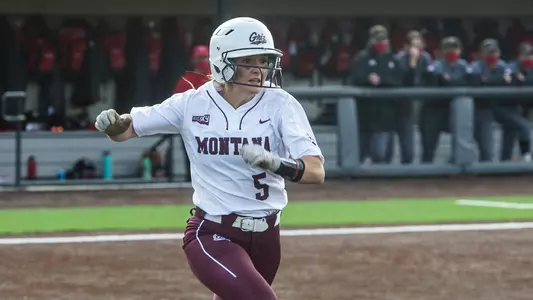
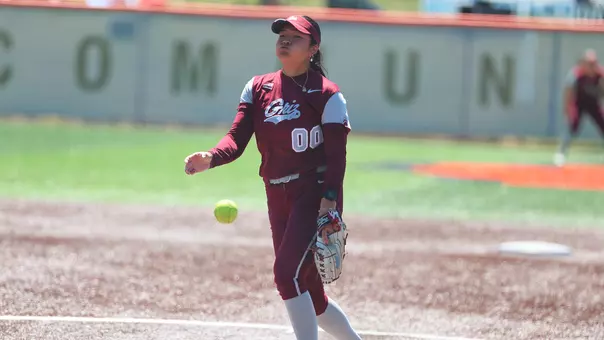
Tristin Achenbach's gift to the Montana softball program wasn't the 586 pitches she threw over three days and five complete games at the Big Sky Conference Championship in Ogden, Utah, two weeks ago, though that effort raced past impressive by Game 2 and reached unbelievable and historic by Game 5.
"What Tristin was able to do, I've never seen done before," says assistant coach Sarah O'Brien, "The amount of pitches she was able to command for five straight games, and she kept getting better. She put the team on her back, and we just let it ride."
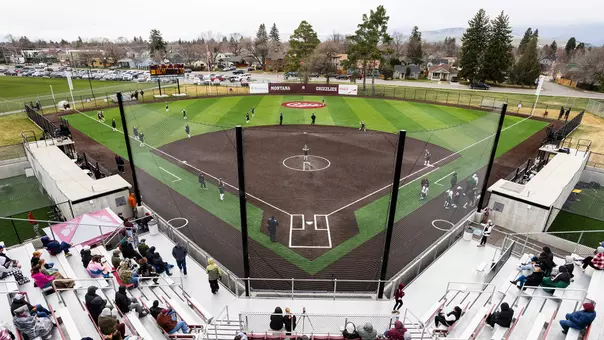
But that performance was constrained by both time and space, starting at noon on a Thursday and ending on Saturday morning, all on a small patch of grass and dirt in South Ogden, relegated to mere footnote in the record book a few hours later, eclipsed by Portland State's championship celebration.
Rather, her gift surpassed the throwing of balls and strikes, of keeping batters off-balance, of giving Montana the chance to be one play away from playing for a championship. As the best gifts are, hers was one that will be long-lasting. A gift that keeps on giving. It transcends time and space.
She gave her teammates, those who will go on in her graduated absence, the power of belief.
After a challenging season of ups and downs, with more of the latter than the former, Montana arrived in Ogden and, led by Achenbach, defied its No. 6 seed. The Grizzlies thought -- believed! -- they were the best team in the field and on the field against any one opponent.
Based on the numbers -- Montana had gone just 5-10 against the rest of the teams in the tournament during the regular season, winning just one of five series -- it made no sense. It felt Pollyannaish to those on the outside looking in. Who did these Grizzlies think they were?
Head coach Melanie Meuchel had been saying all along that it was there, it was close, just under the surface, that this was a really, really good team, despite the results. She spent months trying to help it emerge, a coach doing a coach's job at its purest form: getting the best out of a group of athletes.
After Montana closed the regular season with back-to-back home losses to Weber State, by a combined score of 21-7, outcomes that sent the Grizzlies tumbling down to the No. 6 seed, Meuchel spoke of the new season ahead, of fresh starts in Ogden the following week, of hers being one of the teams to beat.
Who among us wasn't at least a little bit skeptical? The team was 16-28 and had allowed 10 or more runs to its opponent in 10 of those games, nearly a quarter of them. This wasn't a team that was going to Ogden to win a championship. It was just lower-seeded fodder to those who were.
But we were always outside the ropes, watching from a distance. Little did we know what was truly happening inside the dugout and behind closed doors. We based our assumptions on results. Meuchel's optimism was based on a feeling. Everything was finally coming together, and she could sense it.
"Every team is a process of building something," she says. "It took a little bit longer this year given the circumstances, but each weekend we could feel our bond and team chemistry, our ability, strengthening." She saw it, even if we couldn't.
"The team and staff stayed the course together. We knew things were growing stronger."
It needed something more, a kicker, if Montana was going to truly be tournament ready. The Grizzlies needed something, or somebody, to take them over the line, the one that separates those who think they believe to those who do, with every fiber of their being. Full stop. No questions, no doubts.
Enter: Achenbach, who started Game 1 against Sacramento State, which had swept Montana in Missoula earlier in the season to extend its winning streak over the Grizzlies to 10 games covering four years. The Hornets were the higher seed and favored once again.
This time: Montana 6, Sacramento State 3, with the Hornets getting limited by Achenbach to three hits, one over the final 6 2/3 innings. She was dominant. And something started to feel a little different with this team.
"She's always been competitive, but she was more driven than I've ever seen her before," says Allie Brock, Montana's No. 2 starter who spent three days of games in Ogden staying warm for the call that never came. Achenbach was too dialed in to ever need relief.
"That really transferred over. I think our team could see it. It was amazing watching her pitch that many games. She put us in a really great position to win every game."
Those of us watching from a distance assumed it would be Brock getting the start in Game 2 of opening day, against No. 2 Southern Utah, after opening with a win. After all, Achenbach hadn't made a second start in the same day all season following an earlier complete game.
But there it was in the live stats after the starters had been input: P, Achenbach. She was going again. It was an electronic signal that everybody was being put on notice. She was here to go until she could go no more.
"You don't ever go into a weekend thinking it's only going to take one pitcher," said Meuchel. "You have everybody prepared. But she was absolutely determined and on a mission from Game 1. You could see a different side of her competitive nature.
"It didn't matter. Give me the ball again, give me the ball again. Each game it seemed like she got stronger and stronger. She was absolutely phenomenal."
Montana would fall to the Thunderbirds 3-1, but Achenbach allowed just four hits over seven more innings, 100 pitches.
Then Friday arrived. If there are days that will go down in Montana softball lore, May 14, 2021, is one of them. Achenbach was the story on Thursday. One day later, the Grizzlies, collectively, took center stage, playing a game of follow the leader.
With Achenbach throwing complete games in wins over Northern Colorado and Sacramento State, her teammates batted .393. The team had it, that vibe, not seen in the program since Montana's run to the NCAA tournament on that same field in Ogden in 2017.
Montana had gone 0-6 against the Bears and Hornets during the regular season. Now they were 3-0 against them in Ogden when it mattered most.
"They finally became the team we always knew they were, and it was such a beautiful thing to see," says O'Brien. "I sat down with Coach Mel and said, this is the moment when you get out of their way. You let them do it because they are doing it. And they did it.
"At that point you're not coaching anymore. You're letting them be them. I always told our kids, we're all we have and we're all we need. But we have to believe that. And they finally did. They finally believed we were the better team on the field. And everyone saw what happened.
"They became exactly who we thought they were, then a little bit more."
We woke up the next morning, Championship Saturday, with two things in our heads, one a question, the other a statement of belief. Could Achenbach do it again? And whether she gets the start or not, Montana was going to win. And then win again. And then win for a third time and hoist the trophy.
They would find a way, like champions do. The transformation, so quick in coming, was complete. They believed, and they made believers of us all. It doesn't happen a lot, that shared affection among players and fans, but when it does, it's magical to behold, to feel, to experience, to get sucked in for the ride.
Montana would face Southern Utah in an elimination game on Saturday morning. The winner would face unbeaten Portland State, the team the Grizzlies swept on its home field in late March.
The path was clear: keep hitting and ride Achenbach's arm to a win over the Thunderbirds, then put it all on the line against Portland State, hot team against hot team, the place every team wants to be when that first practice gets underway in mid-January: playing for a title.
Then Achenbach, with a runner on base, walked three straight batters in the bottom of the first. Southern Utah led 1-0. It was shocking. She had commanded her pitches for two straight days. Now she couldn't find the strike zone. Perhaps the magic had left her right arm after so many pitches.
She had lit the fire early on Friday, calling her teammates around her during the Northern Colorado game, telling them they were not going to lose, the quiet one starting an inferno with her words, a command so out of character that it gave goosebumps to her coaches.
"I saw that and looked at Mel and said, 'This is it. We have this,' " said O'Brien.
But now Achenbach didn't have it. She was struggling. Or so we thought. Turns out it wasn't her. It was a home-plate umpire with a tight definition of what was a strike and what was a ball.
"When she's hitting (catcher Riley Stockton's) mitt and Riley's mitt is not missing, there is nothing we can do," says O'Brien, quite judiciously. Achenbach adds, in the same vein, "There were a few that were put where they were supposed to be."
And they both leave it at that.
Back at their shared home in East Missoula, Achenbach's housemates watched the tournament in amusement if not a bit of pique. After years of living with her fellow Montanan, Sophia Stiles of the Lady Griz basketball team can read Achenbach's tells like she's a teammate, even on a video feed.
"She's the sweetest person you've ever met, but she's one of the hardest workers I know and really competitive. That's something I really admire about her," she says.
"We were just laughing because we know how competitive she is. When she didn't like a call, instead of getting mad, she just smiled, which is such a Tristin thing to do. Throws it into her mitt a couple of times extra hard. Subtle things."
After Achenbach walked in the game's opening run with two outs, she appeared to get out of the bases-loaded jam when she induced a pop fly to left. But with the 9:30 a.m. start time, the morning sun was right in the eyes of Montana's left fielder. She lost it and the ball dropped for a two-run double.
Three runs on a tight zone and one sketchy hit. Achenbach would go the distance, adapting to the umpire and pitching the way the game required, a grand total of four hits allowed, a veteran flex.
"She still had the ability to get people out when things weren't going her way," says O'Brien. "That, to me, is a testament to who she is as a player. The umpire may not be on my side, but I'm still going to throw my game. And she did. She still went to her best pitches and was able to get outs."
Montana trailed 4-0 as the game entered the fourth. Then the bats awakened and came to life. One run scored in the fourth, three in the fifth, two more in the sixth to tie it at 6-6.
But little things kept popping up as red flags, particularly runners left on base. Two stranded in the second, two in the third, two in the fourth, three in the fifth, three in the sixth. Montana should have gone to the seventh with the lead, not in a deadlock.
Yet the go-ahead run was right there, Maygen McGrath on second with one out in the top of the seventh. Instead: pop up, ground out. End of threat.
Achenbach would walk the first two batters in the bottom of the seventh. She had painted herself into a corner, if that corner doubled as the tight space between a rock and a hard place. In other words, she was up against it.
She got a fielder's choice that left runners at the corners with one out. Due up: Reilly Williams, the former Grizzly who went yard off Achenbach in the fifth. The tension was nearly unbearable.
"I was thinking a weak ground ball to someone on the corner. That's what had to happen if we weren't going to let that run score," says Achenbach. "She had hit a home run in the at-bat before that, so it was a battle."
One that Achenbach would win, getting a swinging strikeout on a 2-2 pitch. With two outs, the tension had been released, but only by a fraction. The winning run, the one that could possibly end Montana's season, still stood on third base, those 60 feet the space between heartbreak and continuing on.
On a 2-2 pitch, Achenbach got what she wanted: a ground ball to short. Easy play at second, mostly routine, one that had been practiced by two softball players hundreds of times this season, thousands in their lifetimes.
But bottom of the seventh in a deadlock with the winning run on third in an elimination game at the conference tournament can never be duplicated in practice. The catch was mishandled. The game was over, to the disbelief of both teams.
In that split second of ball being hit toward short, both teams had already moved on mentally to the eighth. But the eighth would never get played. Southern Utah won 7-6.
"That's why the game of softball is so much like life. What is life going to throw at me today? And how am I going to fight back? That's our game. You're constantly fighting failure," says O'Brien. "And you get to do it as a team."
There would be no scapegoat. In a game of exactly 300 pitches, any of them could have changed the result of the game had its outcome been different. Montana had 15 hits to Southern Utah's four. Fourteen were left on base, a season high. That doesn't fall on any one player.
"That runner doesn't score if I don't walk her," says Achenbach, proving the point. "The last play is the one people will remember, but that wasn't the game-defining play. There were plenty of plays before that that could have changed the game. We had plenty of opportunities."
But that's softball. And sports in general. One team wins, one team loses, and oftentimes the margin of difference can be measured in inches. And those results change the storyline of a program, even a trajectory, and can for a long period of time.
Because there can be a power in coming up short, a benefit that pays off down the road, especially in an outcome like that, when one team believes that it was the better team that day, even if the result said otherwise. A destiny unreached.
But the tomorrow, the chance to make it right on the field, to show it, to prove it, stands nearly a year away. That, too, is sports. Those opportunities only come along every so often. That's what makes seeing them slip away so painful but so potentially impactful for those who will return.
"They believe, and now they have a little bit of a chip on their shoulder, because you were there and you had everything you wanted. You came up short, but you were there, and you were meant to be there," says O'Brien.
"They believed they were the best team there. Now you ride that out and go back to work. They are going to be hungry." In other words, the Big Sky tournament was five games over three days and 48 hours that changed a program.
And players like Jaxie Klucewich.
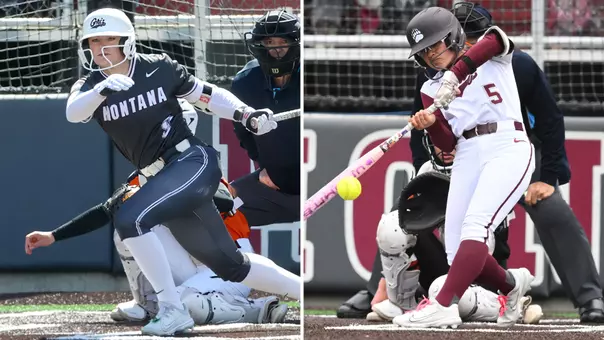
If you've seen Klucewich play, or if you've seen pictures of her in action, you know her look, how she applies eye black before the game, then runs two lines over her cheekbones. It's the look of a warrior, and that's how she plays, with intensity and enthusiasm, with esprit de corps.
Had Montana won in Ogden and had the satisfaction of making the NCAA tournament for the second time, what would this summer be like for the returning Grizzlies. Or the fall? How much different would things be without that chip on their shoulder?
We'll never know, because it's there. And Klucewich says it will remain in place until next May. It'll be right where she wants it, a constant reminder of what could have been and what they want again.
"We showed everyone how good we can be and how tough we can be," she says. "We're just going to build on what we ended on. We're coming after all of them."
"What Tristin was able to do, I've never seen done before," says assistant coach Sarah O'Brien, "The amount of pitches she was able to command for five straight games, and she kept getting better. She put the team on her back, and we just let it ride."
But that performance was constrained by both time and space, starting at noon on a Thursday and ending on Saturday morning, all on a small patch of grass and dirt in South Ogden, relegated to mere footnote in the record book a few hours later, eclipsed by Portland State's championship celebration.
Rather, her gift surpassed the throwing of balls and strikes, of keeping batters off-balance, of giving Montana the chance to be one play away from playing for a championship. As the best gifts are, hers was one that will be long-lasting. A gift that keeps on giving. It transcends time and space.
She gave her teammates, those who will go on in her graduated absence, the power of belief.
After a challenging season of ups and downs, with more of the latter than the former, Montana arrived in Ogden and, led by Achenbach, defied its No. 6 seed. The Grizzlies thought -- believed! -- they were the best team in the field and on the field against any one opponent.
Based on the numbers -- Montana had gone just 5-10 against the rest of the teams in the tournament during the regular season, winning just one of five series -- it made no sense. It felt Pollyannaish to those on the outside looking in. Who did these Grizzlies think they were?
Head coach Melanie Meuchel had been saying all along that it was there, it was close, just under the surface, that this was a really, really good team, despite the results. She spent months trying to help it emerge, a coach doing a coach's job at its purest form: getting the best out of a group of athletes.
After Montana closed the regular season with back-to-back home losses to Weber State, by a combined score of 21-7, outcomes that sent the Grizzlies tumbling down to the No. 6 seed, Meuchel spoke of the new season ahead, of fresh starts in Ogden the following week, of hers being one of the teams to beat.
Who among us wasn't at least a little bit skeptical? The team was 16-28 and had allowed 10 or more runs to its opponent in 10 of those games, nearly a quarter of them. This wasn't a team that was going to Ogden to win a championship. It was just lower-seeded fodder to those who were.
But we were always outside the ropes, watching from a distance. Little did we know what was truly happening inside the dugout and behind closed doors. We based our assumptions on results. Meuchel's optimism was based on a feeling. Everything was finally coming together, and she could sense it.
"Every team is a process of building something," she says. "It took a little bit longer this year given the circumstances, but each weekend we could feel our bond and team chemistry, our ability, strengthening." She saw it, even if we couldn't.
"The team and staff stayed the course together. We knew things were growing stronger."
It needed something more, a kicker, if Montana was going to truly be tournament ready. The Grizzlies needed something, or somebody, to take them over the line, the one that separates those who think they believe to those who do, with every fiber of their being. Full stop. No questions, no doubts.
Enter: Achenbach, who started Game 1 against Sacramento State, which had swept Montana in Missoula earlier in the season to extend its winning streak over the Grizzlies to 10 games covering four years. The Hornets were the higher seed and favored once again.
This time: Montana 6, Sacramento State 3, with the Hornets getting limited by Achenbach to three hits, one over the final 6 2/3 innings. She was dominant. And something started to feel a little different with this team.
"She's always been competitive, but she was more driven than I've ever seen her before," says Allie Brock, Montana's No. 2 starter who spent three days of games in Ogden staying warm for the call that never came. Achenbach was too dialed in to ever need relief.
"That really transferred over. I think our team could see it. It was amazing watching her pitch that many games. She put us in a really great position to win every game."
Those of us watching from a distance assumed it would be Brock getting the start in Game 2 of opening day, against No. 2 Southern Utah, after opening with a win. After all, Achenbach hadn't made a second start in the same day all season following an earlier complete game.
But there it was in the live stats after the starters had been input: P, Achenbach. She was going again. It was an electronic signal that everybody was being put on notice. She was here to go until she could go no more.
"You don't ever go into a weekend thinking it's only going to take one pitcher," said Meuchel. "You have everybody prepared. But she was absolutely determined and on a mission from Game 1. You could see a different side of her competitive nature.
"It didn't matter. Give me the ball again, give me the ball again. Each game it seemed like she got stronger and stronger. She was absolutely phenomenal."
Montana would fall to the Thunderbirds 3-1, but Achenbach allowed just four hits over seven more innings, 100 pitches.
Then Friday arrived. If there are days that will go down in Montana softball lore, May 14, 2021, is one of them. Achenbach was the story on Thursday. One day later, the Grizzlies, collectively, took center stage, playing a game of follow the leader.
With Achenbach throwing complete games in wins over Northern Colorado and Sacramento State, her teammates batted .393. The team had it, that vibe, not seen in the program since Montana's run to the NCAA tournament on that same field in Ogden in 2017.
Montana had gone 0-6 against the Bears and Hornets during the regular season. Now they were 3-0 against them in Ogden when it mattered most.
"They finally became the team we always knew they were, and it was such a beautiful thing to see," says O'Brien. "I sat down with Coach Mel and said, this is the moment when you get out of their way. You let them do it because they are doing it. And they did it.
"At that point you're not coaching anymore. You're letting them be them. I always told our kids, we're all we have and we're all we need. But we have to believe that. And they finally did. They finally believed we were the better team on the field. And everyone saw what happened.
"They became exactly who we thought they were, then a little bit more."
We woke up the next morning, Championship Saturday, with two things in our heads, one a question, the other a statement of belief. Could Achenbach do it again? And whether she gets the start or not, Montana was going to win. And then win again. And then win for a third time and hoist the trophy.
They would find a way, like champions do. The transformation, so quick in coming, was complete. They believed, and they made believers of us all. It doesn't happen a lot, that shared affection among players and fans, but when it does, it's magical to behold, to feel, to experience, to get sucked in for the ride.
Montana would face Southern Utah in an elimination game on Saturday morning. The winner would face unbeaten Portland State, the team the Grizzlies swept on its home field in late March.
The path was clear: keep hitting and ride Achenbach's arm to a win over the Thunderbirds, then put it all on the line against Portland State, hot team against hot team, the place every team wants to be when that first practice gets underway in mid-January: playing for a title.
Then Achenbach, with a runner on base, walked three straight batters in the bottom of the first. Southern Utah led 1-0. It was shocking. She had commanded her pitches for two straight days. Now she couldn't find the strike zone. Perhaps the magic had left her right arm after so many pitches.
She had lit the fire early on Friday, calling her teammates around her during the Northern Colorado game, telling them they were not going to lose, the quiet one starting an inferno with her words, a command so out of character that it gave goosebumps to her coaches.
"I saw that and looked at Mel and said, 'This is it. We have this,' " said O'Brien.
But now Achenbach didn't have it. She was struggling. Or so we thought. Turns out it wasn't her. It was a home-plate umpire with a tight definition of what was a strike and what was a ball.
"When she's hitting (catcher Riley Stockton's) mitt and Riley's mitt is not missing, there is nothing we can do," says O'Brien, quite judiciously. Achenbach adds, in the same vein, "There were a few that were put where they were supposed to be."
And they both leave it at that.
Back at their shared home in East Missoula, Achenbach's housemates watched the tournament in amusement if not a bit of pique. After years of living with her fellow Montanan, Sophia Stiles of the Lady Griz basketball team can read Achenbach's tells like she's a teammate, even on a video feed.
"She's the sweetest person you've ever met, but she's one of the hardest workers I know and really competitive. That's something I really admire about her," she says.
"We were just laughing because we know how competitive she is. When she didn't like a call, instead of getting mad, she just smiled, which is such a Tristin thing to do. Throws it into her mitt a couple of times extra hard. Subtle things."
After Achenbach walked in the game's opening run with two outs, she appeared to get out of the bases-loaded jam when she induced a pop fly to left. But with the 9:30 a.m. start time, the morning sun was right in the eyes of Montana's left fielder. She lost it and the ball dropped for a two-run double.
Three runs on a tight zone and one sketchy hit. Achenbach would go the distance, adapting to the umpire and pitching the way the game required, a grand total of four hits allowed, a veteran flex.
"She still had the ability to get people out when things weren't going her way," says O'Brien. "That, to me, is a testament to who she is as a player. The umpire may not be on my side, but I'm still going to throw my game. And she did. She still went to her best pitches and was able to get outs."
Montana trailed 4-0 as the game entered the fourth. Then the bats awakened and came to life. One run scored in the fourth, three in the fifth, two more in the sixth to tie it at 6-6.
But little things kept popping up as red flags, particularly runners left on base. Two stranded in the second, two in the third, two in the fourth, three in the fifth, three in the sixth. Montana should have gone to the seventh with the lead, not in a deadlock.
Yet the go-ahead run was right there, Maygen McGrath on second with one out in the top of the seventh. Instead: pop up, ground out. End of threat.
Achenbach would walk the first two batters in the bottom of the seventh. She had painted herself into a corner, if that corner doubled as the tight space between a rock and a hard place. In other words, she was up against it.
She got a fielder's choice that left runners at the corners with one out. Due up: Reilly Williams, the former Grizzly who went yard off Achenbach in the fifth. The tension was nearly unbearable.
"I was thinking a weak ground ball to someone on the corner. That's what had to happen if we weren't going to let that run score," says Achenbach. "She had hit a home run in the at-bat before that, so it was a battle."
One that Achenbach would win, getting a swinging strikeout on a 2-2 pitch. With two outs, the tension had been released, but only by a fraction. The winning run, the one that could possibly end Montana's season, still stood on third base, those 60 feet the space between heartbreak and continuing on.
On a 2-2 pitch, Achenbach got what she wanted: a ground ball to short. Easy play at second, mostly routine, one that had been practiced by two softball players hundreds of times this season, thousands in their lifetimes.
But bottom of the seventh in a deadlock with the winning run on third in an elimination game at the conference tournament can never be duplicated in practice. The catch was mishandled. The game was over, to the disbelief of both teams.
In that split second of ball being hit toward short, both teams had already moved on mentally to the eighth. But the eighth would never get played. Southern Utah won 7-6.
"That's why the game of softball is so much like life. What is life going to throw at me today? And how am I going to fight back? That's our game. You're constantly fighting failure," says O'Brien. "And you get to do it as a team."
There would be no scapegoat. In a game of exactly 300 pitches, any of them could have changed the result of the game had its outcome been different. Montana had 15 hits to Southern Utah's four. Fourteen were left on base, a season high. That doesn't fall on any one player.
"That runner doesn't score if I don't walk her," says Achenbach, proving the point. "The last play is the one people will remember, but that wasn't the game-defining play. There were plenty of plays before that that could have changed the game. We had plenty of opportunities."
But that's softball. And sports in general. One team wins, one team loses, and oftentimes the margin of difference can be measured in inches. And those results change the storyline of a program, even a trajectory, and can for a long period of time.
Because there can be a power in coming up short, a benefit that pays off down the road, especially in an outcome like that, when one team believes that it was the better team that day, even if the result said otherwise. A destiny unreached.
But the tomorrow, the chance to make it right on the field, to show it, to prove it, stands nearly a year away. That, too, is sports. Those opportunities only come along every so often. That's what makes seeing them slip away so painful but so potentially impactful for those who will return.
"They believe, and now they have a little bit of a chip on their shoulder, because you were there and you had everything you wanted. You came up short, but you were there, and you were meant to be there," says O'Brien.
"They believed they were the best team there. Now you ride that out and go back to work. They are going to be hungry." In other words, the Big Sky tournament was five games over three days and 48 hours that changed a program.
And players like Jaxie Klucewich.
If you've seen Klucewich play, or if you've seen pictures of her in action, you know her look, how she applies eye black before the game, then runs two lines over her cheekbones. It's the look of a warrior, and that's how she plays, with intensity and enthusiasm, with esprit de corps.
Had Montana won in Ogden and had the satisfaction of making the NCAA tournament for the second time, what would this summer be like for the returning Grizzlies. Or the fall? How much different would things be without that chip on their shoulder?
We'll never know, because it's there. And Klucewich says it will remain in place until next May. It'll be right where she wants it, a constant reminder of what could have been and what they want again.
"We showed everyone how good we can be and how tough we can be," she says. "We're just going to build on what we ended on. We're coming after all of them."
Players Mentioned

P
/ Softball
P
/ Softball
OF
/ Softball
INF
/ Softball
C
/ SoftballLady Griz Basketball Locker Room Unveiling - 5/1/26
Friday, May 01
Griz Track & Field - Montana Open Highlights - 4/25/26
Friday, May 01
Griz Softball vs. Idaho State Game-Winning Hit - 3/25/26
Friday, May 01
Griz Softball Championship Series Promo
Friday, May 01