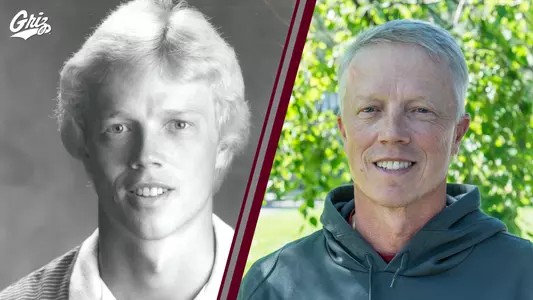
The Hall of Famers: A trip down memory lane with Kris Nord
9/3/2026 1:43:00 PM | General, Men's Tennis, Golf, Women's Tennis
Kris Nord spent 42 years as a Grizzly coach. 42 years of service to one team would be a hall of fame worthy career in itself. But when you learn he spent decades coaching two and often three different programs all at once, you realize that level of dedication makes a hall of fame induction a no-brainer.
Nord was hired in 1982 as Montana's head women's and assistant men's tennis coach. He became head coach for both programs in 1986 and led both until 2006. In between he also started Montana's women's golf program and coached all three for a time before returning to the golf team from 2017 until his retirement in 2024.
There were certainly plenty of wins along the way. He was named the Mountain West Coach of the Year in 1986 with the UM women's tennis team, and the Big Sky Coach of the Year in 2012 and '14 after winning a pair of titles with the men. There were All-Americans and tournament titles, and a million miles of driving in between.
But perhaps greater than any wins or losses was the notion that any team Kris Nord coached was going to represent Montana the right way. The players, no matter the sport, were going to compete with his same passion and competitive fire, and they were going to do it with the same grace, humility, respect and toughness he brought to every encounter.
He was a coach that brought out the best in the hundreds of student-athletes he mentored over the years, rarely in the spotlight, but always treated as if they were the most important people on campus. They found success on the court, the course, the classroom, and have gone on to find success in life.
Then, there are the years before he coached at Montana, growing up a Grizzly.
Nord is a Missoula native who grew up around the athletic department. His dad, Ron Nord, served as Montana's head basketball coach from 1962-68 and later an assistant football coach from 1969-74. His brothers Jeff and Mark both played basketball for the Griz as well.
He's spent nearly his entire life in and around the Adams Center, a staple of the Missoula community dedicated to the Grizzlies and the players, coaches and fans who make Montana special, no matter the sport. Proof it's the people that make programs.
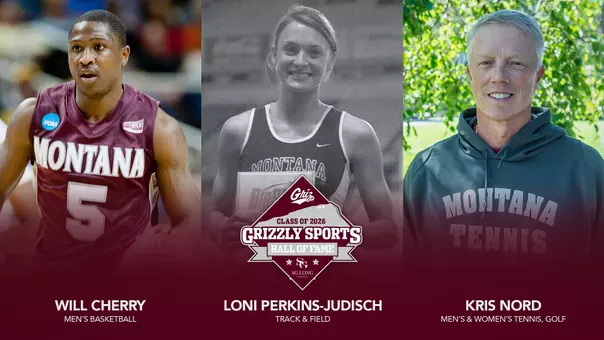
Next week, Nord will take his place among Montana's all-time legends as a 2026 inductee into the Grizzly Sports Hall of Fame. His is a career that is defined, yes, by wins and losses, but so much more than that. It's a career defined by consistency, hard work, dedication, and the desire to do things the right way, for the right reasons.
GoGriz.com sat down with Nord recently to take a walk down memory lane ahead of the hall of fame induction ceremony at the Adams Center on Sept. 11.
GoGriz.com: Let's start way back at the beginning. Tell us about some of your favorite memories of growing up in that building (the Adams Center) and being a small part of the athletic department, surrounded by Grizzly athletes.
Nord: Well, back then it was the Adams Fieldhouse, not the Adams Center. It had no false roof. You could look to the top of the arch, and it was a sawdust floor. I was four years old, and my first and lasting memory was meeting Naseby Rhinehart and loving the guy. I loved to go to my dad's practices, hang out, and then go see Naseby and all the Griz athletes. My dad did six years of basketball, then went straight to football so I watched a lot of practice.
I remember practicing punt, pass and kick in there with John Elway, whose dad was coaching here under (Jack) Swarthout. He lived a house away from me up in Farviews. But you could punt and pass in the field house, they had rodeos in there, concerts, and it was my little private playground. I remember Naseby and Gary Hughes were just as sweet as could be to me and I was a Griz from then on.
The moment I'd get out of school at Lewis and Clark, I would jog to campus, come watch practice and get to hang. It was just fun to explore. I knew all the athletes on my dad's team but got to know a lot of the people in the building. Rupert Holland was kind of the crusty old equipment manager, but he was sweet to me. It was good having your dad as a coach.
I went to my very first concert there. My dad announced a fight between Bob Foster and Roger Rouse. He was right down on the floor, and I was ringside. Foster dominated, and I got blood splattered all over me. I just thought it was the coolest thing in the world. I'd watch basketball from up in the Century Club with the boosters and have donuts and drinks. I just have tons and tons and tons of memories. It's a special place to me.
GoGriz.com: Your dad coached here until '74 when you were 16. They left town, but you stayed in Missoula. What was that time like?
Nord: My parents briefly tried to get into the insurance business here, but they ended up leasing our house and going to Alaska up to Fairbanks. I was up there a year and a half, but I ended up finishing high school in Missoula, living with my brother Jeff and his wife Patty out on Blue Mountain Road. Right where Peak Athletic Club is, there was a little ranch house and that is where I finished high school.
GoGriz.com: You were an accomplished athlete at Sentinel High as well. You played football, basketball and tennis in the spring and got D-I offers for each.
Nord: I played three sports my senior year. I broke my ankle the very first football game as quarterback as a freshman at Sentinel, and then I didn't play football my sophomore and junior years because I was really into tennis and I would have had to miss double-days to play at the Intermountain tournament down in Denver. So, I didn't play, then senior year, Gary Ekegren was the coach. He said, 'you can do both and miss some practice.' So, I ended up playing my senior year, and it went really well.
Then playing basketball, it was funny, UM and MSU were fighting to recruit Blaine Taylor, and he finally signed with the Griz. I think we were in Bozeman at a game, getting on the bus to go practice, and Rich Juarez, the MSU coach, came on and offered me a basketball scholarship right on the spot. Which, I said I can't do this right now. I've got to talk to my parents, and I've got to talk about being a Bobcat. It was kind of cool that he came on and made the offer, but I ended up signing to play football for the Griz then backed out on that and ended up going to UNLV instead.
Football was probably my favorite sport to play, just for the excitement part of it. But back then, the Grizzlies were still at Dornblaser. If they had been at Washington-Griz I don't think I would have ever backed out of the scholarship. It was seriously tough to say no to that.
GoGriz.com: After all that you chose to pursue tennis and headed to Vegas and UNLV, which, at that time probably felt like a world away.
Nord: Well, I went to Vegas on a football recruiting trip. Tony Knap was the coach. He had just started down there. He was well known for what he had done at Boise State, and my dad really liked him. My dad kind of pushed me to look at getting out of Montana, just to go experience the world and don't have it be a continuation of high school.
It was probably the best advice I got because I went down on my football visit and had a great time. I met the tennis coach as well and talked a little with him, and he said, 'Hey, if you end up down here, we'd have this for tennis.' I ended up just taking the tennis scholarship and not doing football, and I think it was a real smart move on my part to get away from my core friends and go see something new, and Vegas was something new alright.
GoGriz.com: Halfway through your career in Vegas you decided to head closer to home and transferred to Boise State. What was the driver behind that move?
Nord: I was in Vegas for a year and half then I came back to Missoula and worked peeling logs in a sawmill here for two months in winter and realized I couldn't do that very long. By that time my dad was up in Prudhoe Bay running an oil camp, and said, 'Get a ticket up here, you'll have a great job.' And as timing had it, ARCO Oil shut the camp down. I'd already bought my ticket. I was on my way up, so I just went to work for my mom and dad. They managed a hotel and condominiums in Fairbanks, and I worked for them and taught tennis, which was a great job up there at that time. They had a bubble on the University of Alaska campus, and I was making more money than I knew what to do with, and I was going to stay there. Then my dad said, 'No, you're going back to school, and you're going to get your degree,' and kicked me out of there after just over a year.
So, I decided I was going to go play football at Boise and give it a try because I had regrets about not playing football. Then I promptly blew my ankle out on the sixth day of football practice and kept getting hurt. Had a shoulder issue. My nickname was Crash at Boise, so I decided to get healthy and go back and focus on tennis.
I had a good senior year there. I remember my very first match after shoulder surgery was against the number one college ranked player in the country, Mike De Palmer, who played for Tennessee and Boise at that time hosted the Collegiate Indoor. So, my christening back from shoulder surgery was to play the best guy in the country, which was fun. I was a bit nervous, you might say.
But senior year went well. Won my spot at conference. We came close to winning the team title, but not as close as we wanted. We had Bus Connors, the ex-basketball coach at BSU, as our coach my senior year, and he was wonderful. He didn't know a ton about tennis, but he's a great coach, organizer, motivator, and it was special to finish up my collegiate career with him.
I met my wife Robi at Boise State. After I used up my eligibility in '81 I didn't have my degree yet but got that at UM five years later. I went on the mini tour and Robi and I got married at the end of that year, then I came up here to coach.
GoGriz.com: You took your shot at pro tennis? What was the mini tour like? Had to be a grind.
It was mostly Pacific Northwest. You know, up the Oregon coast, Portland, B.C. Seattle. I realized very early I wasn't going to be thriving out there. The talent was incredible. There were international kids that were prepping to get on the main tour and coming off injuries. It was it was a grind, and it also laid to rest any thoughts I had about playing more after college. Then I thought I better get into coaching.
GoGriz.com: You come from a coaching family. Is that something you knew you always wanted to do?
Nord: My dad had one comment for me growing up. He said, 'never ever be a coach.' So, I took that to heart. I taught a lot of tennis but then started coaching here in '82 and loved it. I didn't like how good we were. It was a challenge to get us to be more relevant in the Big Sky Conference. I was coaching both men and women, and we were just behind in many ways, facilities and scholarships, and I was pretty competitive. It was a tough start, but it also motivated me to try and get better.
GoGriz.com: How did that transition happen? Going from an aspiring tour player to coaching both the men and women in Missoula.
Nord: Larry Gianchetta, who was head of the business school at the time, was coaching men's tennis at UM, and at Boise during my last match against them, he said, 'You know, I'm going to be backing out of coaching here soon, and the women's job is open. I don't think I can continue to do what I'm doing, and you should come up and at least get your foot in the door, maybe take over both.' That's where that started in 1981 in Boise, our last match against Montana. When I threw my resume in and met with Barb Holman and Harley Lewis, and they hired a 24-year-old kid who looked like he was 17.
GoGriz.com: How does one even manage two teams at the same time considering recruiting, travel, practice and everything else that goes into it?
Nord: Well, I started just traveling with the women and Larry would practice them during the week. Then I took over both men and women in '86 and did that until the early 2000's.
Sometimes we could travel together, but that wasn't the norm. I would work my schedule so I'd be off one team and on with the next, and we'd practice indoor late night at the Missoula Athletic Club from 10 to midnight. Sometimes we'd go every other day with each team. It wasn't ideal. You don't really get to know the kids as well as you'd want and understand what's going on with them. So, it was a little like trying to plug all the holes in a dam, and I didn't have enough fingers to keep track of both programs.
Then Bill Moos had me start women's golf in '93 so I did three teams. Then it got real crazy, and that's when Robi and I started having kids too.
It was interesting, but it wasn't quite as organized. Fall seasons weren't as important as they are now. Women's golf championships were in the fall, and tennis was in the spring. Annette Rocheleau helped me with the golf team when I was with tennis. We just found a way to make it work.
Eventually I found a great assistant in Joanne Steel that was great for the golf program and meant I could slide into more tennis. For me, that turned out to be the whole reason I could stay at the U. The bump in salary I got to take on three teams for three years from Bill Moos was huge for me.
So, three years later I went back to just men and women's tennis, and four or five years after that it was just men's tennis. That's when we started having a lot more success. Being focused on one team and applying all my energy to that one team was essential.
GoGriz.com: Personally speaking they must have been some pretty lean years to begin with, coaching three teams with a family at home. Did you have any time to yourself?
Nord: No, because I was also teaching a lot of tennis outside of the coaching jobs. Eventually I was the head pro at the Missoula Athletic Club, and at that point it was crazy, but it was necessary for me to make enough money to survive on.
Then Robi got a job at Western Montana Clinic, and it got to the point we could actually get into a house. That was epic for us at that point. But there was a few times Robi asked, 'Why are we married, because I never ever see you?' There were some long days, but they were well worth it.
GoGriz.com: Despite all those late nights and your attention being pulled away, you had some success in those early years. You were the Mountain West Coach of the Year in '86 in women's tennis and recruited and coached arguably the greatest player in UM history – men or women – in Vanessa Castellano. That must have been gratifying.
Nord: Vanessa was one of the best players in Spain and came here as an exchange student at Billings Central. She was going to go back but she wanted to have more of a well-rounded life. She didn't want her life to be just tennis. She was a really good student, so I got her here on a visit.
She ended up coming, and she was phenomenal for two years. I mean, literally, we'd get her into the national tournaments, and she'd have to go through pre-qualifying to get into the qualifying, and then through the bracket, and ended up getting to the semis and finals of four major U.S. collegiate tournaments. She was ranked in the low 20's nationally, but our strength of schedule was so weak that ranking would drop as soon as we'd start conference play.
She was one of the best players in the country. Top five in my mind. It was gratifying to have her because the team I had around here were good enough to possibly win the Big Sky, and we came very close her freshman year. But just watching her play, and her leadership, she was amazing.
I'm sure she was underwhelmed by my coaching because she didn't really need much help. She figured out what needed to be adjusted and how to compete. She competed better than any kid I've ever seen. I mean, she didn't like losing a point. Not a match, a point. She played every point like it mattered, and that's what you want.
(editor's note: Castellano went on to play at national powerhouse Georgia for her final two seasons where she became an All-American, was the 1999 SEC Player of the Year, and an NCAA semifinalist.)
GoGriz.com: Things started to calm down a bit in the early 2000's when you finally had responsibility for just one team. You took over the men's program and it blossomed. What spurred on that transition and what was that time like?
Nord: Well, all the programs in the Big Sky Conference were being split up, and we were behind the eight ball in terms of coaching and having two teams. We just weren't running it right.
I had so much fun from that point on. It was not a matter whether it was men or women, it was just one team to worry about recruiting and keeping track of. One team to do individual workouts with the kids. I didn't have to teach as much tennis outside of my job at the U because it was it was better pay. So, it was just it was the best of both worlds.
Then we recruited a couple South African kids, Jan Steenkamp, Stuart Wing, and later Carl Kuschke. That turned the tide. It made us contenders. We got some really good Pacific Northwest kids and Missoula kids to blend in, and we were in the mix. That was my main goal was to just be relevant, get into some championship matches and eventually win a couple.
GoGriz.com: That's when the team really started to have success and the championships came soon after. They must have felt like the salad days. What are some of your favorite memories from that time?
Nord: Let's see… We had a road match at Utah State, and they were very good. They had Clancy Shields as their coach, who is now at Arizona. He made them very tough, but also very edgy and hard to compete against. Their crowd was rowdy. Their kids were obnoxious. We went there and had a tough loss to them at their indoors.
But we played them a month later in Boise. And after the tough loss our goal was to get our act together, keep improving, and then we beat them 7-0 at Boise. It was the most gratifying, non-championship match I've ever coached because we shut them up, and our kids did it the right way with some class and humility.
But my favorite memories from about 2003 on was just the chemistry we had and the fun we had on the road. Everything was fun for the most part. A few bumps here and there, but everything from early morning workouts to traveling and long drives - we found a way to make them work. We played along a lot of card games in the in the Suburban. That made a lot of miles pass. We did a lot of traveling late at night after long three tournaments. It was interesting, but fun.
GoGriz.com: So, after all those years you've got a team you can focus on, and things start really coming together. Then in 2012 you took the next step and won the Big Sky regular season title.
Nord: We went undefeated in conference, 16-5 overall, and just had a really solid team. We beat Sacramento State in our last home match of the regular season then had to play them down there in the tournament in 105 degree heat the next week for the championship. We won our semifinal, but it would have been hard to beat them at home, in the heat, after we had such an emotional win in Missoula the week before clinching the regular season title.
GoGriz.com: Fast forward two years to 2014 and you finally bring the big one home, winning the Big Sky title and punching your first ticket to the NCAA tournament. What was it like, finally reaching the mountain top in the Big Sky and getting to face a powerhouse like Oklahoma in the NCAA tourney?
Nord: Jason (Brown) joined me in 2013 and he was really helpful because he was great with the kids and was able to be the good cop to my bad cop. Everything got better that year. Recruiting got better, I had more fun, and the group was just a kick.
We had an interesting 13-day spring break trip that almost ended in tragedy outside of Rock Creek. We had a drive at 1 a.m. going the wrong way on the freeway that forced us off the road in both vehicles. Very, very scary.
But Ben DeMorris and Carl Kuschke had started this culture of saying 'hey, let's go win championships,' and we had some new players join us that worked out really well. The whole 2014 season was just a kick. Jason and I had a lot of fun coaching together. We played a tough schedule, we were the second seed going into the tournament after a tough loss at Weber State.
But the year ended well. Our guys played awesome at the Big Sky tournament and when we played Oklahoma we had three matches that were really competitive. We would have won a doubles match and were winning a singles match when they clinched, so it was fun to go out on a high note with those guys because they deserved a championship.
GoGriz.com: Tell us about the trip to Norman and, after all those years, getting to play in the NCAA Tourney at a place like Oklahoma.
Nord: Well, we had some tough travel to get in there. We ended up spending the night in the Salt Lake Airport because when we got to Norman, we couldn't land because the airport closed. Landed in Wichita, refueled, tried to get back into Oklahoma City, and there were horrible thunderstorms. So, we had to go all the way back to Salt Lake, spend the night there, get no sleep, get back on a plane, and made it to our practice courts just on time.
I remember going out on the courts, and all the kids were looking at the Oklahoma team, who were all out practicing without shirts on, which I wouldn't let our guys do. They were all 6-2,6-3, and looked like they were spent all their time in the weight room. They were beasts, and it was it was a little intimidating. We said, let's go warm up so we can go to bed because we were exhausted.
But their facilities, their talent, just being an NCAA event was fun for everyone. We had a kick, and I don't have any regrets on how we played because they were number one or two in the country and played like it. It was fun to go play against the best.
GoGriz.com: You kind of got to go out on top, stepping away from men's tennis a few years later. It's not often a coach of any sport at the collegiate level gets to essentially hand-pick his replacement. How important was it for you to keep Jason there and what made you want it to be him. Because it's certainly paid off.
Nord: I knew Jason out of tennis and liked him. He and I got along and he's a really smart guy. After watching him with the team I knew he'd be great. I was also getting burnt out. That was my 42nd year of college tennis between playing and coaching, and I just wasn't feeling fresh about tennis. I couldn't retire though.
When Matt Higgins left the golf program that created an opportunity. Kent (Haslam) and Greg (Sundberg) came and asked if I'd do golf temporarily, and I said that's great because I knew Jason would do a wonderful job. I wasn't planning on keeping golf permanently, but three months later I decided I'd like to stay with it. The kids on our team went to bat for me and we had great chemistry.
Then I went to bat for Jason because I thought this team doesn't deserve a new coach. They need consistency and Jason's going to do a great job. I'm just glad Kent took that to heart because Jason has taken the ball, kept running and is doing better. It's been fun to watch.
GoGriz.com: Then it was full time with Golf until your retirement in 2024. College golf seems hard in Montana because you can't get outside half the year, but what are some of your favorite memories from that time?
Nord: Our first tournament out of the gate we had a decent team. We went to Old Works and played against a competitive field of 13 teams. Baylee Barckley was our top player and she went out and won the medalist. Our goal for the year was to win one tournament and she goes out and wins the very first one and we end up shooting a team record at Old Works.
It was a great start for a tennis coach. I was raw at coaching golf. I'd don't it, but it was intimidating to go back and keep it going. We had a good team that year and had a lot of fun. We were competitive, but choosing a golf lineup in Montana is impossible because you play your last competition in October and have to pick a team in mid-February. Being in simulators doesn't help, so not being able to golf is an enormous challenge. But we raised funds and took extra trips in January. It was challenging but I enjoyed it.
Then later, three of the eight kids on our team were fighting cancer at the same time. We had the death of a parent during that time from one of the kids who had just been declared cancer-free. She lost her father. So coaching became just trying to keep the team together and somewhat focused. It was a huge challenge, but also very rewarding. It was about more than golf at that point. I still talk to that team and we have good relationships. They're all doing better now and that's great to see. But, it was tough times and it was real. I wasn't worried about wins and losses and scores. It was about keeping the crew going.
GoGriz.com: Well, it certainly was a hall of fame worthy career. It wasn't always about the wins and losses, it was about the consistency, the 2 a.m. road trips and getting the kids to do the right things for the right reasons.
Nord: I'm amazed at how many miles we drove without an incident. People have no idea. I'd do 35 miles a day just to practice after picking up all the kids and dropping them off. We had some close calls, but I'm thankful we came out alive and healthy.
But, doing things the right way was incredibly important to me. Being in this hall of fame means the world. It gives me validation when I look back, knowing I made a difference. I just wanted to be relevant. It got better as time went on and we had some things go our way with the teams. But having a small slice of Griz history is huge to me.
Nord was hired in 1982 as Montana's head women's and assistant men's tennis coach. He became head coach for both programs in 1986 and led both until 2006. In between he also started Montana's women's golf program and coached all three for a time before returning to the golf team from 2017 until his retirement in 2024.
There were certainly plenty of wins along the way. He was named the Mountain West Coach of the Year in 1986 with the UM women's tennis team, and the Big Sky Coach of the Year in 2012 and '14 after winning a pair of titles with the men. There were All-Americans and tournament titles, and a million miles of driving in between.
But perhaps greater than any wins or losses was the notion that any team Kris Nord coached was going to represent Montana the right way. The players, no matter the sport, were going to compete with his same passion and competitive fire, and they were going to do it with the same grace, humility, respect and toughness he brought to every encounter.
He was a coach that brought out the best in the hundreds of student-athletes he mentored over the years, rarely in the spotlight, but always treated as if they were the most important people on campus. They found success on the court, the course, the classroom, and have gone on to find success in life.
Then, there are the years before he coached at Montana, growing up a Grizzly.
Nord is a Missoula native who grew up around the athletic department. His dad, Ron Nord, served as Montana's head basketball coach from 1962-68 and later an assistant football coach from 1969-74. His brothers Jeff and Mark both played basketball for the Griz as well.
He's spent nearly his entire life in and around the Adams Center, a staple of the Missoula community dedicated to the Grizzlies and the players, coaches and fans who make Montana special, no matter the sport. Proof it's the people that make programs.
Next week, Nord will take his place among Montana's all-time legends as a 2026 inductee into the Grizzly Sports Hall of Fame. His is a career that is defined, yes, by wins and losses, but so much more than that. It's a career defined by consistency, hard work, dedication, and the desire to do things the right way, for the right reasons.
GoGriz.com sat down with Nord recently to take a walk down memory lane ahead of the hall of fame induction ceremony at the Adams Center on Sept. 11.
GoGriz.com: Let's start way back at the beginning. Tell us about some of your favorite memories of growing up in that building (the Adams Center) and being a small part of the athletic department, surrounded by Grizzly athletes.
Nord: Well, back then it was the Adams Fieldhouse, not the Adams Center. It had no false roof. You could look to the top of the arch, and it was a sawdust floor. I was four years old, and my first and lasting memory was meeting Naseby Rhinehart and loving the guy. I loved to go to my dad's practices, hang out, and then go see Naseby and all the Griz athletes. My dad did six years of basketball, then went straight to football so I watched a lot of practice.
I remember practicing punt, pass and kick in there with John Elway, whose dad was coaching here under (Jack) Swarthout. He lived a house away from me up in Farviews. But you could punt and pass in the field house, they had rodeos in there, concerts, and it was my little private playground. I remember Naseby and Gary Hughes were just as sweet as could be to me and I was a Griz from then on.
The moment I'd get out of school at Lewis and Clark, I would jog to campus, come watch practice and get to hang. It was just fun to explore. I knew all the athletes on my dad's team but got to know a lot of the people in the building. Rupert Holland was kind of the crusty old equipment manager, but he was sweet to me. It was good having your dad as a coach.
I went to my very first concert there. My dad announced a fight between Bob Foster and Roger Rouse. He was right down on the floor, and I was ringside. Foster dominated, and I got blood splattered all over me. I just thought it was the coolest thing in the world. I'd watch basketball from up in the Century Club with the boosters and have donuts and drinks. I just have tons and tons and tons of memories. It's a special place to me.
GoGriz.com: Your dad coached here until '74 when you were 16. They left town, but you stayed in Missoula. What was that time like?
Nord: My parents briefly tried to get into the insurance business here, but they ended up leasing our house and going to Alaska up to Fairbanks. I was up there a year and a half, but I ended up finishing high school in Missoula, living with my brother Jeff and his wife Patty out on Blue Mountain Road. Right where Peak Athletic Club is, there was a little ranch house and that is where I finished high school.
GoGriz.com: You were an accomplished athlete at Sentinel High as well. You played football, basketball and tennis in the spring and got D-I offers for each.
Nord: I played three sports my senior year. I broke my ankle the very first football game as quarterback as a freshman at Sentinel, and then I didn't play football my sophomore and junior years because I was really into tennis and I would have had to miss double-days to play at the Intermountain tournament down in Denver. So, I didn't play, then senior year, Gary Ekegren was the coach. He said, 'you can do both and miss some practice.' So, I ended up playing my senior year, and it went really well.
Then playing basketball, it was funny, UM and MSU were fighting to recruit Blaine Taylor, and he finally signed with the Griz. I think we were in Bozeman at a game, getting on the bus to go practice, and Rich Juarez, the MSU coach, came on and offered me a basketball scholarship right on the spot. Which, I said I can't do this right now. I've got to talk to my parents, and I've got to talk about being a Bobcat. It was kind of cool that he came on and made the offer, but I ended up signing to play football for the Griz then backed out on that and ended up going to UNLV instead.
Football was probably my favorite sport to play, just for the excitement part of it. But back then, the Grizzlies were still at Dornblaser. If they had been at Washington-Griz I don't think I would have ever backed out of the scholarship. It was seriously tough to say no to that.
GoGriz.com: After all that you chose to pursue tennis and headed to Vegas and UNLV, which, at that time probably felt like a world away.
Nord: Well, I went to Vegas on a football recruiting trip. Tony Knap was the coach. He had just started down there. He was well known for what he had done at Boise State, and my dad really liked him. My dad kind of pushed me to look at getting out of Montana, just to go experience the world and don't have it be a continuation of high school.
It was probably the best advice I got because I went down on my football visit and had a great time. I met the tennis coach as well and talked a little with him, and he said, 'Hey, if you end up down here, we'd have this for tennis.' I ended up just taking the tennis scholarship and not doing football, and I think it was a real smart move on my part to get away from my core friends and go see something new, and Vegas was something new alright.
GoGriz.com: Halfway through your career in Vegas you decided to head closer to home and transferred to Boise State. What was the driver behind that move?
Nord: I was in Vegas for a year and half then I came back to Missoula and worked peeling logs in a sawmill here for two months in winter and realized I couldn't do that very long. By that time my dad was up in Prudhoe Bay running an oil camp, and said, 'Get a ticket up here, you'll have a great job.' And as timing had it, ARCO Oil shut the camp down. I'd already bought my ticket. I was on my way up, so I just went to work for my mom and dad. They managed a hotel and condominiums in Fairbanks, and I worked for them and taught tennis, which was a great job up there at that time. They had a bubble on the University of Alaska campus, and I was making more money than I knew what to do with, and I was going to stay there. Then my dad said, 'No, you're going back to school, and you're going to get your degree,' and kicked me out of there after just over a year.
So, I decided I was going to go play football at Boise and give it a try because I had regrets about not playing football. Then I promptly blew my ankle out on the sixth day of football practice and kept getting hurt. Had a shoulder issue. My nickname was Crash at Boise, so I decided to get healthy and go back and focus on tennis.
I had a good senior year there. I remember my very first match after shoulder surgery was against the number one college ranked player in the country, Mike De Palmer, who played for Tennessee and Boise at that time hosted the Collegiate Indoor. So, my christening back from shoulder surgery was to play the best guy in the country, which was fun. I was a bit nervous, you might say.
But senior year went well. Won my spot at conference. We came close to winning the team title, but not as close as we wanted. We had Bus Connors, the ex-basketball coach at BSU, as our coach my senior year, and he was wonderful. He didn't know a ton about tennis, but he's a great coach, organizer, motivator, and it was special to finish up my collegiate career with him.
I met my wife Robi at Boise State. After I used up my eligibility in '81 I didn't have my degree yet but got that at UM five years later. I went on the mini tour and Robi and I got married at the end of that year, then I came up here to coach.
GoGriz.com: You took your shot at pro tennis? What was the mini tour like? Had to be a grind.
It was mostly Pacific Northwest. You know, up the Oregon coast, Portland, B.C. Seattle. I realized very early I wasn't going to be thriving out there. The talent was incredible. There were international kids that were prepping to get on the main tour and coming off injuries. It was it was a grind, and it also laid to rest any thoughts I had about playing more after college. Then I thought I better get into coaching.
GoGriz.com: You come from a coaching family. Is that something you knew you always wanted to do?
Nord: My dad had one comment for me growing up. He said, 'never ever be a coach.' So, I took that to heart. I taught a lot of tennis but then started coaching here in '82 and loved it. I didn't like how good we were. It was a challenge to get us to be more relevant in the Big Sky Conference. I was coaching both men and women, and we were just behind in many ways, facilities and scholarships, and I was pretty competitive. It was a tough start, but it also motivated me to try and get better.
GoGriz.com: How did that transition happen? Going from an aspiring tour player to coaching both the men and women in Missoula.
Nord: Larry Gianchetta, who was head of the business school at the time, was coaching men's tennis at UM, and at Boise during my last match against them, he said, 'You know, I'm going to be backing out of coaching here soon, and the women's job is open. I don't think I can continue to do what I'm doing, and you should come up and at least get your foot in the door, maybe take over both.' That's where that started in 1981 in Boise, our last match against Montana. When I threw my resume in and met with Barb Holman and Harley Lewis, and they hired a 24-year-old kid who looked like he was 17.
GoGriz.com: How does one even manage two teams at the same time considering recruiting, travel, practice and everything else that goes into it?
Nord: Well, I started just traveling with the women and Larry would practice them during the week. Then I took over both men and women in '86 and did that until the early 2000's.
Sometimes we could travel together, but that wasn't the norm. I would work my schedule so I'd be off one team and on with the next, and we'd practice indoor late night at the Missoula Athletic Club from 10 to midnight. Sometimes we'd go every other day with each team. It wasn't ideal. You don't really get to know the kids as well as you'd want and understand what's going on with them. So, it was a little like trying to plug all the holes in a dam, and I didn't have enough fingers to keep track of both programs.
Then Bill Moos had me start women's golf in '93 so I did three teams. Then it got real crazy, and that's when Robi and I started having kids too.
It was interesting, but it wasn't quite as organized. Fall seasons weren't as important as they are now. Women's golf championships were in the fall, and tennis was in the spring. Annette Rocheleau helped me with the golf team when I was with tennis. We just found a way to make it work.
Eventually I found a great assistant in Joanne Steel that was great for the golf program and meant I could slide into more tennis. For me, that turned out to be the whole reason I could stay at the U. The bump in salary I got to take on three teams for three years from Bill Moos was huge for me.
So, three years later I went back to just men and women's tennis, and four or five years after that it was just men's tennis. That's when we started having a lot more success. Being focused on one team and applying all my energy to that one team was essential.
GoGriz.com: Personally speaking they must have been some pretty lean years to begin with, coaching three teams with a family at home. Did you have any time to yourself?
Nord: No, because I was also teaching a lot of tennis outside of the coaching jobs. Eventually I was the head pro at the Missoula Athletic Club, and at that point it was crazy, but it was necessary for me to make enough money to survive on.
Then Robi got a job at Western Montana Clinic, and it got to the point we could actually get into a house. That was epic for us at that point. But there was a few times Robi asked, 'Why are we married, because I never ever see you?' There were some long days, but they were well worth it.
GoGriz.com: Despite all those late nights and your attention being pulled away, you had some success in those early years. You were the Mountain West Coach of the Year in '86 in women's tennis and recruited and coached arguably the greatest player in UM history – men or women – in Vanessa Castellano. That must have been gratifying.
Nord: Vanessa was one of the best players in Spain and came here as an exchange student at Billings Central. She was going to go back but she wanted to have more of a well-rounded life. She didn't want her life to be just tennis. She was a really good student, so I got her here on a visit.
She ended up coming, and she was phenomenal for two years. I mean, literally, we'd get her into the national tournaments, and she'd have to go through pre-qualifying to get into the qualifying, and then through the bracket, and ended up getting to the semis and finals of four major U.S. collegiate tournaments. She was ranked in the low 20's nationally, but our strength of schedule was so weak that ranking would drop as soon as we'd start conference play.
She was one of the best players in the country. Top five in my mind. It was gratifying to have her because the team I had around here were good enough to possibly win the Big Sky, and we came very close her freshman year. But just watching her play, and her leadership, she was amazing.
I'm sure she was underwhelmed by my coaching because she didn't really need much help. She figured out what needed to be adjusted and how to compete. She competed better than any kid I've ever seen. I mean, she didn't like losing a point. Not a match, a point. She played every point like it mattered, and that's what you want.
(editor's note: Castellano went on to play at national powerhouse Georgia for her final two seasons where she became an All-American, was the 1999 SEC Player of the Year, and an NCAA semifinalist.)
GoGriz.com: Things started to calm down a bit in the early 2000's when you finally had responsibility for just one team. You took over the men's program and it blossomed. What spurred on that transition and what was that time like?
Nord: Well, all the programs in the Big Sky Conference were being split up, and we were behind the eight ball in terms of coaching and having two teams. We just weren't running it right.
I had so much fun from that point on. It was not a matter whether it was men or women, it was just one team to worry about recruiting and keeping track of. One team to do individual workouts with the kids. I didn't have to teach as much tennis outside of my job at the U because it was it was better pay. So, it was just it was the best of both worlds.
Then we recruited a couple South African kids, Jan Steenkamp, Stuart Wing, and later Carl Kuschke. That turned the tide. It made us contenders. We got some really good Pacific Northwest kids and Missoula kids to blend in, and we were in the mix. That was my main goal was to just be relevant, get into some championship matches and eventually win a couple.
GoGriz.com: That's when the team really started to have success and the championships came soon after. They must have felt like the salad days. What are some of your favorite memories from that time?
Nord: Let's see… We had a road match at Utah State, and they were very good. They had Clancy Shields as their coach, who is now at Arizona. He made them very tough, but also very edgy and hard to compete against. Their crowd was rowdy. Their kids were obnoxious. We went there and had a tough loss to them at their indoors.
But we played them a month later in Boise. And after the tough loss our goal was to get our act together, keep improving, and then we beat them 7-0 at Boise. It was the most gratifying, non-championship match I've ever coached because we shut them up, and our kids did it the right way with some class and humility.
But my favorite memories from about 2003 on was just the chemistry we had and the fun we had on the road. Everything was fun for the most part. A few bumps here and there, but everything from early morning workouts to traveling and long drives - we found a way to make them work. We played along a lot of card games in the in the Suburban. That made a lot of miles pass. We did a lot of traveling late at night after long three tournaments. It was interesting, but fun.
GoGriz.com: So, after all those years you've got a team you can focus on, and things start really coming together. Then in 2012 you took the next step and won the Big Sky regular season title.
Nord: We went undefeated in conference, 16-5 overall, and just had a really solid team. We beat Sacramento State in our last home match of the regular season then had to play them down there in the tournament in 105 degree heat the next week for the championship. We won our semifinal, but it would have been hard to beat them at home, in the heat, after we had such an emotional win in Missoula the week before clinching the regular season title.
GoGriz.com: Fast forward two years to 2014 and you finally bring the big one home, winning the Big Sky title and punching your first ticket to the NCAA tournament. What was it like, finally reaching the mountain top in the Big Sky and getting to face a powerhouse like Oklahoma in the NCAA tourney?
Nord: Jason (Brown) joined me in 2013 and he was really helpful because he was great with the kids and was able to be the good cop to my bad cop. Everything got better that year. Recruiting got better, I had more fun, and the group was just a kick.
We had an interesting 13-day spring break trip that almost ended in tragedy outside of Rock Creek. We had a drive at 1 a.m. going the wrong way on the freeway that forced us off the road in both vehicles. Very, very scary.
But Ben DeMorris and Carl Kuschke had started this culture of saying 'hey, let's go win championships,' and we had some new players join us that worked out really well. The whole 2014 season was just a kick. Jason and I had a lot of fun coaching together. We played a tough schedule, we were the second seed going into the tournament after a tough loss at Weber State.
But the year ended well. Our guys played awesome at the Big Sky tournament and when we played Oklahoma we had three matches that were really competitive. We would have won a doubles match and were winning a singles match when they clinched, so it was fun to go out on a high note with those guys because they deserved a championship.
GoGriz.com: Tell us about the trip to Norman and, after all those years, getting to play in the NCAA Tourney at a place like Oklahoma.
Nord: Well, we had some tough travel to get in there. We ended up spending the night in the Salt Lake Airport because when we got to Norman, we couldn't land because the airport closed. Landed in Wichita, refueled, tried to get back into Oklahoma City, and there were horrible thunderstorms. So, we had to go all the way back to Salt Lake, spend the night there, get no sleep, get back on a plane, and made it to our practice courts just on time.
I remember going out on the courts, and all the kids were looking at the Oklahoma team, who were all out practicing without shirts on, which I wouldn't let our guys do. They were all 6-2,6-3, and looked like they were spent all their time in the weight room. They were beasts, and it was it was a little intimidating. We said, let's go warm up so we can go to bed because we were exhausted.
But their facilities, their talent, just being an NCAA event was fun for everyone. We had a kick, and I don't have any regrets on how we played because they were number one or two in the country and played like it. It was fun to go play against the best.
GoGriz.com: You kind of got to go out on top, stepping away from men's tennis a few years later. It's not often a coach of any sport at the collegiate level gets to essentially hand-pick his replacement. How important was it for you to keep Jason there and what made you want it to be him. Because it's certainly paid off.
Nord: I knew Jason out of tennis and liked him. He and I got along and he's a really smart guy. After watching him with the team I knew he'd be great. I was also getting burnt out. That was my 42nd year of college tennis between playing and coaching, and I just wasn't feeling fresh about tennis. I couldn't retire though.
When Matt Higgins left the golf program that created an opportunity. Kent (Haslam) and Greg (Sundberg) came and asked if I'd do golf temporarily, and I said that's great because I knew Jason would do a wonderful job. I wasn't planning on keeping golf permanently, but three months later I decided I'd like to stay with it. The kids on our team went to bat for me and we had great chemistry.
Then I went to bat for Jason because I thought this team doesn't deserve a new coach. They need consistency and Jason's going to do a great job. I'm just glad Kent took that to heart because Jason has taken the ball, kept running and is doing better. It's been fun to watch.
GoGriz.com: Then it was full time with Golf until your retirement in 2024. College golf seems hard in Montana because you can't get outside half the year, but what are some of your favorite memories from that time?
Nord: Our first tournament out of the gate we had a decent team. We went to Old Works and played against a competitive field of 13 teams. Baylee Barckley was our top player and she went out and won the medalist. Our goal for the year was to win one tournament and she goes out and wins the very first one and we end up shooting a team record at Old Works.
It was a great start for a tennis coach. I was raw at coaching golf. I'd don't it, but it was intimidating to go back and keep it going. We had a good team that year and had a lot of fun. We were competitive, but choosing a golf lineup in Montana is impossible because you play your last competition in October and have to pick a team in mid-February. Being in simulators doesn't help, so not being able to golf is an enormous challenge. But we raised funds and took extra trips in January. It was challenging but I enjoyed it.
Then later, three of the eight kids on our team were fighting cancer at the same time. We had the death of a parent during that time from one of the kids who had just been declared cancer-free. She lost her father. So coaching became just trying to keep the team together and somewhat focused. It was a huge challenge, but also very rewarding. It was about more than golf at that point. I still talk to that team and we have good relationships. They're all doing better now and that's great to see. But, it was tough times and it was real. I wasn't worried about wins and losses and scores. It was about keeping the crew going.
GoGriz.com: Well, it certainly was a hall of fame worthy career. It wasn't always about the wins and losses, it was about the consistency, the 2 a.m. road trips and getting the kids to do the right things for the right reasons.
Nord: I'm amazed at how many miles we drove without an incident. People have no idea. I'd do 35 miles a day just to practice after picking up all the kids and dropping them off. We had some close calls, but I'm thankful we came out alive and healthy.
But, doing things the right way was incredibly important to me. Being in this hall of fame means the world. It gives me validation when I look back, knowing I made a difference. I just wanted to be relevant. It got better as time went on and we had some things go our way with the teams. But having a small slice of Griz history is huge to me.
Monday, October 12
Monday, October 12
Saturday, October 10
Tuesday, October 06