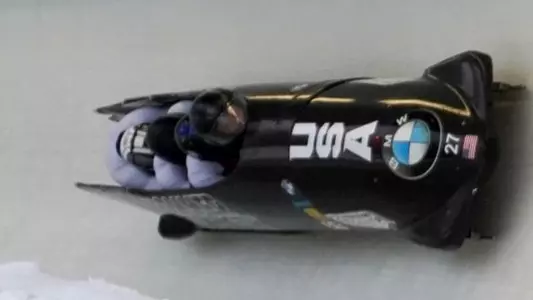
Alex Mustard living out new dream, aiming for 2022 Olympics in bobsled
3/20/2020 11:15:00 AM | Men's Track and Field, Women's Track and Field
In the 10 months since graduating from the University of Montana, Alex Mustard has traveled the world. He hopes to do a little more traveling, as well.
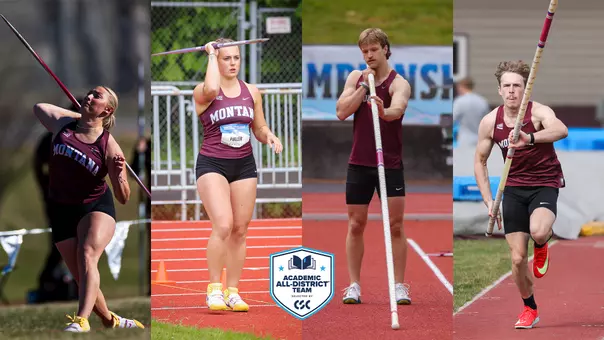
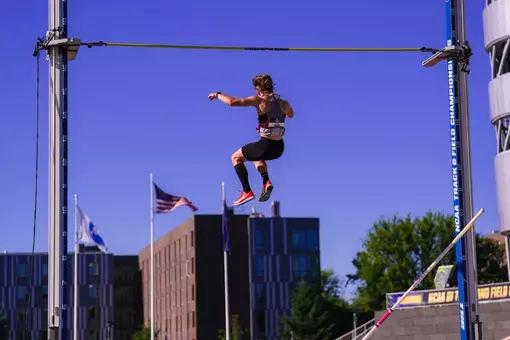
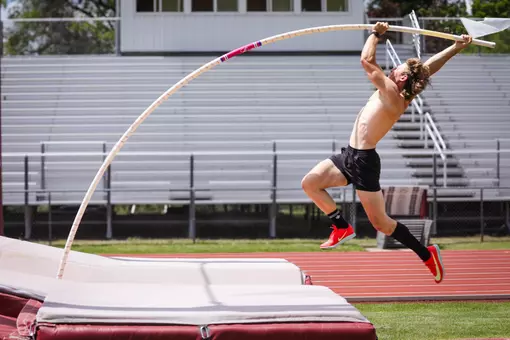
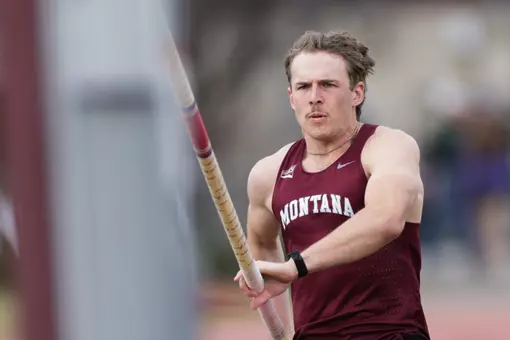
Mustard, a Big Sky High School graduate and standout on the Griz track team, concluded his collegiate career last spring. As a prep and college track athlete, Mustard did it all.
Now, the talented athlete is embarking on his new career path... as a hopeful for the U.S. bobsled team at the 2022 Olympic Games.
So how did a Missoula kid who ran track for his hometown college get to this point?
Even Mustard, himself, isn't quite sure. All he knows is that, like a lot of students his age, he began to ask himself, 'What's next?' at some point during his redshirt senior season of college. He had completed his degree in finance, and was beginning to look toward his next career venture.
But at 23 years old, his body still felt good and he still had the same competitive drive. Plus, he'd always been the type who liked to challenge himself and step out of his comfort zone.
No one discounts Mustard's athletic ability. He was a four-time All-Big Sky performer at the University of Montana, even qualifying for NCAA Regionals in the 200 meters.
But how does someone who had never before seen a bobsled in person get to the point where he's now – less than a year later – in the mix to represent his country on the sport's biggest stage?
Mustard doesn't remember how the idea of bobsled first got initiated. He believes it may have been a comment from a friend or teammate, but he can't be entirely sure. By last spring, however, Mustard found himself on the USA Bobsled website doing research about what something like that might look like.
He filled out a preliminary athlete profile on the sport's website, because, why not?
A few weeks later, he was contacted by a coach. Shortly after that, the same coach recommended that Mustard fill out an application for the Next Olympic Hopeful talent-identification program.
Out of thousands of applications, Mustard was one of 50 chosen. So, still learning about his new sport, Mustard traveled to Colorado Springs last July.
"We went through testing that included sprinting, weightlifting, cycling and endurance tests, among others," Mustard recalled. "I put my best foot forward."
That he did.
At the end of the three-day training, Mustard was selected as the 'Next Olympic Hopeful' for the sport.
He was featured on a show on NBC. He's been written about on Team USA's website. And for the past eight months, he's been learning all there is to know about the sport of bobsled while training with some of the sport's elite.
There was the rookie camp, featuring Mustard and around 20 athletes who had no experience in the sport. They learned about the bobsled and its requirements, while learning how to push, drive, maintain a sled and compete like an Olympian.
Prior to recent events across the globe, Mustard had spent most of his time training in either Lake Placid, New York – where USA Bobsled and Skeleton is headquartered – or Park City, Utah, but his travels have taken him abroad, as well, spending time earlier this year competing with members of the U.S. team in Austria, Switzerland and Germany.
He's since learned that his path isn't all that uncommon, actually. After all, not many athletes grow up training to be a professional bobsledder, so many of the professionals come from sprinting backgrounds.
Each bobsled pilot – the driver of the sled – is on a track nearly identical to its competitors, so for that reason, one of the most important parts of any bobsled race is the push. A sled moving at a higher velocity after the push will continue to accelerate as it slides down the track, often times leading to even larger advantages when the sled crosses the finish line.
Which is where Mustard – and his strong build and explosive speed – comes in.
"The push requires absolute maximal exertion for a very brief period, similar to a sprint," Mustard said. "It is essential that push athletes put everything they have into each push because after that, they are just along for the ride."
And about the ride...
"The ride itself is insane," Mustard said. "On most tracks, the sled will hit a top speed somewhere between 80 and 90 miles per hour, and the athletes in the sled will experience pressures of 4 to 5 G's. It's very loud and it is not comfortable. Some trips are violent."
Much of Mustard's training has been similar to his time as a track athlete. Sprinting and weight lifting several times a week – and sometimes multiple times per day – in addition to pushing and taking training runs. And while Mustard is built more to push, he has received plenty of training as a pilot, as well.
"You get in the sled and the first four corners happen so quickly that you lose track of where you are and you have no idea what you're supposed to be doing," Mustard said in an interview with Team USA. "By the time your brain tells you what movement to do, it's two turns later. But the more you do it, it starts to slow down and you get a better understanding of where you are."
Despite still being so new to the sport, Mustard has experienced it all. He's a veteran on the two tracks in the United States and has trained on three tracks during his time competing in the Europa Cup while abroad. He's raced both 2-man and 4-man sleds.
He can tell you pretty much all there is to know about the sport, as well.
For example: "A 4-man sled weighs somewhere around 500 pounds."
Mustard has also had early success, placing third at the Lake Placid Rookie Camp and ninth at the National Push Championship. One of the highlights came at the North American Cup when three-time Olympian Nick Cunningham, who is now a coach, stepped in as the pilot for Mustard's team. The group won three silver medals that week at the competition.
The next step, of course, is to continue improving his craft and – hopefully – represent Team USA at the 2022 Winter Olympic Games in Beijing. Mustard won't learn his fate until about six weeks prior to then, which for a beginner like him, gives him more time to learn, train and prepare.
"The entire process thus far has been both challenging and fulfilling," Mustard said. "Staying at the Olympic Training Center in Lake Placid has been awe-inspiring. There are days where I'm sitting at the lunch table with multiple Olympic medalists and it blows my mind every single time.
"Observing how the veteran athletes on the team conduct themselves, not only as athletes, but in their personal lives, is very impressive. I've learned a lot and have gained a lot of inspiration from people who are extremely successful at what they do. It's a once-in-a-lifetime chance. There are a lot of sacrifices, but, regardless of what happens, I think it's going to be well worth it."
To learn more about Mustard's journey click here.
Mustard, a Big Sky High School graduate and standout on the Griz track team, concluded his collegiate career last spring. As a prep and college track athlete, Mustard did it all.
Now, the talented athlete is embarking on his new career path... as a hopeful for the U.S. bobsled team at the 2022 Olympic Games.
So how did a Missoula kid who ran track for his hometown college get to this point?
Even Mustard, himself, isn't quite sure. All he knows is that, like a lot of students his age, he began to ask himself, 'What's next?' at some point during his redshirt senior season of college. He had completed his degree in finance, and was beginning to look toward his next career venture.
But at 23 years old, his body still felt good and he still had the same competitive drive. Plus, he'd always been the type who liked to challenge himself and step out of his comfort zone.
No one discounts Mustard's athletic ability. He was a four-time All-Big Sky performer at the University of Montana, even qualifying for NCAA Regionals in the 200 meters.
But how does someone who had never before seen a bobsled in person get to the point where he's now – less than a year later – in the mix to represent his country on the sport's biggest stage?
Mustard doesn't remember how the idea of bobsled first got initiated. He believes it may have been a comment from a friend or teammate, but he can't be entirely sure. By last spring, however, Mustard found himself on the USA Bobsled website doing research about what something like that might look like.
He filled out a preliminary athlete profile on the sport's website, because, why not?
A few weeks later, he was contacted by a coach. Shortly after that, the same coach recommended that Mustard fill out an application for the Next Olympic Hopeful talent-identification program.
Out of thousands of applications, Mustard was one of 50 chosen. So, still learning about his new sport, Mustard traveled to Colorado Springs last July.
"We went through testing that included sprinting, weightlifting, cycling and endurance tests, among others," Mustard recalled. "I put my best foot forward."
That he did.
At the end of the three-day training, Mustard was selected as the 'Next Olympic Hopeful' for the sport.
He was featured on a show on NBC. He's been written about on Team USA's website. And for the past eight months, he's been learning all there is to know about the sport of bobsled while training with some of the sport's elite.
There was the rookie camp, featuring Mustard and around 20 athletes who had no experience in the sport. They learned about the bobsled and its requirements, while learning how to push, drive, maintain a sled and compete like an Olympian.
Prior to recent events across the globe, Mustard had spent most of his time training in either Lake Placid, New York – where USA Bobsled and Skeleton is headquartered – or Park City, Utah, but his travels have taken him abroad, as well, spending time earlier this year competing with members of the U.S. team in Austria, Switzerland and Germany.
He's since learned that his path isn't all that uncommon, actually. After all, not many athletes grow up training to be a professional bobsledder, so many of the professionals come from sprinting backgrounds.
Each bobsled pilot – the driver of the sled – is on a track nearly identical to its competitors, so for that reason, one of the most important parts of any bobsled race is the push. A sled moving at a higher velocity after the push will continue to accelerate as it slides down the track, often times leading to even larger advantages when the sled crosses the finish line.
Which is where Mustard – and his strong build and explosive speed – comes in.
"The push requires absolute maximal exertion for a very brief period, similar to a sprint," Mustard said. "It is essential that push athletes put everything they have into each push because after that, they are just along for the ride."
And about the ride...
"The ride itself is insane," Mustard said. "On most tracks, the sled will hit a top speed somewhere between 80 and 90 miles per hour, and the athletes in the sled will experience pressures of 4 to 5 G's. It's very loud and it is not comfortable. Some trips are violent."
Much of Mustard's training has been similar to his time as a track athlete. Sprinting and weight lifting several times a week – and sometimes multiple times per day – in addition to pushing and taking training runs. And while Mustard is built more to push, he has received plenty of training as a pilot, as well.
"You get in the sled and the first four corners happen so quickly that you lose track of where you are and you have no idea what you're supposed to be doing," Mustard said in an interview with Team USA. "By the time your brain tells you what movement to do, it's two turns later. But the more you do it, it starts to slow down and you get a better understanding of where you are."
Despite still being so new to the sport, Mustard has experienced it all. He's a veteran on the two tracks in the United States and has trained on three tracks during his time competing in the Europa Cup while abroad. He's raced both 2-man and 4-man sleds.
He can tell you pretty much all there is to know about the sport, as well.
For example: "A 4-man sled weighs somewhere around 500 pounds."
Mustard has also had early success, placing third at the Lake Placid Rookie Camp and ninth at the National Push Championship. One of the highlights came at the North American Cup when three-time Olympian Nick Cunningham, who is now a coach, stepped in as the pilot for Mustard's team. The group won three silver medals that week at the competition.
The next step, of course, is to continue improving his craft and – hopefully – represent Team USA at the 2022 Winter Olympic Games in Beijing. Mustard won't learn his fate until about six weeks prior to then, which for a beginner like him, gives him more time to learn, train and prepare.
"The entire process thus far has been both challenging and fulfilling," Mustard said. "Staying at the Olympic Training Center in Lake Placid has been awe-inspiring. There are days where I'm sitting at the lunch table with multiple Olympic medalists and it blows my mind every single time.
"Observing how the veteran athletes on the team conduct themselves, not only as athletes, but in their personal lives, is very impressive. I've learned a lot and have gained a lot of inspiration from people who are extremely successful at what they do. It's a once-in-a-lifetime chance. There are a lot of sacrifices, but, regardless of what happens, I think it's going to be well worth it."
To learn more about Mustard's journey click here.
Players Mentioned

Sprints
/ Men's Track and FieldMonday, August 17
Monday, August 10
Monday, August 03
Friday, June 19